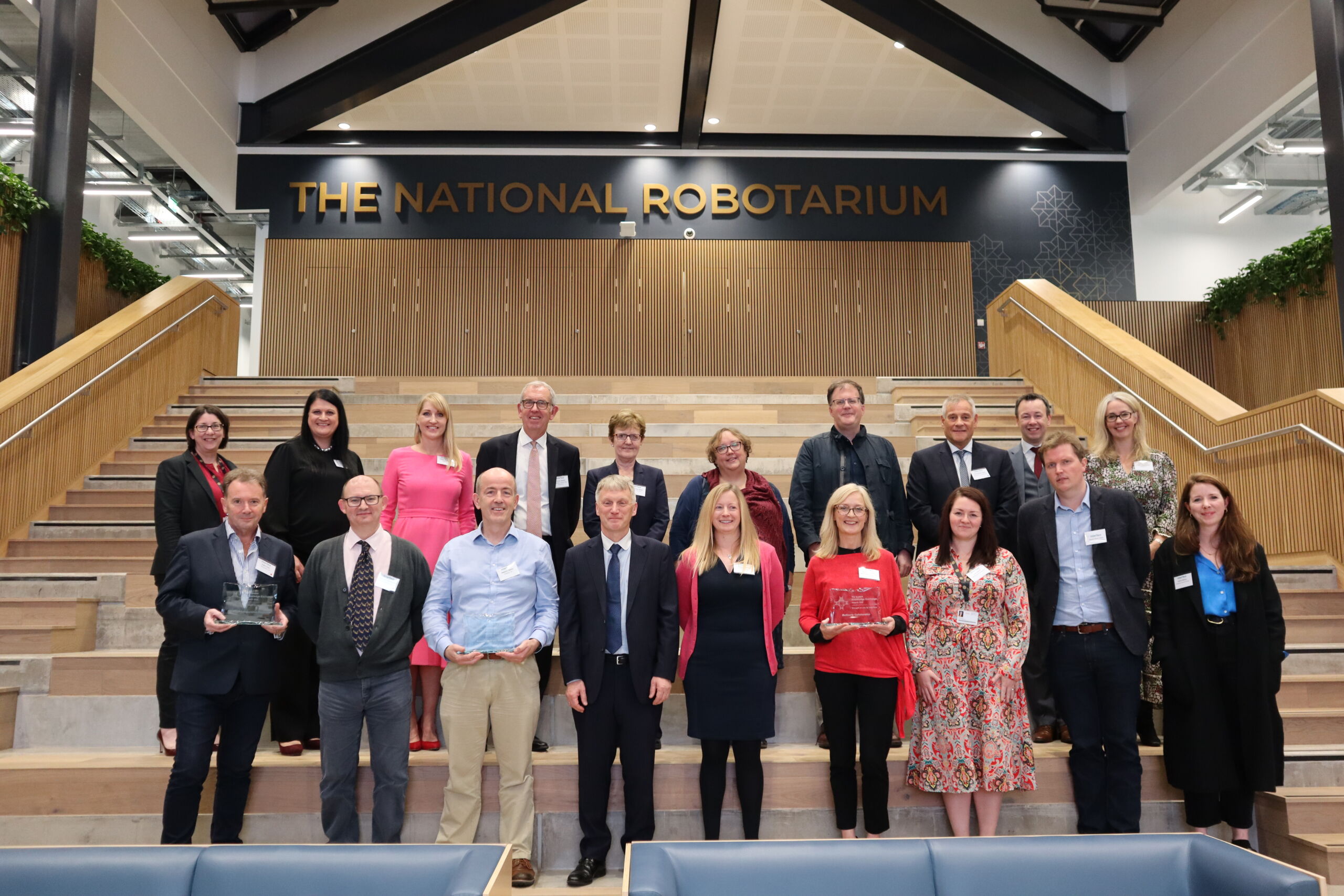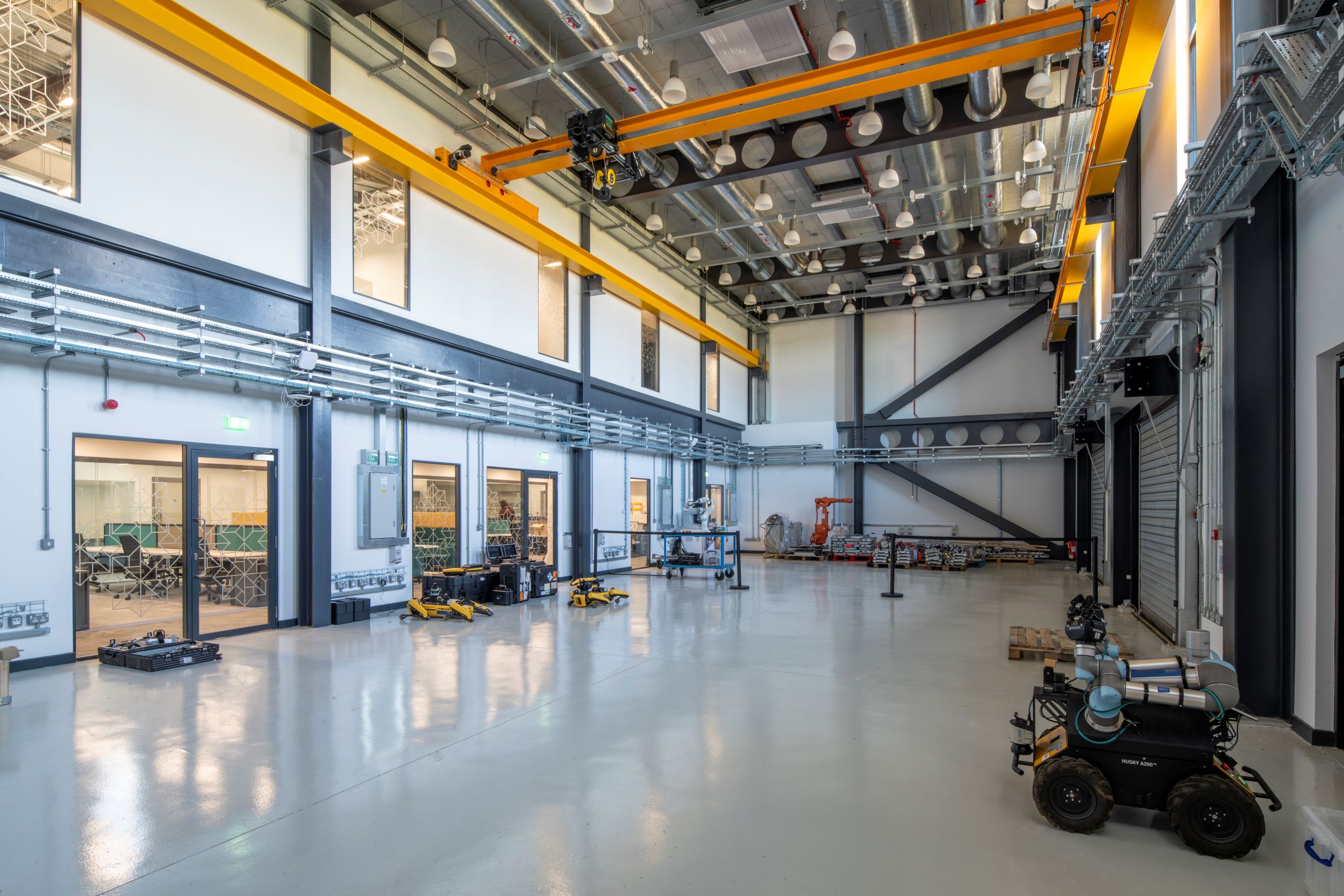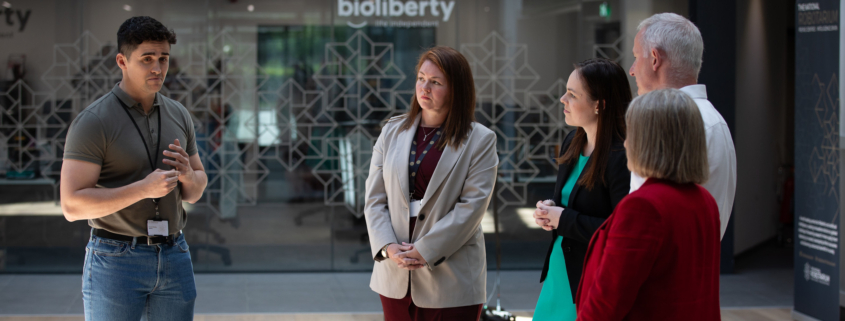

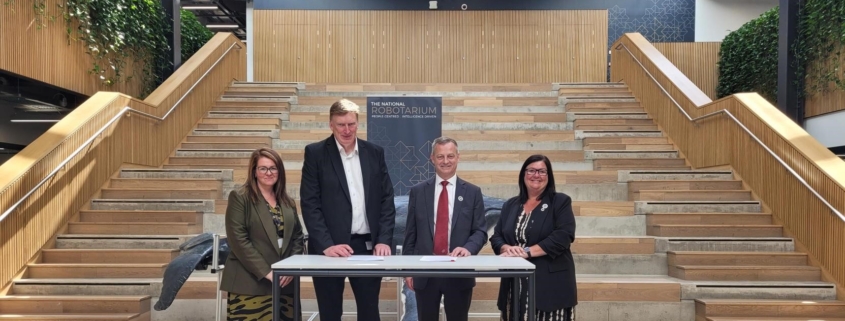
Imenco Future Technologies, a global leader in remotely operated vehicle (ROV) technology has taken a strategic investment stake in Frontier Robotics, a specialist developer of advanced subsea robotic technologies, based at The National Robotarium.
The investment, which will support Frontier’s long-term innovation and growth strategy, represents a significant step in Imenco’s Future Technologies ongoing commitment to advancing subsea capabilities, enhancing operational efficiency and accelerating the development of next-generation solutions for offshore energy, defence, and emerging blue economy sectors.
Frontier Robotics has built a strong reputation for its pioneering work in subsea autonomy and perception technologies. Its technology roadmap is closely aligned with Imenco’s strategic focus on digitalisation, automation, and increased ROV system performance in complex subsea environments.
The partnership is expected to enable closer collaboration on product development, integration of complementary technologies, and faster commercialisation of innovative solutions. Furthermore, it will also support joint exploration of emerging market opportunities where advanced ROV capabilities and intelligent systems are becoming increasingly critical.
Daniele Petrone, CEO at Imenco Future Technologies said:
“This investment marks an important milestone in our strategy to partner with and support innovative companies that bring differentiated technological capabilities to the subsea market.
“We see strong alignment between our organisations, both in terms of technical vision and ambition to drive industry progress. Working more closely together will enhance our market leading position in subsea visual systems, adding perception technologies, autonomy and expanded AI capabilities to our recently launched MillieOne platform accelerating delivery of solutions that create real value for our customers.”
Jonatan Scharff Willners, Founder and CEO at Frontier Robotics said:
“We are delighted to welcome Imenco Future Technologies as a strategic investor.
“Their deep domain expertise, global market presence, and commitment to innovation make them an ideal partner as we continue to grow and expand our technology portfolio. This investment will enable us to accelerate development and deliver even greater impact across the subsea sector.”
Dr Jonatan Scharff-Willners, CEO of Frontier Robotics
The investment underscores Imenco Future Technologies broader strategy of building an ecosystem of complementary technologies and partnerships to support the future of subsea operations. As the industry evolves toward more autonomous, data-driven and sustainable solutions, collaboration between established leaders and technology innovators is increasingly essential.
Frontier Technologies will benefit from Imenco’s global reach, operational experience, and established customer base, providing a strong platform to scale its technologies and bring innovations to market more rapidly.
At The National Robotarium, we believe that collaborations – at local, national and international level – are essential to advancing robotics innovation. In our latest blog post, Thomas McGravie, Senior Robotics Technician at The National Robotarium, shares his insights from a recent a knowledge exchange visit to Japan.
Building Global Connections
Organised through the UK Robotics and Autonomous Systems Technical Specialists (UK RAS STEPS) network, Thomas and other technical specialists from leading UK universities and research institutes came together in April 2026 to explore Japan’s robotics ecosystem and share technical expertise.
Selected through a competitive application process, Thomas was one of ten technicians chosen to participate in the programme, which aimed to foster collaboration between UK and Japanese robotics communities. The trip also provided valuable opportunities for networking and knowledge sharing among technicians, who oftentimes work in highly specialised environments.
Thomas said: “As someone who came into robotics from a mechanical engineering background, the trip offered a rare chance to step back and look at the wider picture. It wasn’t just about seeing new technologies, it was about understanding how different countries approach innovation and how technicians are crucial to driving research ecosystems.”
“Being relatively new to robotics, it helped me understand the bigger picture and see how their priorities shape the technologies they develop.”
Tom (fourth from left) and other UKRAS-STEPS delegates visited RT Corporation, a robotics innovation company based in Tokyo
Robotics Solving Real-World Challenges
The group visited several leading institutions, including the Tokyo Institute of Science and the University of Tokyo, where researchers showcased cutting-edge work in human-robot interaction.
One of the most striking observations from the visit was the strong connection between robotics research and real-world societal needs. Japan’s unique environmental challenges have driven significant investment in technologies designed to operate in hazardous environments. Researchers demonstrated robotic systems developed for inspecting damaged nuclear facilities, assessing infrastructure, monitoring radiation levels, and supporting disaster response following earthquakes and tsunamis.
Thomas said: “Many of the projects were directly addressing challenges that Japan faces as a country. The research wasn’t being conducted for its own sake – there was a very clear application and purpose behind the work.”
Attention was also given to projects supporting Japan’s ageing population. Researchers showcased studies with people engaging with humanoid robots in healthcare environments, exploring whether robot assistants could help improve the patient’s experience and support increasingly stretched healthcare services.
Thomas said: “These projects highlighted the importance of understanding the human side of robotics. The technology itself is only part of the challenge; understanding how people respond to it is equally important.
“This resonated with me as it’s exactly the kind of work we’re doing in healthcare robotics at The National Robotarium.”
Tom (third from left) with the group at The University of Tokyo
Industry Innovation
The delegation also visited RT Corporation, a robotics company developing commercial automation solutions.
Among the technologies showcased were robotic systems designed for food production environments, automating repetitive tasks such as sorting, handling and assembling food products. The company also demonstrated educational robotics platforms, autonomous systems and mobile robots used for research and development, providing valuable insight into how robotics companies are balancing advances in artificial intelligence with practical engineering and manufacturing expertise.
Thomas said: “There was a clear emphasis on creating solutions that solve genuine industry problems. It was interesting to see how research, product development and commercial deployment are connected.”
Shared Challenges, Shared Opportunities
Beyond the technical demonstrations, Thomas found one of the most valuable aspects of the programme was the opportunity to connect with fellow technicians. The visit created space for conversations about common issues, best practice and professional development.
He said: “Many technicians, like myself, either work in small teams or as the sole technician within their organisation. When you attend a conference, you might only get a few minutes with someone – spending a week together gave us the chance to really understand each other’s work and learn how we share a lot of the same challenges.”
The discussions reinforced the critical role technicians play in supporting research and innovation. Thomas also learned that many Japanese institutions are beginning to recognise the importance of rebuilding technical support structures after reducing technician roles in previous years.
He said: “Our hosts were genuinely interested in understanding how technical specialists contribute to research environments in the UK and how those models might support future development in Japan.”
Building a global robotics community
A recurring theme throughout the visit was the potential for greater international exchange between the UK and Japan, with a shared appreciation for technical expertise creating a strong foundation for future collaboration. Researchers, technicians and institutional leaders expressed strong interest in developing future partnerships, including knowledge-sharing initiatives and more staff exchanges.
Representatives from the UK science and technology community based in Japan also joined several meetings, helping identify opportunities to strengthen relationships between organisations in both countries.
Thomas said: “The visit demonstrated how much we can learn from each other.
“Whether it’s technical expertise, different ways of solving problems, or approaches to supporting innovation, there’s huge value in sharing knowledge across borders.”
For The National Robotarium, which has in recent months entered collaboration agreements with robotics institutes in Australia, Denmark and the Basque Country, these connections reinforce the importance of engaging with global robotics communities and ensuring that Scotland remains part of international conversations shaping the future of robotics and artificial intelligence.
Tom taking part in Japan Kart during some downtime in Tokyo!
https://thenationalrobotarium.com/wp-content/uploads/Tom-Tokyo-scaled-e1782141879375.jpg13532230Louise Jackhttp://thenationalrobotarium.com/wp-content/uploads/Robotarium.pngLouise Jack2026-06-22 16:19:452026-06-29 15:22:01BLOG: From Edinburgh to Tokyo: Exploring the Future of Robotics Through International Collaboration
By Stewart Miller, CEO of the National Robotarium. Originally published by The Scotsman on 5 February 2026.
Joan Kangro founded Kingdom Technologies after graduating from the University of Glasgow with a vision to build one of the world’s first commercial robotic mowers for large-scale terrains. Golf courses, sports fields, parks, commercial campuses. It was a genuine problem waiting to be solved, and he saw it.
He assembled a world-class robotics team. They designed and developed technology sophisticated enough that some of the largest companies in the industry licensed it. They began building customers across the UK and the US. In 2022, investors and venture capitalists backed them with £2 million. By 2024, the founders of Skype and Bolt invested another £1.4 million. A £20 million Series A was planned.
Then, in January of this year, Kingdom Technologies entered liquidation.
Stewart Miller, pictured here at the 2025 UK Robotics Expo, is CEO of The National Robotarium
In robotics, the technology is mature and proven. The costs of buying and operating have dropped dramatically. Scotland is continually growing new robotics companies with products that should be finding markets here. So why is Kingdom’s tale one that is becoming far too familiar?
“In a challenging fundraising climate and an increasingly competitive market,” Kangro reflected, “we were not able to raise the capital needed to continue.”
Kingdom didn’t fail because its technology was weak. It failed because it couldn’t find enough customers quickly enough. While it waited for businesses to adopt, it ran out of runway.
Scotland has spent years building world-class research capability in robotics. We’ve succeeded. By almost any measure, Scotland’s robotics research is genuinely excellent. But excellence in research isn’t the same as businesses actually using it.
It’s the second robotics company with market-ready products to collapse in recent times. The Small Robot Company faced the same problem – remarkable technology that farmers desperately needed to make crop management easier, but not enough early adoption to keep the lights on while they scaled.
This isn’t about either company’s business decisions. It’s about a market challenge Scotland and the UK needs to face.
Scotland has spent years building world-class research capability in robotics. We’ve succeeded. By almost any measure, Scotland’s robotics research is genuinely excellent. But excellence in research isn’t the same as businesses actually using it.
Globally, it’s expected that the robotics market will be worth over £200 billion by 2030. Germany installs nearly eight times more robots than the UK, according to recent figures. Asia accounts for nearly three quarters of all global robot installations. These countries aren’t winning because they’re necessarily better at inventing. They’re winning because their businesses are adopting faster.
Meanwhile, across the UK, approximately 20,000 of our 27,000 manufacturing small and medium-sized businesses operate without any robotics whatsoever. The gap between having the solution and deploying it across the economy is where we’re falling behind.
But we can see what’s possible when an industry embraces robotics at pace. Look at food manufacturing. It’s a sector with a rich history of automation, and it’s showing what happens when businesses adopt confidently. Companies like Aberdeen-based Leap AI are thriving because food manufacturers across the UK – from Fife to Kent – are ready to implement robotic solutions. It’s addressing acute labour shortages that cost the industry £1.4 billion annually. It’s improving efficiency. It’s staying competitive.
That sector-wide confidence creates the market robotics companies need to survive and scale. When businesses adopt at pace, innovation doesn’t just survive – it flourishes. Leap AI secured £7.9 million in funding and is growing. Not because it got lucky, but because its sector was ready.
Prior to entering liquidation, Kingdom Technologies produced industrial robotic lawnmowers, like these installed at The National Robotarium in 2025.
Imagine if manufacturing, healthcare, energy, and agriculture showed the same confidence. That’s the opportunity in front of us.
Denmark shows what this could look like at national scale. With a population smaller than Scotland’s, they’ve built one of Europe’s strongest robotics ecosystems. Their manufacturers install 234 robots per 10,000 workers. The UK manages 119. The difference? Danish businesses are more confident adopting. Part of that comes from their Odense Robotics hub, which connects companies with suppliers, provides hands-on testing facilities, and helps businesses move from interest to implementation.
Scotland is building similar support. The National Robotarium, which I lead, is working to grow awareness of robotics, grow business confidence in the technology and support companies to build a new technology sector in Scotland.
We run Robotics Readiness Workshops – free programmes helping businesses understand where robotics fits their operations and how to implement it. We’ve engaged tens of thousands of young people in robotics education, supported dozens of start-ups, and delivered industry-funded projects showing what’s achievable.
But no single organisation can solve this. The real shift happens when businesses across Scotland in all sectors decide robotics isn’t something for the future. It’s something for now.
What most people don’t realise is that when a business adopts robotics, they’re not just solving their own problems, like addressing labour shortages, improving efficiency, and staying competitive. They’re also helping build the market that keeps innovative Scottish robotics companies alive. Every implementation matters.
..no single organisation can solve this. The real shift happens when businesses across Scotland in all sectors decide robotics isn’t something for the future. It’s something for now.
Kingdom Technologies had the talent. It had the technology. It had backing from serious investors who believed in what they were building. What it couldn’t get was enough businesses moving fast enough from “this could work for us” to “we’re doing this.”
That’s the gap we need to close. Not through better research; we’re already excellent at that. Not through more innovation; we’ve got that in spades. But through businesses taking action.
The robotics revolution is happening globally, right now. The question for Scotland is whether our businesses will participate in it quickly enough to capture the opportunity – and to stop companies like Kingdom from becoming cautionary tales.
https://thenationalrobotarium.com/wp-content/uploads/Kingdom-robot-lawnmowers.jpeg11672048Louise Jackhttp://thenationalrobotarium.com/wp-content/uploads/Robotarium.pngLouise Jack2026-02-09 00:01:532026-02-09 09:59:38OPINION: We keep losing brilliant robotics companies. Scotland’s businesses can help change that.
The Data-Driven Innovation (DDI) Programme, a strategic partnership led by the University of Edinburgh and Heriot-Watt University, from which The National Robotarium centre for robotics and Artificial Intelligence was created, has won the Collaborative Initiative of the Year award at the prestigious Institute of Economic Development (iED) Annual Awards 2025.
This year saw a record-breaking number of entries, with almost 60 submissions received for seven award categories, and shortlisted nominations were assessed by an expert judging panel in September.
The Collaborative Initiative of the Year award, which this year is sponsored by Recurve Solutions, recognises outstanding cross-sector economic development collaboration between two or more partners drawn from local authorities, private sector, third sector, business and academia.
The submission outlined how the £700 million Data-Driven Innovation Programme, supported by the £1.3 billion Edinburgh and South East Scotland City Region Deal, unites the University of Edinburgh and Heriot-Watt University with six regional councils and industry to transform South East Scotland into the data capital of Europe. Delivering new infrastructure, thousands of skilled graduates, and high-growth ventures, the DDI programme is driving both inclusive growth and global competitiveness.
iED Director and former Chair Bev Hurley CBE, who hosted the awards honouring achievements across the public and private sectors, said: “Our judges said the Data-Driven Innovation Programme exemplifies the power of strategic collaboration to drive inclusive economic growth. With over £200 million in investment, support for over 600 companies, and a robust skills pipeline, the initiative demonstrates both measurable impact and long-term sustainability. They reported the seamless integration of public, academic, and industry partners sets a new benchmark for regional innovation.
“Our judges also praised the programme’s scale, infrastructure, innovation capacity, skills development, and global relevance, noting that these combined strengths position it as a catalyst for widespread economic and social benefit. In addition, they described the DDI Programme as a flagship model of collaborative economic development, delivering innovation, skills, and infrastructure at scale, and said that it is a benchmark for data-led transformation.”
Reflecting on the award, Professor Kim Graham, Provost of the University of Edinburgh and Senior Responsible Officer for the Data Driven Innovation Programme, commented: “This award is fantastic recognition of the impact of the DDI programme. The partnership between the universities of Edinburgh and Heriot-Watt is a shining example of how place-based investment in innovation and skills can have a transformative effect on economic growth, jobs and productivity, benefiting people in the region and beyond.”
Stewart Miller, Chief Executive Officer of The National Robotarium, said: “The National Robotarium is proud to be a part of the Data-Driven Innovation programme, a shining example of how collaboration between academia and industry can drive technological progress and create opportunities that will benefit businesses and communities across the region, the UK and beyond.
“Congratulations to the DDI delivery team and to our partner hubs for this award success.”
To find out more about the Data-Driven Innovation initiative and its partner hubs, visit: https://ddi.ac.uk/
https://thenationalrobotarium.com/wp-content/uploads/IED-awards-1500x500-1.jpeg5001500Louise Jackhttp://thenationalrobotarium.com/wp-content/uploads/Robotarium.pngLouise Jack2025-11-27 12:53:082025-11-27 13:00:32Data-Driven Innovation Programme wins Collaborative Initiative of the Year award at iED Annual Awards 2025
A partnership between Scotland’s leading technology and agricultural research institutions is developing 5G-connected robotics applications that enable farmers to implement precision agriculture techniques while addressing rural connectivity challenges.
The collaboration between Heriot-Watt University’s The National Robotarium, James Hutton Institute, Scotland 5G Centre, Boston Dynamics, and Freshwave is advancing robotic systems that can perform precision farming tasks – including crop health monitoring, targeted fertiliser application, and soil condition assessment – through portable 5G private networks.
Through private, mobile 5G connectivity, robots like Boston Dynamics’ Spot can undertake real-time scanning and mapping operations in remote or rural settings (photography by Ben Glasgow)
The technology addresses critical challenges facing modern agriculture, such as rising input costs, labour shortages, environmental regulations, and the need to increase food production while reducing environmental impact. Traditional farming approaches often involve uniform treatment across entire fields, but 5G-connected robotics enable plant-by-plant precision, applying resources only where needed.
The robotic systems use high-speed 5G connections to communicate with other robotic devices securely in real time as well as transmit detailed information about crops, soil conditions, and growing environments, enabling farmers to make informed decisions based on current field conditions.
A key breakthrough has been addressing connectivity limitations in rural areas. Agricultural operations requiring data-intensive robotic applications often face inadequate mobile network coverage and bandwidth constraints. The partnership has worked with portable 5G private networks that can be rapidly deployed on farms, providing the high-speed, low-latency connectivity essential for real-time robotic operations.
The robotic systems can stream high-definition video, generate detailed field mapping and, with under-development visual recognition systems, identify issues such as disease, pest infestations, or water stress significantly earlier than traditional monitoring methods. Applications that previously required expensive specialised equipment, technical expertise, and optimal weather conditions can now be implemented more efficiently and cost-effectively.
With global food production required to increase by more than 50% by 2050 while reducing environmental impact, advanced agricultural technologies are becoming essential. The agricultural sector, which contributes £2.2 billion to Scotland’s economy, is positioned to lead development of practical precision farming solutions that address real-world operational challenges.
Project Manager at The National Robotarium, Ruth Plant
Following a demonstration of the 5G-connected robotics technologies at The National Robotarium, Ruth Plant, Project Manager, said:
“What’s exciting about this project is seeing the technology develop from initial concept to working demonstration. We’ve successfully shown that portable 5G networks can provide the connectivity needed for real-time robotic operations in agricultural settings. The integration of these technologies creates opportunities for precision farming that weren’t previously possible in areas with limited connectivity.
“This partnership demonstrates exactly what the National Robotarium was designed to achieve – bringing together leading academic research, innovative companies, and industry expertise to develop practical solutions to real-world challenges. Our facility provides the collaborative environment where these breakthrough technologies can be developed, tested, and demonstrated to the partners and stakeholders who can help bring them to market.”
The technology was demonstrated at a 5G-connected robotics showcase, held at The National Robotarium on 30 June 2025 (photography by Ben Glasgow)
Andrew Christie, agritech specialist at The James Hutton Institute, said:
“As an evolution of precision farming technology being used in modern agriculture, robotics are a next step in the progression towards data driven farming practices, but a barrier to uptake has been the speed and reliability for real time communication and a need for manual intervention for data processing.
“With the integration of 5G private networks in robotics we can address these issues enabling high volumes of data to be transmitted at low latency and allowing us to use our current equipment more effectively, whilst also enabling future progress in swarm robotics, real-time sensors for digital twinning and active data processing through cloud computing.
“The use of remotely deployable 5G private networks as showcased at The National Robotarium and The James Hutton Institute provides relevance to all rural settings, and agricultural businesses regardless of farm type.”
Ian Sharp, Head of Delivery at the Scotland 5G Centre, said:
“The Scotland 5G Centre (S5GC) is focussed on enabling Scotland to unlock the benefits of advanced wireless connectivity, so we are very pleased to play an active role in this partnership.
“The collaboration highlights clearly how advanced wireless communications (5G) can enable new and exciting applications of robotics in an agricultural setting. It’s easy to see from the project how the 5G connected robotics can provide new opportunities to increase productivity and reduce costs.
“It’s also important to note that the partnership itself highlights the collaborative nature and strength of Scotland’s innovation ecosystem, particularly in working closely with industry partners.
“We were able to seed this project through use of funding from our Innovate UK Technology Mission Fund Programme. The IUK Programme ended in March 2025 and enabled a number of other 5G related projects, some of which continued the theme of addressing rural connectivity through the use of mobile 5G test networks deployed in harsh outdoor conditions.”
Robotics Engineer Hari operates the 5G-connected robot using VR
Tom Bennett, Chief Technology Officer at Freshwave, said:
“We’re proud to be enabling next-generation connectivity at the cutting edge of agritech research. Reliable, portable private 5G is unlocking new possibilities for robotics and automation, and we’re excited to support the National Robotarium as they help shape the future of sustainable agriculture alongside their partners and customers.”
WATCH STV News for a special report on The National Robotarium’s 5G Connected Robotics showcase event.
Interested in finding out if 5G-connected robotics can help your business? Contact Project Manager Ruth Plant at r.plant@hw.ac.uk
https://thenationalrobotarium.com/wp-content/uploads/Robotarium-5G-Showcase-130-Spot-1000px.jpg6661000Louise Jackhttp://thenationalrobotarium.com/wp-content/uploads/Robotarium.pngLouise Jack2025-07-02 10:15:002025-07-02 10:15:005G connected robotics set to revolutionise the farming sector
But, what is the Robotics Revolution? And how can the UK play its part?
In our latest video, Chief Executive Officer Stewart Miller, Business Development expert Lisa Farrell, and Dr Lorenzo Conti, Director and Co-Founder of industry residents Crover, outline the success of the National Robotarium model in supporting the development of new robotics technologies, driving homegrown innovations, and futureproofing the UK’s workforce, and economy, for an increasingly roboticised future.
https://thenationalrobotarium.com/wp-content/uploads/C_Locher_NR_HoP_DSC_8163_sm.jpg10691682Louise Jackhttp://thenationalrobotarium.com/wp-content/uploads/Robotarium.pngLouise Jack2024-08-01 15:45:562024-08-01 15:48:02VIDEO: What is the Robotics Revolution?
The project team, which includes global geo-data specialists Fugro and Heriot-Watt spinout technology company Frontier Robotics, is developing advanced AI and autonomous systems for undertaking remote inspections of offshore wind farms to offer a safe, efficient and sustainable solution for global energy providers.
The Scottish KE awards, now in their 10th year, highlight the exceptional collaborations that deliver economic, environmental and social benefits for Scotland. UNITE has been nominated within the Multi-party Collaboration category, in recognition of the consortium’s innovative knowledge exchange, bringing together a legacy of science, industry expertise and emerging technologies to tackle a real-world challenge.
UNITE aims to develop autonomous, electric remotely-operated vehicles (eROVs) to conduct maintenance and repair on offshore wind turbines
Professor Yvan Petillot is academic co-lead at The National Robotarium and leads the UNITE project at Heriot-Watt.
He said: “It’s an honour to be shortlisted for a Scottish KE Award. By harnessing advanced robotics, artificial intelligence, and subsea engineering with the aim of transforming offshore maintenance and directly supporting Scotland’s net-zero ambitions, we think the UNITE project is an excellent example of truly impactful Knowledge Exchange.”
Amelia Whitelaw, Director of Interface, which organises the Awards, said: “At Interface, we are proud to deliver the Scottish Knowledge Exchange Awards on behalf of Scotland’s vibrant innovation ecosystem.
“These awards are more than just a celebration of achievements—they showcase the transformative power of collaboration between academia and industry. Each finalist represents the spirit of partnership, driving solutions that create lasting economic, environmental, and social impact.”
The Interface Scottish KE Awards will take place at Edinburgh Futures Institute on 19th March.
https://thenationalrobotarium.com/wp-content/uploads/KE-awards.png499706Louise Jackhttp://thenationalrobotarium.com/wp-content/uploads/Robotarium.pngLouise Jack2025-02-12 12:34:512025-02-12 12:40:25UNITE consortium shortlisted for Scottish Knowledge Exchange Award
The National Robotarium has signed a new MOU (Memorandum of Understanding) with Corps Monitoring that will underpin the safe development of technologies for healthcare and other sectors.
The agreement, which was co-signed by Robotarium CEO Stewart Miller and CEO of Corps Monitoring Mike Bullock, during a visit to the National Robotarium on 3 June, kick-starts a collaboration that will focus on improving security and monitoring services for the social care sector.
Researchers in Human-Robot Interaction at Heriot-Watt University are developing applications, such as smart sensors and remote technologies, to enhance care provision in assisted-living environments. One current project involves the deployment of assistive robots within a real-use care organisation being led by Associate Professor Dr Mauro Dragone in partnership with Blackwood Homes and Care Services. Corps Monitoring, a division of Corps Security, will apply its extensive expertise in specialist security solutions to ensure these technologies are deployed safely, with enhanced cybersecurity to protect patient data and information.
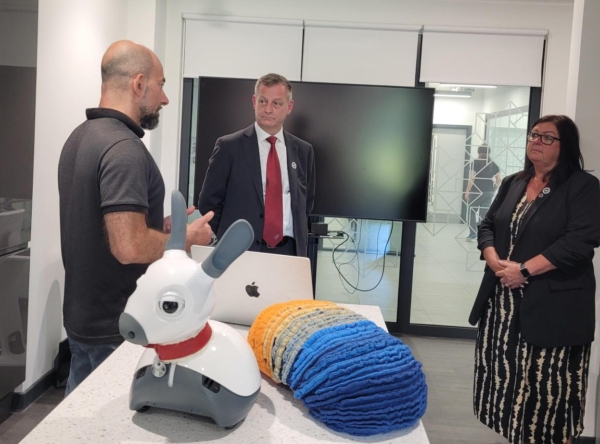
Dr Mauro Dragone (far-left), who leads the Laboratory for Assisted Robotic Living at the National Robotarium
“The aim of our partnership with the National Robotarium, is to improve the quality of life for many whilst striving forward with innovative technology advances.” Andrea Strong, MD of Corps Monitoring
National Robotarium Business Development Manager Lisa Farrell, who spearheaded the partnership, led the visit. She said:
“We were delighted to welcome Andrea and Mike to the National Robotarium to co-sign our new partnership agreement with Corps Monitoring.
“Our researchers are making huge advancements into the use of smart sensors, data analysis and machine vision to support greater independent living, however their security is a must if they are to be adopted by care providers on a wider scale.
“The expertise of Corps Monitoring will help underpin the safe development of these technologies, ensuring patient data remains private and protected and maintaining confidence within the sector.”
Andrea Strong, Managing Director of Corps Monitoring, also attended the signing. She said:
“The advancement of technology is moving at such a rapid pace. This partnership won’t just allow us to ‘keep up’ but to be ahead of the curve. By focusing on innovations that not only enhances independent living within the varying care sectors but aids the security and other sectors in general.
“The aim of our partnership with the National Robotarium, is to improve the quality of life for many whilst striving forward with innovative technology advances.”
https://thenationalrobotarium.com/wp-content/uploads/Corps-Monitoring-MOU.jpeg10061663Louise Jackhttp://thenationalrobotarium.com/wp-content/uploads/Robotarium.pngLouise Jack2024-06-05 14:17:292024-06-07 10:06:29New partnership will safeguard remote technologies for healthcare
The National Robotarium hosted the newly appointed Deputy First Minister and Cabinet Secretary for the Economy, Kate Forbes MSP, on Monday 20 May.
The Cabinet Secretary chose the UK’s centre for robotics and AI as the venue to announce a new £5 million funding package, created by the Scottish Government to boost the economy and attract international investment.
Targeted at start-up businesses, spinouts and female entrepreneurs, the scheme will help deliver end-to-end support as part of the government’s ongoing commitment to developing a world-class technology sector in Scotland.
As part of the visit, led by National Robotarium Business Development Manager, Lisa Farrell, and Chief Operating Officer, Steve Maclaren, alongside Heriot-Watt University’s Vice-Principal and Provost, Professor Steve McLaughlin, the Deputy First Minister met a number of start-up tech companies, who are advancing their business and technology through access to the centre’s high-spec laboratories, office space and robotics expertise.
“Facilities like the National Robotarium are proven to attract a range of talented and dynamic companies in their infancy. However, we need to ensure that we have a supportive infrastructure that allows them to remain in Scotland while they grow their business and scale-up production.”
Lisa Farrell, The National Robotarium
Companies benefitting from the National Robotarium’s business acceleration support include Frontier Robotics, BioLiberty, Crover, Touchlab Ltd., and newest residents, Danu Robotics, all of whom spoke to the Economy Secretary about how crucial centres like the National Robotarium are for growing Scotland’s start-up business community and retaining its tech talent and skills base.
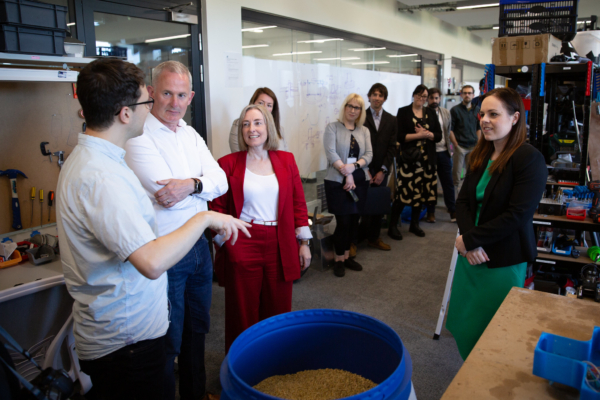
Agritech start-up Crover shared how they’ve developed their technology since joining the National Robotarium
Deputy First Minister Kate Forbes said:
“Innovation is at the very heart of our economy. We have the talent, the skills and the facilities to make Scotland one of Europe’s fastest-growing start-up economies: an economy that is strong, successful and dynamic.
“This package of measures, which builds on the multi-million investment the Scottish Government is already making into our start-up business community, forms the next step in providing one of the most comprehensive government-backed support networks in Europe.”
Business Development Manager, Lisa Farrell said:
“It was an honour to host the Deputy First Minister and showcase some of the start-ups that are getting a head-start through our business incubation and acceleration support.
“Facilities like the National Robotarium are proven to attract a range of talented and dynamic companies in their infancy. However, we need to ensure that we have a supportive infrastructure that allows them to remain in Scotland while they grow their business and scale-up production.
“I welcome the announcement that the Scottish Government are committed to delivering additional resource that will foster real economic growth through its start-up community and grow its roster of female entrepreneurs.”
Also in attendance were Mark Logan, Chief Entrepreneurial Advisor to the Scottish Government, and Ana Stewart, a tech entrepreneur and investment partner, who produced a Pathways report last year that highlighted recommendations for improving under-representation of women in entrepreneurship.
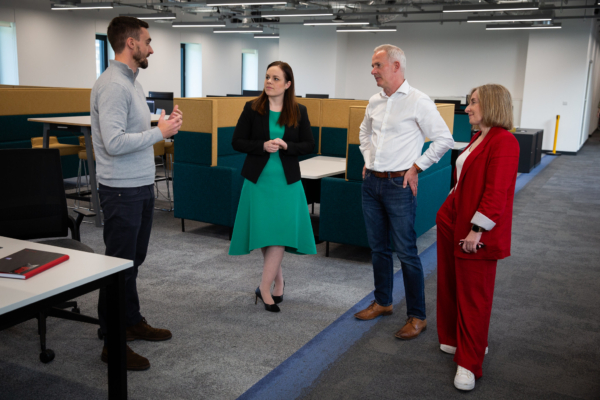
New resident company Danu Robotics spoke to the Economy Secretary about their automated waste sorting technology
https://thenationalrobotarium.com/wp-content/uploads/Bioliberty-Lisa-and-Kate-Forbes-e1716303196332.jpg9692048Louise Jackhttp://thenationalrobotarium.com/wp-content/uploads/Robotarium.pngLouise Jack2024-05-21 15:52:212026-05-11 13:54:48Deputy First Minister announces new £5m funding package at the National Robotarium
We may request cookies to be set on your device. We use cookies to let us know when you visit our websites, how you interact with us, to enrich your user experience, and to customize your relationship with our website.
Click on the different category headings to find out more. You can also change some of your preferences. Note that blocking some types of cookies may impact your experience on our websites and the services we are able to offer.
Essential Website Cookies
These cookies are strictly necessary to provide you with services available through our website and to use some of its features.
Because these cookies are strictly necessary to deliver the website, refusing them will have impact how our site functions. You always can block or delete cookies by changing your browser settings and force blocking all cookies on this website. But this will always prompt you to accept/refuse cookies when revisiting our site.
We fully respect if you want to refuse cookies but to avoid asking you again and again kindly allow us to store a cookie for that. You are free to opt out any time or opt in for other cookies to get a better experience. If you refuse cookies we will remove all set cookies in our domain.
We provide you with a list of stored cookies on your computer in our domain so you can check what we stored. Due to security reasons we are not able to show or modify cookies from other domains. You can check these in your browser security settings.
Google Analytics Cookies
These cookies collect information that is used either in aggregate form to help us understand how our website is being used or how effective our marketing campaigns are, or to help us customize our website and application for you in order to enhance your experience.
If you do not want that we track your visit to our site you can disable tracking in your browser here:
Other external services
We also use different external services like Google Webfonts, Google Maps, and external Video providers. Since these providers may collect personal data like your IP address we allow you to block them here. Please be aware that this might heavily reduce the functionality and appearance of our site. Changes will take effect once you reload the page.
Google Webfont Settings:
Google Map Settings:
Google reCaptcha Settings:
Vimeo and Youtube video embeds:
Other cookies
The following cookies are also needed - You can choose if you want to allow them:
Privacy Policy
You can read about our cookies and privacy settings in detail on our Privacy Policy Page.