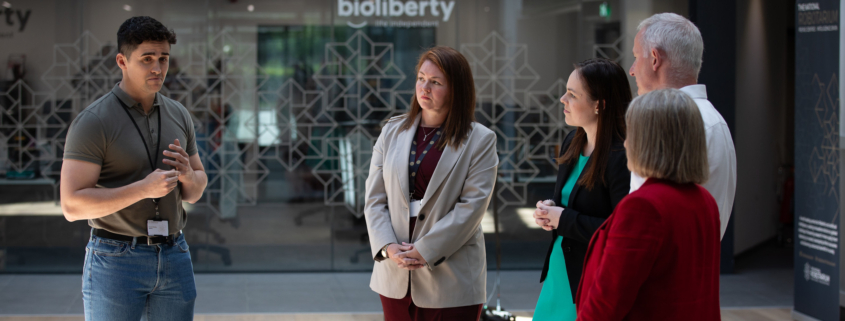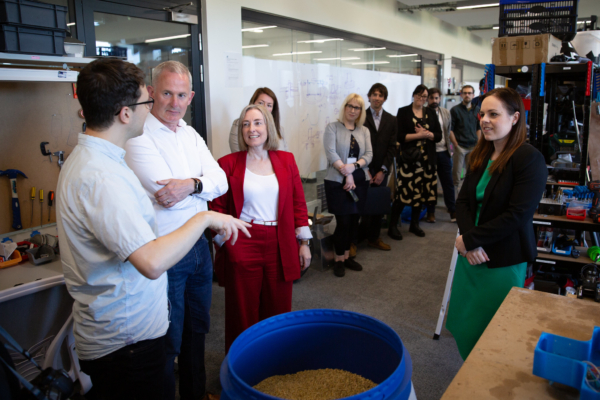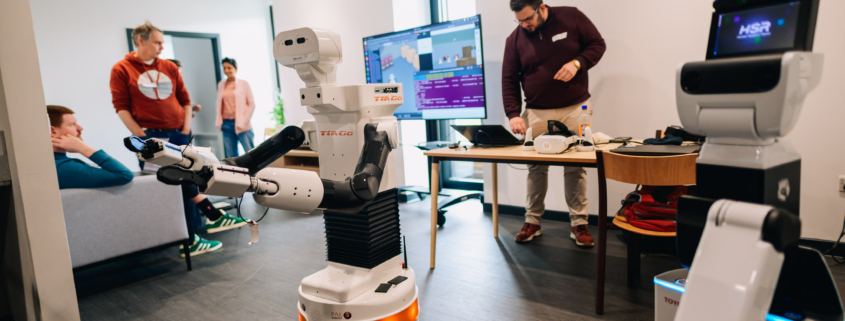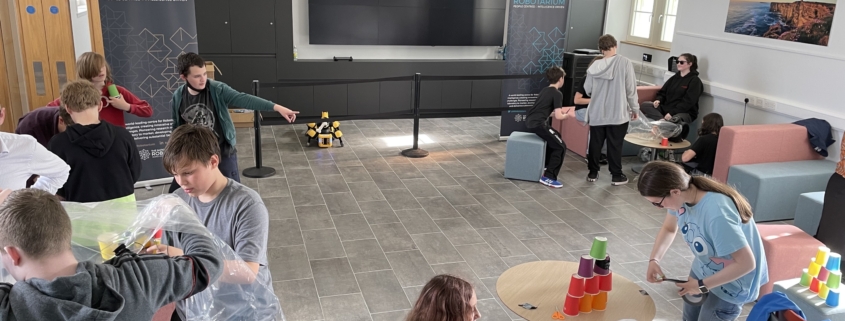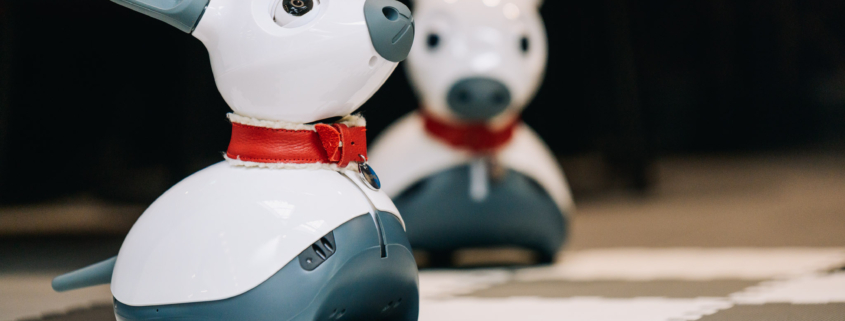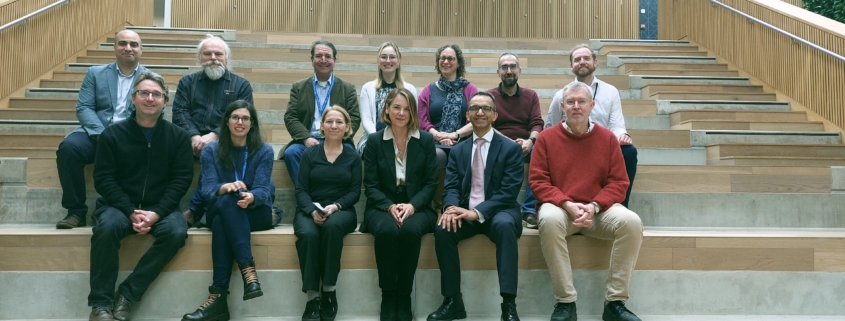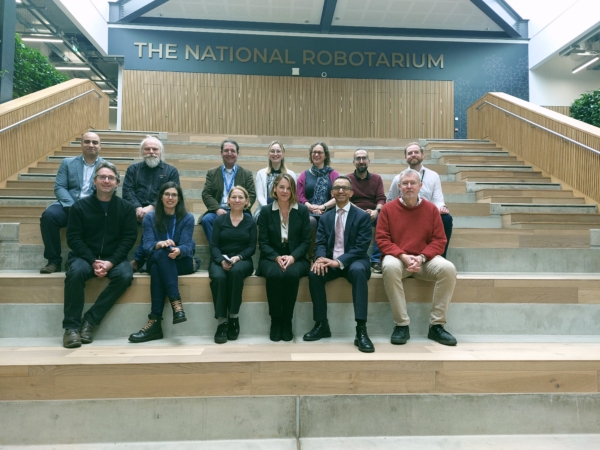

The National Robotarium is hosting the 2026 UK Robotics Summer School, taking place from 22-26 June 2026.
The Summer School, organised by the Edinburgh Centre for Robotics – a joint initiative between the University of Edinburgh and Heriot-Watt University and supported by the UK-RAS Network CDT D2AIR, will feature a week of expert-led lectures, tutorials, and industry talks covering some of the most important and fast-growing areas in robotics and artificial intelligence. Participants will also gain hands-on experience working with state-of-the-art robotics technology and platforms.
Key topics for 2026 include:
Bioinspired robotics
Generative AI for robotics
Healthcare robotics
Safe AI for robotics
The programme will also include an Industry Application Day, where industry partners will present current projects, real-world challenges, and emerging opportunities in robotics and autonomous systems.
In addition to the academic and technical programme, the Summer School provides excellent networking opportunities, bringing together students, researchers, and industry professionals from across the UK robotics and AI community. Registration includes refreshments, lunch, and the Summer School dinner, kindly sponsored by the UK-RAS Network.
Participants can register for the full week or choose to attend specific days depending on their availability and interests. The registration deadline is 29 May 2026.
A PhD researcher in Artificial Intelligence at Heriot-Watt University has been recognised in the 2026 OpenUK New Year’s Honours List.
OpenUK’s annual Honours List, now in its sixth year, celebrates individuals who have made exceptional contributions to open source software, open hardware, open data, open standards, and AI governance. The list highlights innovators and leaders advancing the UK’s position in the global open technology landscape.
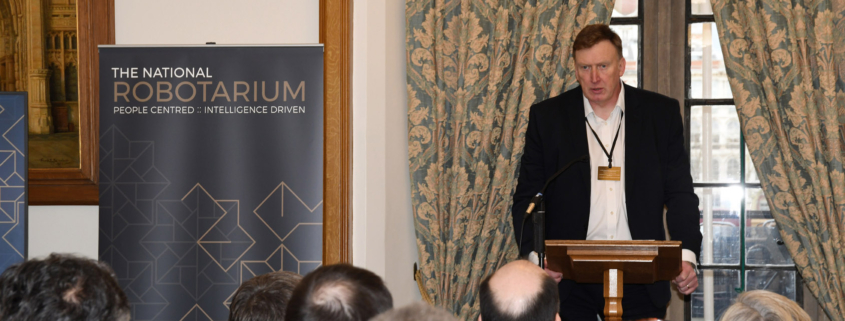
Godfrey Inyama, whose PhD is focused on conversational AI and dialogue systems within the National Robotarium’s Laboratory for Assistive Living (LARA), was included in the prestigious list for his research in ‘AI Openness’ within the UK’s technology ecosystem. Godfrey’s work on agentic AI and mixed-initiative dialogue systems to advance Human-Robot Interaction (HRI) and collaboration between humans and AI agents was also recognised in the AI category of the OpenUK Awards, where he was named runner-up at a special event held in the House of Commons in London.
Godfrey Inyama, PhD student in conversational AI and dialogue systems within the National Robotarium’s Human-Robot Interaction group
Godfrey said: “It is a massive honour to be included in the OpenUK New Year’s Honours List alongside an impressive array of great minds that are pushing the boundaries of Open Technology in the UK. I’m excited to see what the year ahead will bring, especially within the scope of Agentic AI for Mixed Initiative Dialogue.”
Godfrey works with the HRI research group, located in the Laboratory for Assistive Living (LARA), a unique test lab for developing assistive robots
Dr Mauro Dragone, a leading expert in HRI at The National Robotarium, is Godfrey’s researcher supervisor.
He said: “Godfrey is an excellent example of the talent nurtured at Heriot-Watt University.
“Having previously graduated from our MSc Robotics programme, he has consistently demonstrated outstanding work ethic, intellectual curiosity, and ambition. He is now pursuing a PhD focused on conversational Artificial Intelligence to support effective human–robot cooperation, an area of growing national importance.
“His work is strongly aligned with the strategic vision of the UK’s National Robotarium, which serves as a key advanced testbed for translating these technologies into real-world impact across multiple application domains. This research area will play an important role in strengthening the UK’s digital economy over the coming decade.”
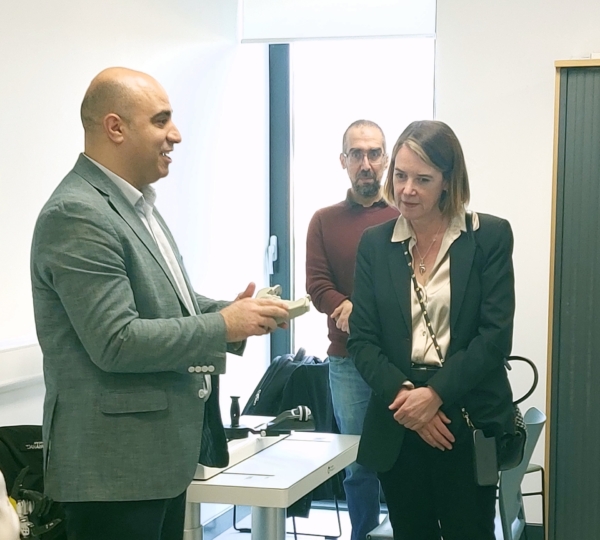
Dr Mauro Dragone, pictured here with health and social care practitioners in LARA, is a leading expert in HRI and Godfrey’s research supervisor
Amanda Brock, CEO of OpenUK, said of this year’s honourees: “The individuals recognised in the 2026 New Year’s Honours represent the cutting edge of open technology innovation and community engagement in the UK. Their work exemplifies the commitment required to build an open, collaborative digital future.”
The full OpenUK 2026 Honours List underscores the breadth of talent across the UK, featuring individuals from academia, startups, industry leaders, and community contributors. It reinforces the UK’s role as a global hub for open technology advancement and thought leadership.
For more details on the full 2026 Honours List and category recognitions, visit the OpenUK website.
https://thenationalrobotarium.com/wp-content/uploads/WhatsApp-Image-2026-01-03-at-21.07.11-3.jpeg20401530Louise Jackhttp://thenationalrobotarium.com/wp-content/uploads/Robotarium.pngLouise Jack2026-01-13 11:35:022026-01-13 11:45:28PhD student recognised in 6th OpenUK New Year Honours List
The Data-Driven Innovation (DDI) Programme, a strategic partnership led by the University of Edinburgh and Heriot-Watt University, from which The National Robotarium centre for robotics and Artificial Intelligence was created, has won the Collaborative Initiative of the Year award at the prestigious Institute of Economic Development (iED) Annual Awards 2025.
This year saw a record-breaking number of entries, with almost 60 submissions received for seven award categories, and shortlisted nominations were assessed by an expert judging panel in September.
The Collaborative Initiative of the Year award, which this year is sponsored by Recurve Solutions, recognises outstanding cross-sector economic development collaboration between two or more partners drawn from local authorities, private sector, third sector, business and academia.
The submission outlined how the £700 million Data-Driven Innovation Programme, supported by the £1.3 billion Edinburgh and South East Scotland City Region Deal, unites the University of Edinburgh and Heriot-Watt University with six regional councils and industry to transform South East Scotland into the data capital of Europe. Delivering new infrastructure, thousands of skilled graduates, and high-growth ventures, the DDI programme is driving both inclusive growth and global competitiveness.
iED Director and former Chair Bev Hurley CBE, who hosted the awards honouring achievements across the public and private sectors, said: “Our judges said the Data-Driven Innovation Programme exemplifies the power of strategic collaboration to drive inclusive economic growth. With over £200 million in investment, support for over 600 companies, and a robust skills pipeline, the initiative demonstrates both measurable impact and long-term sustainability. They reported the seamless integration of public, academic, and industry partners sets a new benchmark for regional innovation.
“Our judges also praised the programme’s scale, infrastructure, innovation capacity, skills development, and global relevance, noting that these combined strengths position it as a catalyst for widespread economic and social benefit. In addition, they described the DDI Programme as a flagship model of collaborative economic development, delivering innovation, skills, and infrastructure at scale, and said that it is a benchmark for data-led transformation.”
Reflecting on the award, Professor Kim Graham, Provost of the University of Edinburgh and Senior Responsible Officer for the Data Driven Innovation Programme, commented: “This award is fantastic recognition of the impact of the DDI programme. The partnership between the universities of Edinburgh and Heriot-Watt is a shining example of how place-based investment in innovation and skills can have a transformative effect on economic growth, jobs and productivity, benefiting people in the region and beyond.”
Stewart Miller, Chief Executive Officer of The National Robotarium, said: “The National Robotarium is proud to be a part of the Data-Driven Innovation programme, a shining example of how collaboration between academia and industry can drive technological progress and create opportunities that will benefit businesses and communities across the region, the UK and beyond.
“Congratulations to the DDI delivery team and to our partner hubs for this award success.”
To find out more about the Data-Driven Innovation initiative and its partner hubs, visit: https://ddi.ac.uk/
https://thenationalrobotarium.com/wp-content/uploads/IED-awards-1500x500-1.jpeg5001500Louise Jackhttp://thenationalrobotarium.com/wp-content/uploads/Robotarium.pngLouise Jack2025-11-27 12:53:082025-11-27 13:00:32Data-Driven Innovation Programme wins Collaborative Initiative of the Year award at iED Annual Awards 2025
On 2-3 September, The National Robotarium at Heriot-Watt University hosted The Scotland Forum, an initiative aimed at enhancing Scotland’s international engagement across economic development, intercultural relations and academic collaborations.
Led by Tasmina Ahmed-Sheikh OBE, former Member of UK Parliament for Ochil and South Perthshire, and facilitated with the Institute for Cultural Diplomacy, the event welcomed dignitaries and political leaders from across UK and European parliaments to explore how deeper engagement between Scotland and Europe could address pressing global challenges and generate strategic proposals and policy recommendations with the potential for national and global impact.
Keynote speakers at the forum, themed ‘Scotland’s Place in Europe: Promoting International Cooperation and Understanding’, included Former First Minister of Scotland, The Rt. Hon. Henry McLeish, Minister for Development Cooperation and Foreign Trade of Finland, Ville Skinnari, Former Prime Minister of Ireland, Bertie Ahern, Chair of the Lithuanian Green Party, Ieva Budraite, and Secretary of State for Exiting the European Union, Sir David Davis.
Speaking on behalf of the University were Associate Executive Dean for International and Partnerships, Professor Amos Haniff and Chief Operating Officer of The National Robotarium, Steve Maclaren, who welcomed guests to the global research institute for robotics and Artificial Intelligence on the first morning of the event, and spoke at that evening’s VIP dinner at Dynamic Earth.
Chief Operating Officer, Steve Maclaren (second left) and Professor Amos Haniff (furthest right) with Mark C. Donfried and representatives from The Institute for Cultural Diplomacy
Steve said: “It was honour to host so many great leaders and parliamentarians for The Scotland Forum and to contribute to discussions that could shape how Scotland and Europe work together on advancing innovation for years to come.
“As the UK’s National Robotarium, we are passionate about expanding our global networks and collaborating with a diverse range of partners that can support our mission to transform people’s lives, work and health through science, technology and robotics.”
As well as talks, panel discussions and workshops, the event included a gala dinner at Edinburgh Castle with a special lecture from lead singer and lyricist of Deep Purple, Ian Gillan.
https://thenationalrobotarium.com/wp-content/uploads/Scotland-Forum-group-pic-1000px.jpg6371000Louise Jackhttp://thenationalrobotarium.com/wp-content/uploads/Robotarium.pngLouise Jack2025-09-08 13:51:132025-09-08 14:54:56World leaders gather at The National Robotarium for international convention
A bold new series of public discussions that brings the spirit of the Scottish Enlightenment into the 21st century. Hosted at Heriot-Watt University’s Panmure House in the historic home of Adam Smith, these events explore the most pressing issues of our time through the lenses of Policy and Government, Economics, History, and Philosophy.
In partnership with Baillie Gifford, this programme reawakens the tradition of rigorous, respectful discourse that once filled these very rooms — where Smith and his contemporaries debated the great questions of their day, from American independence to taxation and the future of science.
AI & Education, Wednesday 20 August, 17:25
As AI transforms how we learn, teach, and think — what is the future of education?
We turn our attention to the classroom, the lecture hall, and the lifelong learner. From personalised learning algorithms to AI tutors and automated assessment, the education sector is undergoing a profound shift. But with these advances come urgent questions about equity, ethics, and the role of human educators.
Panel:
Professor Andrew Manches – Professor of Children at the University of Edinburgh
Dr Megan Crawford – Lecturer in Management & Strategy at Edinburgh Napier University, Business School
Moderated by:
Dr Thusha Rajendran – Professor of Developmental Psychology, Heriot-Watt University and member of the Edinburgh Centre for Robotics
AI & The Workplace, Thursday 21 August, 17:25
As AI reshapes the global economy, how will it redefine the nature of work? We explore the profound implications of AI on employment, productivity, and the human experience of labour. From automation and job displacement to the emergence of new industries and ethical dilemmas, this debate will examine how societies can adapt to — and shape — the future of work in an age of intelligent machines.
Panel:
Luke McKinney – Director of Consulting at Nile HQ, award-winning innovation designer and lecturer at The Glasgow School of Art
Dr Cailean Gallagher – Associate Lecturer at University of St Andrews Business School
Moderated by:
Dr Luciana Blaha – Assistant Professor in Business Management and Intelligent Automation at Heriot-Watt University School of Social Sciences
Each ticket includes a complimentary drink on arrival and the chance to tourAdam Smith’s final residence — a historic institution not normally open to the general public.
https://thenationalrobotarium.com/wp-content/uploads/Panmure-House-Fringe-e1754661557226.jpg4881080Louise Jackhttp://thenationalrobotarium.com/wp-content/uploads/Robotarium.pngLouise Jack2025-08-08 14:58:002025-08-28 12:42:54Panmure House Debates: AI and The Modern World – 20-21 August
A robotics firm based at The National Robotarium has reached a significant milestone by making its first commercial sale with the Offshore Renewable Energy (ORE) Catapult, the UK’s leading technology innovation centre for offshore renewables.
Frontier Robotics, based at the UK’s centre for robotics and AI at Heriot-Watt University, has developed advanced visual sensing and autonomy technology for subsea robots which will now be deployed at several sites including ORE Catapult’s new simulation platform VDARE (Virtual Demonstration and Assessment for Robotic Environments) at its DARE (Digital, Autonomous and Robotics Engineering) Centre in Blyth.
The company’s state-of-the-art camera can be mounted onto a remotely operated vehicle (ROV) to take true to life imagery of offshore assets such as wind turbines, and floating offshore wind platforms. These images are then incorporated into ORE Catapult’s VDARE simulation to create virtually ‘real’ assets.
Dr Jonatan Scharff-Willners, CEO of Frontier Robotics
The unpredictable nature of the world’s oceans makes the inspection and maintenance of offshore assets challenging, with visibility in murky waters a particular obstacle. By leveraging advanced sensor fusion techniques with edge computing, Frontier Robotics’ system offers enhanced visual clarity, robust and reliable positioning and 3D mapping through Simultaneous Localisation and Mapping (SLAM) technology.
SLAM enables ROVs to create comprehensive 3D maps of their surroundings while simultaneously tracking their own position within those environments, providing the foundations for automated and autonomous operations.
The new technology addresses critical challenges for the UK’s offshore wind sector, where more than 2,600 turbines across 43 wind farms require up to three maintenance checks annually. These operations can account for up to 20% of total offshore wind emissions through vessel operations and helicopter transfers. Improved monitoring will enable operators to make faster, better-informed decisions about maintenance operations, reducing both costs and carbon footprint.
Jonatan Scharff Willners, CEO of Frontier Robotics, said:
“Offshore renewable asset inspection is a very challenging and hazardous task in the energy sector. With the UK’s ambitious offshore expansion plans, innovative systems that enhance safety and efficiency aren’t just beneficial – they’re essential.
“This sale to ORE Catapult is really important and helps demonstrate the value of our technology to the market. We’re grateful to the National Robotarium for their support. Being based there, we have access to world-class facilities and exceptional engineering talent and that has accelerated our development timeline.
“Our vision is to become the default autonomy provider for underwater inspections globally, transforming how the industry approaches maintenance and monitoring, and this sale is a major milestone in our journey to delivering that vision.”
Ken Chan, Robotics Operation Lead at ORE Catapult, said:
“Our VDARE simulation platform has been created to accurately represent real world offshore assets and environments, with data integrated into our simulations that respond in real time.
“We have conducted underwater trials using robotics systems to map subsea environments, and have imported data mapping seabed structures, water clarity, temperature and salt levels to create interactive 3D scenes built on accurate, real-world measurements.
“Our mission is to de-risk offshore robotics and accelerate development timelines through affordable, modular, and scalable test environments, and the technology we are now using from Frontier Robotics is supporting us to do that.”
Lisa Farrell, Business Development Manager at the National Robotarium, said:
“Seeing Frontier Robotics develop from incorporation to now securing its first sale demonstrates what’s possible when we properly support innovation in Scotland’s high-growth sectors. Its success creates benefits that extend far beyond one company – strengthening our robotics ecosystem while helping critical industries like offshore energy operate more sustainably.
“The sale to ORE Catapult is a particularly exciting development for us as it coincides with our recent signing of an MOU (Memorandum of Understanding) with ORE Catapult and recent launch of the Blue Robotarium in Orkney, both of which mark our commitment to creating an industry-led robotics cluster and building robotic capabilities to advance the energy transition.
“This is exactly why the National Robotarium exists – to help promising technologies move from concept to commercial reality. We create an environment where talented innovators can access specialised resources rarely found in one location.”
The Frontier Robotics Advisory Board after their inaugural meeting at The National Robotarium
High-profile appointments to expert advisory board
To support its growth trajectory, Frontier Robotics has strengthened its leadership with the appointment of an expert advisory board. Simon Reeve, former Director of Innovation at the Alan Turing Institute and VP of Technology and Innovation at Lloyd’s Register, will chair the board.
He is joined by Mary Jane Brouwers, a highly regarded leader in the Scottish investment ecosystem with over 20 years of experience in early-stage equity investments. The board is completed by Professor Yvan Petillot, a renowned expert in robotics and autonomous systems at Heriot-Watt University, co-founder and ex CTO of SeeByte, and academic co-lead at the National Robotarium.
In addition to their commercial success, Frontier Robotics has bolstered its already impressive funding track record with two new funding grants. The first, from Scottish Enterprise, has seen the firm assess the development of photorealistic, 3D interactive models to significantly decrease the processing time of more commonly used photogrammetry techniques.
The second grant is from the AI Safety Institute for a project the company is working on with partners including King’s College London, and SeaBot Maritime. This project will build and test a training and competence framework to assure the safe and responsible use of AI and autonomy in marine environments and provide a mechanism for the maritime workforce to upskill and adopt the use of the technology as AI advances within the sector.
https://thenationalrobotarium.com/wp-content/uploads/An-underwater-Remotely-Operated-Vehicle-for-inspecting-offshore-assets-.jpg7501000Louise Jackhttp://thenationalrobotarium.com/wp-content/uploads/Robotarium.pngLouise Jack2025-07-31 11:13:062025-07-31 15:32:58Frontier Robotics secures first commercial sale with ORE Catapult
Scotland risks missing out on the global robotics revolution as other nations surge ahead in a market projected to reach £218 billion by 2030, but a major new policy paper published today (19 June 2025) by The National Robotarium shows how the country can still establish itself as a world leader.
Stewart Miller, CEO of the National Robotarium, a Heriot-Watt University Global Research Institute, has today launched the comprehensive policy discussion paper ‘Making Scotland a World Leader in Robotics’ warning that urgent action is needed to prevent Scotland from falling further behind international competitors, while outlining a clear pathway to robotics leadership.
“We’re at a critical juncture,” Miller said. “Countries like China, America, and Singapore are racing ahead in robotics adoption and innovation, while the UK ranks just 24th globally for robots per manufacturing worker. But Scotland has exceptional foundations that, with the right approach, could make us a global robotics powerhouse.”
CEO of the National Robotarium, Stewart Miller (credit Ben Glasgow photography)
The scale of the challenge facing Scotland, highlighted on the front page of The Herald when the policy paper launched, is sobering. Asia dominates with 72% of global robot installations, while Germany installs nearly eight times more robots than the entire UK. Denmark has become a robotics leader through strategic investment in collaborative robots and automation, creating a thriving ecosystem that attracts international companies and talent.
“Other nations aren’t waiting – they’re building robotics capabilities that will define their economic futures,” Miller explained. “While we’ve been developing excellent innovations, our European neighbours and countries like Australia have been creating the systems and support that turn innovation into economic leadership. We risk becoming developers of technology for other countries to commercialise.”
The policy paper highlights the stark reality of missed opportunities. Approximately 20,000 UK manufacturing SMEs currently operate without robotics technology, representing massive untapped potential. According to recent analysis, if UK automation levels matched leading countries, productivity could increase by 22%, potentially contributing £184 billion to the economy over the next decade.
The healthcare sector presents equally concerning gaps. While the global healthcare robotics market is projected to grow to £3.4 billion by 2028, Scotland struggles to translate its clinical expertise and innovation capability into systematic adoption, potentially missing out on £21.7 million in annual efficiency savings for NHS Scotland alone.
“We have companies like Edinburgh-based BioLiberty developing breakthrough stroke rehabilitation technology, but they’re launching in North American markets because we haven’t created the pathways for domestic success,” Miller said. “We’re funding innovations that primarily benefit other countries.”
Companies like Bioliberty have launched stroke rehabilitation technology Lifeglov (pictured) in North America due to lack of pathways to market in the UK
However, Miller’s analysis reveals that Scotland is uniquely positioned to reverse this trend and establish genuine robotics leadership. Unlike countries starting from scratch, Scotland possesses world-class research excellence, outstanding engineering heritage, and proven entrepreneurial spirit.
“The difference between concern and optimism is action,” Miller explained. “Scotland has all the ingredients needed – we just need to combine them more effectively. The National Robotarium has demonstrated what’s possible, supporting over 100 jobs and nurturing 14 innovative companies in less than three years. This success can be replicated and scaled.”
The policy paper identifies three sectors where Scotland can establish clear competitive advantages. The offshore renewables sector offers immediate opportunities, with robotics applications in wind farm operations alone representing a £341 million annual market by 2030. Scotland’s global leadership in offshore energy provides a natural platform for marine robotics excellence.
Healthcare presents extraordinary potential for Scottish innovation. With world-class clinical expertise and growing recognition among healthcare leaders of robotics possibilities, Scotland could become the global centre for healthcare robotics development.
Manufacturing offers perhaps the broadest opportunity, with Scotland’s expertise positioning it to capture significant market share as automation demand accelerates across thousands of ready-to-adopt businesses.
Stewart Miller (pictured with Robotics Engineer Coena Das) argues widespread adoption of robotics in UK manufacturing could lead to greater productivity and efficiencies
“Every challenge becomes an opportunity when viewed through the robotics lens,” Miller said. “NHS pressures could drive healthcare robotics innovation. Manufacturing skills shortages could accelerate automation adoption. Our offshore energy leadership could establish Scotland as the global centre for marine robotics.”
The emergence of embodied AI has created unprecedented opportunities for countries that move decisively. With over a hundred companies worldwide receiving billions in investment to develop genuinely human-capable systems, Scotland’s combination of AI expertise and robotics capability positions it perfectly for this next wave of innovation.
Miller emphasises that Scotland’s advantages extend beyond technology to include cultural and institutional strengths. The country’s collaborative approach between industry, academia, and government – exemplified by the National Robotarium’s ‘triple helix’ model – creates ideal conditions for rapid ecosystem development.
The National Robotarium’s track record provides compelling evidence of Scotland’s potential. Since launching in September 2022, the facility has become internationally recognised, with the Tony Blair Institute for Global Change citing its model in their landmark October 2024 report on robotics leadership. The recent expansion to Orkney through the International Blue Economy Robotarium demonstrates how targeted sector focus can accelerate market leadership.
Professor Gillian Murray, Deputy Principal of Business and Enterprise at Heriot-Watt University, said: “Heriot-Watt has a proud 200-year heritage of pioneering engineering and innovation that has shaped industries worldwide. The National Robotarium exemplifies our commitment to mobilising intellectual and capital assets for global impact. This policy paper demonstrates how Scotland can build on our university sector’s world-class research capabilities to establish genuine leadership in the technologies that will define the future economy.”
Deputy Principal of Business and Enterprise at Heriot-Watt University, Professor Gill Murray
The policy paper outlines a comprehensive vision for establishing Scotland as a global robotics powerhouse through four strategic initiatives:
Create Robotics Scotland as a national coordinating body to accelerate collaboration between research, industry, and international partners
Establish a National Healthcare Robotics Initiative to position Scotland as the global leader in medical robotics innovation
Launch a Marine Robotics Innovation Programme, leveraging Scotland’s offshore expertise to dominate this emerging market
Develop a National Robotics Skills Strategy, ensuring Scotland has the talent to lead across all robotics applications
Miller envisions these initiatives creating a virtuous cycle where Scottish success attracts international investment, talent, and partnerships, transforming Scotland from a country watching the robotics revolution to one leading it.
“We have all the building blocks in place,” Miller concluded. “Outstanding research through institutions like the National Robotarium, breakthrough innovations in technology, and world-class university capabilities. The question isn’t whether Scotland can become a robotics leader – it’s whether we’ll act quickly enough to make it happen.”
https://thenationalrobotarium.com/wp-content/uploads/Robots-and-human.jpg5721000Louise Jackhttp://thenationalrobotarium.com/wp-content/uploads/Robotarium.pngLouise Jack2025-06-19 11:06:142025-06-19 11:06:14Scotland risks being left behind in robotics revolution
The National Robotarium has launched a new work experience programme for secondary schools.
Overseen by Schools Engagement Lead (and former Computer Science teacher), Sabaht Bashir, the immersive week-long programme ran from 9-13 June 2025, offering a glimpse behind-the-scenes at the UK’s centre for robotics innovation.
The group, made-up of young people from schools across Scotland and England, kicked-off the week with a tour the facility’s high-spec labs and workshops, and the wider Heriot-Watt campus, taking in its vast green spaces and multi-million pound Oriam Sports Centre.
They learned about the different roles undertaken at the facility, ranging from Robotics Engineers and Technicians to Project Management and Marketing and Communications, as well as the different pathways to robotics careers, including Heriot-Watt University’s Graduate Apprenticeship scheme.
They also got hands-on experience operating some of the robotic technologies being developed for research and industry partners, such as the Boston Dynamics Spot robot dogs, as well as interacting with social engagement humanoid Ameca, and building their own robotic cars with the help of Senior Robotics Engineer Ronnie Smith. On the final day, members of the National Robotarium Leadership team judged their efforts during a presentation showcase in the main Atrium space.
Work experience participants with School Engagement Lead Sabaht Bashir, COO Steve Maclaren, Robotics Engineer Ronnie Smith, and Project Manager Rowanne Miller
Callum Samson, a 4th year pupil from St John’s RC High School in Dundee, was one of the participants. He said: “I really enjoyed work experience at the Robotarium – the members of staff were all really friendly. I was really surprised at how big the centre is, with lots of different jobs that are really interesting.
“Spending a week at The National Robotarium has changed my perceptions of robots and their levels of advancement. There are lots of different robots for different tasks however they need a lot of support and programming by humans to undertake these.
“I’ve really enjoyed my time here and definitely would like to come back when I’m older to study or work.”
Jakub Przybek from St Modan’s High School said: “Visiting The National Robotarium for work experience has opened my eyes to a whole new world of integrated robotics in so many different sectors.
“I’ve found robots can be used for every type of industry and aren’t just limited to mechanical or manufacturing tasks.
“I’d love to become a Robotics Engineer at the Robotarium when I’m older!”
Other participants in the group were Ben Lake, George Heriot’s, Manuel Amadiegwu, Dartford Grammar School, Alex Vynnytskyi, St Modan’s, Jamie Stephenson, The Priory Academy LSST, Daniel Gregor, Boroughmuir HS, and Alex Florea and Oakley Dow, both St Kentigerns Academy.
Want to know more about The National Robotarium’s work experience programme? Contact s.bashir@hw.ac.uk for information on 2025/26 opportunities.
https://thenationalrobotarium.com/wp-content/uploads/Image-12-scaled.jpeg25601920Louise Jackhttp://thenationalrobotarium.com/wp-content/uploads/Robotarium.pngLouise Jack2025-06-16 14:48:322025-06-16 16:02:50The National Robotarium work experience programme inspires budding roboticists
As part of the 2025 UK Robotics Summer School, expert researchers at Heriot-Watt University are hosting a roundtable discussion on ‘Responsible Research, Innovation and EDI in Robotics and AI’.
Speakers include Associate Professor of Computer Science Dr Ioannis Konstas, Professor of Economics Cristina Tealdi and Professor of Psychology Thusha Rajendran.
This FREE session, taking place on 2 June, is open to ALL (sign-up required).
‼️ Roundtable discussion on responsible research and innovation, Equality, Diversity, and Inclusion in Robotics and AI
📅 Monday 2 June
🕓 1600-1700
📍 HeriotWatt Postgraduate Centre, PG01
🎫 https://lnkd.in/e8-zeaSu
https://thenationalrobotarium.com/wp-content/uploads/Ben-Glasgow-134.jpg13632048Louise Jackhttp://thenationalrobotarium.com/wp-content/uploads/Robotarium.pngLouise Jack2025-05-20 10:36:102025-06-09 13:53:45‘Responsible Research, Innovation and EDI in Robotics and AI’ – Monday 2 June
European investors have gathered in Edinburgh to hear Scotland’s new advanced manufacturing strategy, alongside pitches from top-rated deep tech scaleups.
Investors and experts from the European Growth Deeptech Tech Tour joined key players from the Scottish tech ecosystem at the University of Edinburgh-led technology showcase EIE25.
Business champion Mark Logan presented Scotland’s Deep Tech Supercluster initiative, which aims to provide currently lacking scale-up pathways for innovative hardware companies rooted in advanced science and engineering.
The National Robotarium will co-lead the Supercluster in partnership with Scottish Enterprise and the National Manufacturing Institute Scotland, alongside Scottish universities including Edinburgh, Glasgow and Heriot-Watt. It will build a new large-scale advanced manufacturing facility in Renfrewshire and, from September, will add new high-value posts to existing facilities and services.
Mr Logan said: “The Deep Tech Supercluster creates additional pathways to scale for Scotland’s deep tech startups and spinouts. Complementary to the Techscaler initiative, it will provide facilities and services so that companies that require advanced manufacturing capabilities, in fields such as robotics and semiconductors, can grow.”
The Tech Tour event at The National Robotarium saw eight Scottish businesses pitch to European tech investors
Elsewhere at the joint EIE/Tech Tour event, 47 companies from across the world pitched for startup and scaleup investment, including eight Scottish businesses which were top rated out of 130 by the Tech Tour panel for their growth potential. Pitching companies raised a total of €1.3billion following the European Growth Deeptech Tech Tour event last year.
Deputy Principal for Business and Enterprise at Heriot-Watt, Professor Gill Murray introduced the event at The National Robotarium
Eight Scottish businesses came to The National Robotarium to pitch to Tech Tour and EIE investors. They were Bright Ascension (aerospace), Ceres Holographics (enhanced reality), IOtech Systems (industrial operating technologies), Novosound (ultrasound technology), pureLiFi (wireless communications), Skyrora (space rockets), Sofant Technologies (satellite communications) and Sunamp (thermal energy storage).
The session kicked-off with introductory speeches from Deputy Principal for Business and Enterprise at Heriot-Watt University, Professor Gill Murray, Director of Northface Ventures, David Farquhar, and Head of Digital Economy and Data Driven Business at The Scottish Government Stephen O’Neill.
https://thenationalrobotarium.com/wp-content/uploads/Tech-tour-land-scaled.jpeg22002560Louise Jackhttp://thenationalrobotarium.com/wp-content/uploads/Robotarium.pngLouise Jack2025-05-16 15:19:272025-05-16 15:33:43Scotland’s new tech strategy unveiled at technology showcase
We may request cookies to be set on your device. We use cookies to let us know when you visit our websites, how you interact with us, to enrich your user experience, and to customize your relationship with our website.
Click on the different category headings to find out more. You can also change some of your preferences. Note that blocking some types of cookies may impact your experience on our websites and the services we are able to offer.
Essential Website Cookies
These cookies are strictly necessary to provide you with services available through our website and to use some of its features.
Because these cookies are strictly necessary to deliver the website, refusing them will have impact how our site functions. You always can block or delete cookies by changing your browser settings and force blocking all cookies on this website. But this will always prompt you to accept/refuse cookies when revisiting our site.
We fully respect if you want to refuse cookies but to avoid asking you again and again kindly allow us to store a cookie for that. You are free to opt out any time or opt in for other cookies to get a better experience. If you refuse cookies we will remove all set cookies in our domain.
We provide you with a list of stored cookies on your computer in our domain so you can check what we stored. Due to security reasons we are not able to show or modify cookies from other domains. You can check these in your browser security settings.
Google Analytics Cookies
These cookies collect information that is used either in aggregate form to help us understand how our website is being used or how effective our marketing campaigns are, or to help us customize our website and application for you in order to enhance your experience.
If you do not want that we track your visit to our site you can disable tracking in your browser here:
Other external services
We also use different external services like Google Webfonts, Google Maps, and external Video providers. Since these providers may collect personal data like your IP address we allow you to block them here. Please be aware that this might heavily reduce the functionality and appearance of our site. Changes will take effect once you reload the page.
Google Webfont Settings:
Google Map Settings:
Google reCaptcha Settings:
Vimeo and Youtube video embeds:
Other cookies
The following cookies are also needed - You can choose if you want to allow them:
Privacy Policy
You can read about our cookies and privacy settings in detail on our Privacy Policy Page.