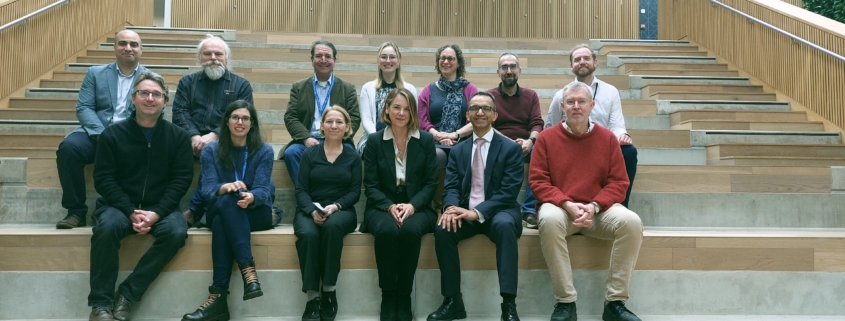
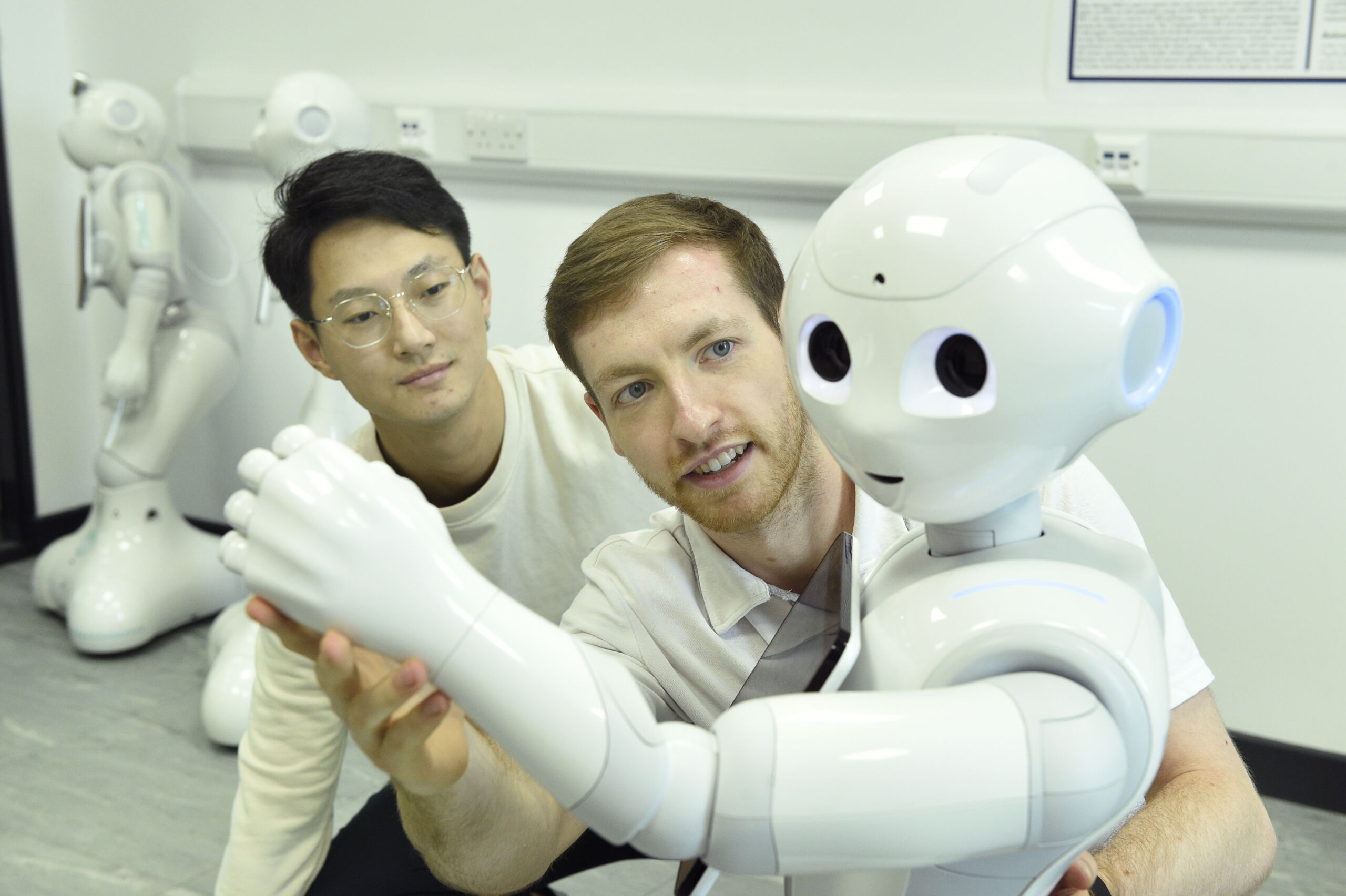
The National Robotarium is hosting the 2026 UK Robotics Summer School, taking place from 22-26 June 2026.
The Summer School, organised by the Edinburgh Centre for Robotics – a joint initiative between the University of Edinburgh and Heriot-Watt University and supported by the UK-RAS Network CDT D2AIR, will feature a week of expert-led lectures, tutorials, and industry talks covering some of the most important and fast-growing areas in robotics and artificial intelligence. Participants will also gain hands-on experience working with state-of-the-art robotics technology and platforms.
Key topics for 2026 include:
Bioinspired robotics
Generative AI for robotics
Healthcare robotics
Safe AI for robotics
The programme will also include an Industry Application Day, where industry partners will present current projects, real-world challenges, and emerging opportunities in robotics and autonomous systems.
In addition to the academic and technical programme, the Summer School provides excellent networking opportunities, bringing together students, researchers, and industry professionals from across the UK robotics and AI community. Registration includes refreshments, lunch, and the Summer School dinner, kindly sponsored by the UK-RAS Network.
Participants can register for the full week or choose to attend specific days depending on their availability and interests. The registration deadline is 29 May 2026.
The Data-Driven Innovation (DDI) Programme, a strategic partnership led by the University of Edinburgh and Heriot-Watt University, from which The National Robotarium centre for robotics and Artificial Intelligence was created, has won the Collaborative Initiative of the Year award at the prestigious Institute of Economic Development (iED) Annual Awards 2025.
This year saw a record-breaking number of entries, with almost 60 submissions received for seven award categories, and shortlisted nominations were assessed by an expert judging panel in September.
The Collaborative Initiative of the Year award, which this year is sponsored by Recurve Solutions, recognises outstanding cross-sector economic development collaboration between two or more partners drawn from local authorities, private sector, third sector, business and academia.
The submission outlined how the £700 million Data-Driven Innovation Programme, supported by the £1.3 billion Edinburgh and South East Scotland City Region Deal, unites the University of Edinburgh and Heriot-Watt University with six regional councils and industry to transform South East Scotland into the data capital of Europe. Delivering new infrastructure, thousands of skilled graduates, and high-growth ventures, the DDI programme is driving both inclusive growth and global competitiveness.
iED Director and former Chair Bev Hurley CBE, who hosted the awards honouring achievements across the public and private sectors, said: “Our judges said the Data-Driven Innovation Programme exemplifies the power of strategic collaboration to drive inclusive economic growth. With over £200 million in investment, support for over 600 companies, and a robust skills pipeline, the initiative demonstrates both measurable impact and long-term sustainability. They reported the seamless integration of public, academic, and industry partners sets a new benchmark for regional innovation.
“Our judges also praised the programme’s scale, infrastructure, innovation capacity, skills development, and global relevance, noting that these combined strengths position it as a catalyst for widespread economic and social benefit. In addition, they described the DDI Programme as a flagship model of collaborative economic development, delivering innovation, skills, and infrastructure at scale, and said that it is a benchmark for data-led transformation.”
Reflecting on the award, Professor Kim Graham, Provost of the University of Edinburgh and Senior Responsible Officer for the Data Driven Innovation Programme, commented: “This award is fantastic recognition of the impact of the DDI programme. The partnership between the universities of Edinburgh and Heriot-Watt is a shining example of how place-based investment in innovation and skills can have a transformative effect on economic growth, jobs and productivity, benefiting people in the region and beyond.”
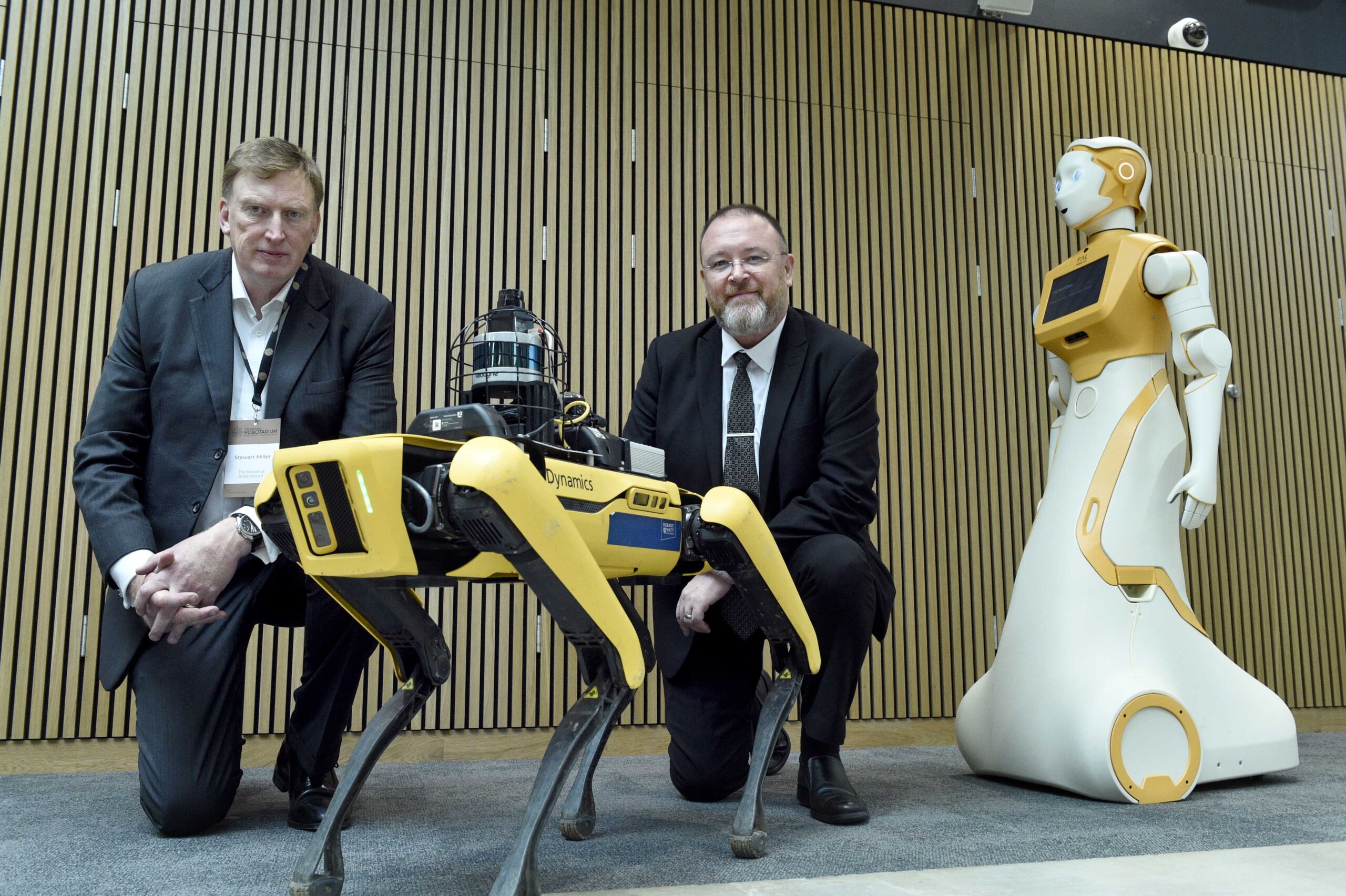
Stewart Miller, Chief Executive Officer of The National Robotarium, said: “The National Robotarium is proud to be a part of the Data-Driven Innovation programme, a shining example of how collaboration between academia and industry can drive technological progress and create opportunities that will benefit businesses and communities across the region, the UK and beyond.
“Congratulations to the DDI delivery team and to our partner hubs for this award success.”
To find out more about the Data-Driven Innovation initiative and its partner hubs, visit: https://ddi.ac.uk/
https://thenationalrobotarium.com/wp-content/uploads/IED-awards-1500x500-1.jpeg5001500Louise Jackhttp://thenationalrobotarium.com/wp-content/uploads/Robotarium.pngLouise Jack2025-11-27 12:53:082025-11-27 13:00:32Data-Driven Innovation Programme wins Collaborative Initiative of the Year award at iED Annual Awards 2025
From 15-17 September, robotics scientists, engineers, technicians, industry experts and robot enthusiasts joined together in Edinburgh for the first ever ROSCon UK.
The 3-day event – themed around ROS (Robotics Operating Systems) – included talks, tutorials, workshops and robot demonstrations, as well as tours of The National Robotarium and partner Data-Driven Innovation hub the Bayes Centre at The University of Edinburgh.
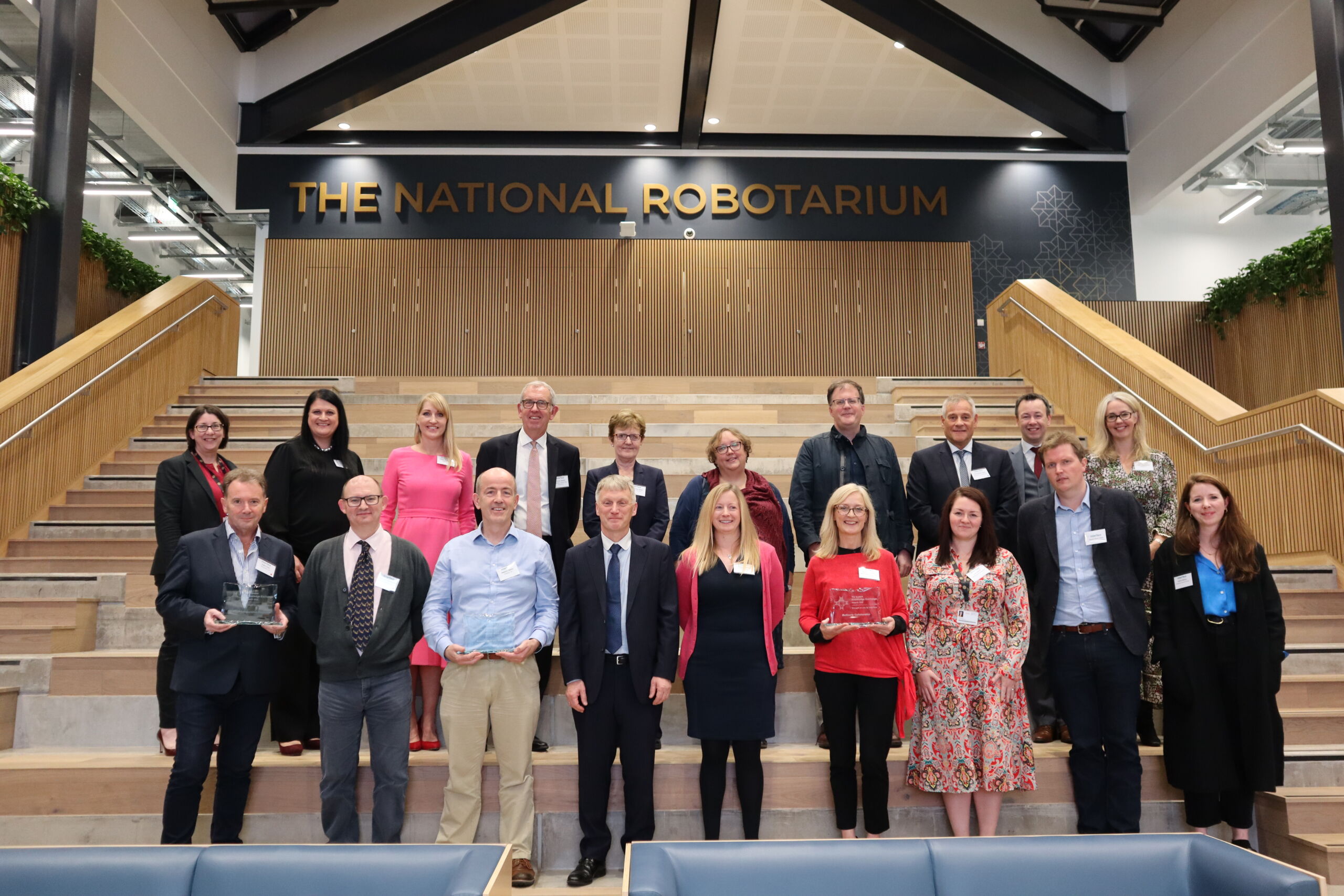
Attendees at the first ROSConUK (photo credit: Tartan Robotics Collective)
Over 150 attendees travelled to Scotland’s capital, where they heard talks from some of the world’s leading voices in robotics, including Dr Steve Cousins, Executive Director of the Stanford University Robotics Centre, Julien Enoch, Senior Solutions Architect at ZettaScale Technology, and Seamus McGinley, a Robotics Software Engineer at the National Oceanography Centre.
Robotics Engineer at The National Robotarium, Rahul Ramachandran, also delivered a talk at the conference, during which he gave an overview of an ongoing project that is integrating ROS2 with NVIDIA Isaac Sim technology to develop a digital twin of the centre’s co-bot station.
RosCon UK was created and delivered by the Tartan Robotics Collective, a charitable organisation that aims to promote scientific research and advance educational opportunities in robotics. Organisers included Head of Robotics at The National Robotarium, Dr Ingo Keller, Dr Alejandro Bordallo (The University of Edinburgh), Dr Bence Magyar and Tom Moore (both Locus Robotics), Dr Vladimir Ivan (Touchlab Ltd), Prof. Dr Sabine Hauert (University of Bristol), and Dr Hugo Sardinha (Launchpad Build).
Head of Robotics, Dr Ingo Keller (second from right) with the ROSConUK organising committee (photo credit: Tartan Robotics Collective)
Dr Keller said: “The team and I were thrilled to deliver the UK’s first ever ROSCon event, which attracted so many robot experts and enthusiasts from across the globe. The positive response to the conference from attendees, host institutions, and sponsors, has highlighted the level of interest and demand for strategic and informed discussions on robotic systems, which are primed to transform every aspect of our future lives.
“I’d like to thank everyone who attended and contributed to the success of the event, particularly my fellow organisers, our wonderful sponsors, and OSRF (Open Source Robotics Foundation) for their support.
“We are already looking forward to planning and organising next year’s event!”
Edinburgh was host of the first ever ROSCon UK event (photo credit: Tartan Robotics Collective)
The event coincided with a significant announcement by NVIDIA to play a leading role in advancing the UK’s AI infrastructure, for which the UK Government has committed an unprecedented £2 billion to physically deploy advanced AI across the country. The National Robotarium, along with other leading UK innovation centres, was namechecked in the global press release, ahead of an exclusive AI ecosystem event attended by Ingo in London, which was introduced by NVIDIA CEO and President Jensen Huang and Prime Minister Sir Keir Starmer MP.
https://thenationalrobotarium.com/wp-content/uploads/ROSCon_UK_2025-TIAGO-1000px.jpg6571000Louise Jackhttp://thenationalrobotarium.com/wp-content/uploads/Robotarium.pngLouise Jack2025-10-27 16:50:422025-10-27 16:52:15Highlights from the inaugural ROSConUK
A new programme to help companies manufacture deep tech products as they take them from prototype to market has been launched by Scottish Enterprise and The National Robotarium.
Deputy First Minister Kate Forbes today (11 September) officially launched the Deep Tech Growth Programme at a showcase event at the Bayes Centre, University of Edinburgh.
Deputy First Minister of Scotland, Kate Forbes MSP with MD, Innovation and Investment at Scottish Enterprise, Jane Martin at the programme launch event, held at The Bayes Centre on 11 Sept 2025
The pilot programme is part of the wider Deep Tech Supercluster and was hailed as a major milestone in Scotland’s innovation journey.
Companies signing up will benefit from wrap-around support from Scottish Enterprise, the National Manufacturing Institute Scotland (NMIS), The National Robotarium, Smart Things Accelerator Centre (STAC), Highlands and Islands Enterprise, universities and the private sector.
According to the Royal Academy of Engineering’s State of UK Deep Tech report, the UK deep tech sector now attracts more than £5 billion in annual venture capital. Deep tech industries are defined as those with substantial scientific or engineering foundations — covering fields such as quantum technologies, photonics, advanced sensors, biotechnology, robotics, satellites and advanced materials.
Business Development Manager (The National Robotarium) Lisa Farrell will lead the pilot of the Deep Tech Growth programme
In Scotland, these capabilities underpin high-growth global markets such as subsea systems, medical technologies, and space.
Deputy First Minister Kate Forbes said: “Deeptech is a fundamental building block of many of the technologies we use in our everyday life – as well as many others that underpin the success of future industries. It represents a high-growth economic opportunity and, as such, it is vital that we harness the huge talent and innovation lying across Scotland’s technology sector.
“We want to see more companies forming, growing and manufacturing here in Scotland. By providing access to public and private support, this supercluster presents a step-change in how we foster deeptech companies and help them to succeed. I look forward to the pilot proving a real game-changer for a number of our most exciting companies, providing them with the right support and expertise at the right time to ensure that they succeed, grow and flourish.”
Managing Director of Innovation and Investment at Scottish Enterprise Jane Martin said: “This exciting collaboration will help companies to manufacture scalable products ultimately anchoring more high-growth firms in Scotland, creating jobs, boosting exports, and attracting investment.
“We want to work with some of Scotland’s most exciting growth prospects intensively to determine the most effective approaches to ensure they can scale here in Scotland, working with public and private partners along the way to create a really joined up system for growth.”
CEO of The National Robotarium Stewart Miller said: “The National Robotarium is proud to be a key delivery partner of the Deep Tech Supercluster Programme. This is a very exciting time for tech companies in Scotland; we have the talent, the skills and the entrepreneurial spirit to rapidly make truly innovative technologies that can improve people’s lives.
“Scotland has a long legacy of technological firsts and programmes like the Deep Tech Supercluster initiative will help to harness the wide range of expert support available to help these fledgling companies scale-up and, crucially, help Scotland retain their valued skills and innovative creations.”
Among the companies showcasing today was Novosound, which is developing thin-film ultrasound sensors for healthcare, subsea inspection, and industrial markets.
Director of Research and Development at Novosound Daniel Irving said: “Having gone through the journey of prototyping and productising deep tech concepts, with the invaluable support of Scottish Enterprise, it’s fantastic to see a dedicated programme now in place to back the next generation of Scottish deep tech start-ups. This kind of targeted support is exactly what’s needed to help innovation thrive.”
The Deep Tech Supercluster Programme is supported by partners including enterprise agencies, Scottish Government, The National Robotarium, Smart Things Accelerator Centre and the National Manufacturing Institute Scotland.
The pilot begins in November 2025 as a manufacturing pathway and will provide tailored support, investment readiness, access to manufacturing facilities, and partner expertise.
Get involved
There are two ways to get involved in the Deep Tech Growth Programme;
As a deep tech company looking to scale: If you’re building a deep tech product with global potential – whether validating feasibility, preparing to scale manufacturing, or expanding into new markets – the programme will help you access the right partners, investment, and support to accelerate growth. Apply as a deep tech company.
As a strategic partner: If you’re a technical, manufacturing, design or investment organisation, you can connect early with high-potential companies, shape projects, and unlock new commercial opportunities via the Partner Pool. Apply as a strategic partner.
Expressions of interest must be submitted to enquiries@scotent.co.uk by midday on 24 October 2025.
https://thenationalrobotarium.com/wp-content/uploads/SE-and-Kate-Forbes-DTSC.jpg545968Louise Jackhttp://thenationalrobotarium.com/wp-content/uploads/Robotarium.pngLouise Jack2025-09-11 15:59:062025-09-15 10:10:34Deep Tech Supercluster Programme takes technologies from prototype to market
The National Robotarium is supporting a pioneering new initiative to monitor greenhouse gases in Edinburgh.
As part of the GEMINI+ project, led by Professor Paul Palmer and team from The University of Edinburgh’s School of Geosciences, a network of monitoring sites has been set-up across the city, using specialist instrumentation to map measurements of greenhouse gases, including carbon dioxide (CO₂) and methane.
The testing compound area at The National Robotarium, located in Riccarton as part of Heriot-Watt University’s campus, is being used as one base for the Bruker equipment, which will link up with similar instruments across other locations in the monitoring network, including Port of Leith Distillery, Queen Margaret University and The University of Edinburgh to continuously collect data. The network also includes automatic weather stations to monitor wind patterns, which are crucial for interpreting the gas measurements.
The sophisticated Bruker equipment autonomously gathers real-time greenhouse gas data
Dr Will Morrison a research scientist at The University of Edinburgh led the roll-out of the monitoring sites and currently analyses the data collected from each of the locations to quantify city-wide emission estimates of CO2 and methane. This information aims to inform long-term climate strategies for the city, which has a net-zero target by 2030.
Chief Operating Officer at The National Robotarium, Steve Maclaren
Chief Operating Officer at The National Robotarium, Steve Maclaren, was integral to the facility being involved in the study. He said: “As the UK’s leading robotics centre, we’re committed to developing new technologies that promote sustainability and create a cleaner, safer planet for all.
“Our purpose-built facility is powered by solar energy and was designed with energy efficiency at its core. Hosting one of the GEMINI instruments allows us to actively support Edinburgh’s long-term carbon-neutral goals and contribute to climate science in a meaningful way.”
The National Robotarium is one of six Data-Driven Innovation hubs, funded in partnership with The University of Edinburgh, as part of the £1.5bn Edinburgh and South-East Scotland City Region Deal.
https://thenationalrobotarium.com/wp-content/uploads/ROBOTARIUM-ROOF-1000px.jpg7491000Louise Jackhttp://thenationalrobotarium.com/wp-content/uploads/Robotarium.pngLouise Jack2025-08-19 17:25:382025-09-01 09:43:14The National Robotarium supports groundbreaking greenhouse gas monitoring initiative
European investors have gathered in Edinburgh to hear Scotland’s new advanced manufacturing strategy, alongside pitches from top-rated deep tech scaleups.
Investors and experts from the European Growth Deeptech Tech Tour joined key players from the Scottish tech ecosystem at the University of Edinburgh-led technology showcase EIE25.
Business champion Mark Logan presented Scotland’s Deep Tech Supercluster initiative, which aims to provide currently lacking scale-up pathways for innovative hardware companies rooted in advanced science and engineering.
The National Robotarium will co-lead the Supercluster in partnership with Scottish Enterprise and the National Manufacturing Institute Scotland, alongside Scottish universities including Edinburgh, Glasgow and Heriot-Watt. It will build a new large-scale advanced manufacturing facility in Renfrewshire and, from September, will add new high-value posts to existing facilities and services.
Mr Logan said: “The Deep Tech Supercluster creates additional pathways to scale for Scotland’s deep tech startups and spinouts. Complementary to the Techscaler initiative, it will provide facilities and services so that companies that require advanced manufacturing capabilities, in fields such as robotics and semiconductors, can grow.”
The Tech Tour event at The National Robotarium saw eight Scottish businesses pitch to European tech investors
Elsewhere at the joint EIE/Tech Tour event, 47 companies from across the world pitched for startup and scaleup investment, including eight Scottish businesses which were top rated out of 130 by the Tech Tour panel for their growth potential. Pitching companies raised a total of €1.3billion following the European Growth Deeptech Tech Tour event last year.
Deputy Principal for Business and Enterprise at Heriot-Watt, Professor Gill Murray introduced the event at The National Robotarium
Eight Scottish businesses came to The National Robotarium to pitch to Tech Tour and EIE investors. They were Bright Ascension (aerospace), Ceres Holographics (enhanced reality), IOtech Systems (industrial operating technologies), Novosound (ultrasound technology), pureLiFi (wireless communications), Skyrora (space rockets), Sofant Technologies (satellite communications) and Sunamp (thermal energy storage).
The session kicked-off with introductory speeches from Deputy Principal for Business and Enterprise at Heriot-Watt University, Professor Gill Murray, Director of Northface Ventures, David Farquhar, and Head of Digital Economy and Data Driven Business at The Scottish Government Stephen O’Neill.
https://thenationalrobotarium.com/wp-content/uploads/Tech-tour-land-scaled.jpeg22002560Louise Jackhttp://thenationalrobotarium.com/wp-content/uploads/Robotarium.pngLouise Jack2025-05-16 15:19:272025-05-16 15:33:43Scotland’s new tech strategy unveiled at technology showcase
The UNITE project, an EPSRC Prosperity Partnership programme spearheaded by The National Robotarium and Heriot-Watt University in collaboration with Imperial College London, was Highly Commended in the Multi-party Collaboration category at the 2025 Interface Scottish Knowledge Exchange awards.
The project team, which includes global geo-data specialists Fugro and Heriot-Watt spinout technology company Frontier Robotics, is developing advanced AI and autonomous systems for undertaking remote inspections of offshore wind farms to offer a safe, efficient and sustainable solution for global energy providers.
Picking up the prize on the night from Minister for Business, Richard Lochhead MSP was Project Manager, David Morrison, Director and Co-Founder of Frontier Robotics, Jonatan Scharff Willners, Head of the Robot Motor Intelligence (RoMI) lab, Dr Carlos Mastalli and postdoctoral student Hefan Wang.
Yvan Petillot, Professor of Robotics at Heriot Watt University and National Robotarium academic lead, commented:
“The National Robotarium’s partnership between Fugro and the UNITE project has created an exciting opportunity to develop this next generation of underwater technologies as well as the skills and expertise needed to support the transition to net zero. UNITE has enormous potential to power the UK’s offshore renewable sector and beyond, delivering worldwide economic and environmental impact that can benefit communities around the world.”
Adding to the evening’s achievements, Heriot-Watt was part of a team that claimed the Innovation of the Year award through the collaborative spin-out SolarSub Ltd. Working alongside partner universities, SolarSub Ltd has developed groundbreaking solar-powered autonomous underwater vehicles, significantly enhancing sustainable subsea operations. These innovative vehicles provide environmentally friendly solutions for extended underwater monitoring and exploration, supporting diverse industries from environmental research to offshore renewable energy.”
Minister for Business, Richard Lochhead MSP said:
“It was good to see the full breadth of academic and business-led innovation on show at Interface’s annual awards.
“Scotland has been at the forefront of many of the world’s most impactful innovations, from the MRI Scanner and penicillin to televisions and telephones. Yet, by combining research and business, so many new and exciting Scottish breakthroughs are just on the horizon and that is something we should all champion.”
The awards, now in their tenth year, were held at Edinburgh Futures Institute and celebrated exceptional collaborations between academia and industry that deliver economic, environmental and social benefits for Scotland. UNITE was recognised for its innovative KE consortium, which brings together a long legacy of scientific research alongside industry expertise and new autonomous and AI technologies.
Heriot-Watt’s Medical Device Manufacturing Centre (MDMC), scooped the main prize in the same category, topping off an successful evening for the institution.
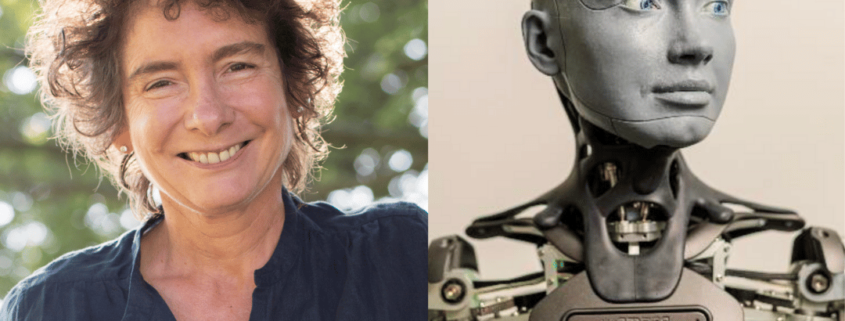
Ameca, one of the world’s most advanced humanoids, will take to the stage for a one-on-one interview with nationally decorated author Jeanette Winterson, as part of the Edinburgh Futures Institute (EFI) official launch event.
The robot, recently installed at The National Robotarium, a world-leading centre for robotics and artificial intelligence (AI) at Heriot-Watt University, will share its thoughts on the rapid advancement of AI in society and how people’s lives, work and learning will be impacted by the development of these technologies.
Also speaking at the event, taking place 7 October, is the National Robotarium’s Head of Robotics, Dr Ingo Keller, who will join a panel discussion with Jeanette and Chair JL Williams for a deep-dive into the future of robots and how human trust and relationships robots will evolve as the technology gets increasingly more sophisticated.
‘Jeanette Winterson: In Conversation with Ameca’ kicks-off EFI’s new season of events, Learning Curves, its first since renovation work was completed on the building. It also marks the first joint event delivered by EFI and The National Robotarium, both partner hubs of the Data-Driven Innovation initiative, funded as part of the Edinburgh and South-East Scotland City Region Deal to make the region the data capital of Europe.
Researchers in Robotics and Artificial Intelligence (AI) from Heriot-Watt University and The University of Edinburgh hosted a visit from Caroline Lamb, NHS Scotland Chief Executive and Director – General Health and Social Care, at the National Robotarium on 18 March. The purpose of the visit was to showcase the latest innovations in robotics for healthcare being developed by scientists.
Led by Professor Lynne Baillie, Heriot-Watt’s world-leading expert in Human-Robot Interaction (HRI), the visit included an introduction from Chief Executive of the Robotarium, Stewart Miller, followed by a tour of the high-spec HRI labs and selection of demonstrations from researchers developing cutting-edge robotics and AI solutions to support people’s health, wellbeing and social care, and reduce pressure on clinical and healthcare staff.
Prof. Kia Nazarpour (University of Edinburgh), Dr Theo Georgiou (Heriot-Watt University) and Caroline Lamb
Examples of research included the FEATHER project, a ground-breaking study that is utilising AI and smart home sensors to monitor living habits and enable the early detection of urinary tract infections (UTIs). The project team, a partnership with the Robotarium and School of Informatics at Edinburgh University, is working with social care and residential homes to develop the smart data systems and help improve patient care for the condition, which affects 150 million people worldwide.
The Horizon Europe project SPRING, led by academic co-lead at the National Robotarium Professor Oliver Lemon, was also featured during the tour, with a demonstration of the socially-assistive ARI robots, which have been providing advice and comfort to elderly patients and those with cognitive decline in a hospital in Paris. Recent news of the study has captured the public’s imagination and garnered significant media interest worldwide.
The varied and comprehensive programme also included talks and visual presentations from Research Assistants and doctoral students from Edinburgh Centre for Robotics covering topics such as robotics-assisted surgery and assessment, automated upper-limb protheses and rehabilitation, robotic exoskeletons, wearable devices to combat drug overdoses, healthcare sensors, long-term monitoring resources for an ageing population, and legged robots.
Caroline was accompanied by Professor Soumen Sengupta, Chief Officer of South Lanarkshire Health and Social Care Partnership, throughout the visit. Following the tour, they joined scientists and business figures from the Robotarium in a roundtable discussion on the future of applications of robotics in the NHS and beyond.
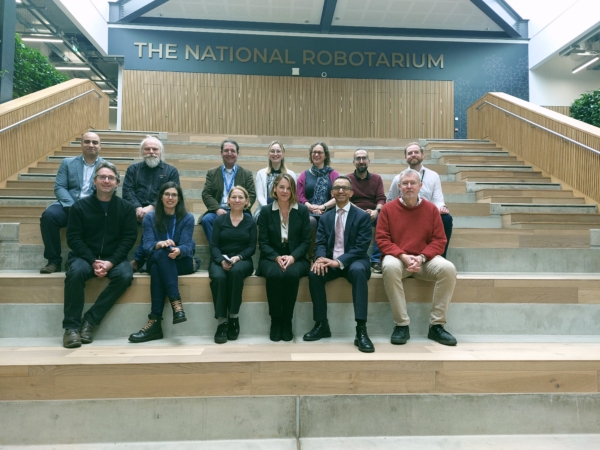
The visit was organised and led by Professor Lynne Baillie (front row, third from left)
Professor Lynne Baillie said: “On behalf of the research teams at Heriot-Watt and The University of Edinburgh, I’d like to express my gratitude to Caroline and Soumen for taking the time to visit the National Robotarium and learn about the wide-ranging robotic applications and solutions we’re developing with input from the health and social care industry.
“As Chief Executive of NHS Scotland and lead of the Digital Health and Care Directorate, Caroline was interested in learning about new innovations that can complement the existing care and support being given to patients across the country.
“Scotland’s population is ageing more rapidly than ever before. That, alongside the pandemic and other public health crises, is putting strain on existing health services, leading to longer waiting lists and staff burnout. We believe that the safe and responsible application of robotics, AI and data could provide solutions to current challenges facing the sector, facilitating independent-living for longer and improving patient wellbeing overall.”
Professor Soumen Sengupta, Chief Officer of South Lanarkshire University Health and Social Care Partnership, said: “Innovation and collaboration with partners across the nation is crucial to how increasingly sophisticated care is being delivered, compassionately, in and with communities.
“Indeed, this is something we are actively committed to in South Lanarkshire and across Lanarkshire as a whole.
“These are challenging times for health and social care services – which further reinforces the importance of innovation and collaboration with strategic partners such as our universities.
“From the stimulating presentations and lively discussions with colleagues from Heriot-Watt University and The University of Edinburgh, it is clear that there is huge scope to build upon the exciting developments that are already being progressed with the NHS in Scotland, and to expand the opportunities for collaboration in relation to social care and housing.
“We all clearly share a common, resolute commitment to the ongoing exchange of learning and experience with a view to harnessing all the potential of technology to enhance the vital work of our health and care staff and to improve the quality of lives across our diverse communities.
“I very much look forward to our harnessing the expertise and enthusiasm that is evident within the National Robotarium to contribute to the transformation of health and social care right across Scotland.”
https://thenationalrobotarium.com/wp-content/uploads/20240318_145730-scaled.jpg19202560Louise Jackhttp://thenationalrobotarium.com/wp-content/uploads/Robotarium.pngLouise Jack2024-03-27 10:00:492024-03-27 10:20:39Health and social care robots showcased for NHS Scotland Chief Executive
Funding for a new training centre to make robots safer and more trustworthy has been announced for the Edinburgh Centre for Robotics.
The new UKRI Centre for Doctoral Training in Dependable and Deployable Artificial Intelligence for Robotics – shortened to CDT-D2AIR (pronounced ‘dare’) – will train new PhD students in verification and certification systems for robotics and AI.
The aim of the centre, delivered in partnership by experts from Heriot-Watt University and The University of Edinburgh, is to ensure that robotics applications in the home and in industry – such as AI assistants to help with independent living or robotic machinery in manufacturing and construction – can interact safely with the environment and users. Postgraduate students in the CDT will be given access to high-spec lab space, robotics equipment and expertise at the National Robotarium as part of their studentship.
The centre is being awarded a share of £117 million funding by UK Research and Innovation (UKRI) – the UK’s national funding agency for investing in science and research – as one of 12 new Centres for Doctoral Training announced by the UK’s Department for Science, Innovation and Technology in the week of the AI Safety Summit 2023.
The successful submission, driven by former National Robotarium academic co-lead Professor Helen Hastie, highlighted the opportunity and need for students to be able to build skills and understanding around AI, verification, design and robotics, ensuring the UK is equipped with the knowledge to develop AI-driven robotic technologies that are trustworthy, dependable and ethical for end users and industry. The centre builds on work already being undertaken by the UKRI TAS (Trustworthy Autonomous Systems) Node in Trust, which Professor Hastie and others at Heriot-Watt are involved in.
Professor Ron Petrick, a Professor of Computer Science at Heriot-Watt University and a world-leading researcher in automated planning and robotics, is Director of the new D2AIR Centre for Doctoral Training.
He said: “There is a clear need for robotics and AI systems be certifiable, reliable and capable of interacting safely with people and the environment. While AI methods are being increasingly used in robotics, much of this technology was not originally designed with safety and other important human-centred requirements in mind. Making AI truly applicable to, and deployable in, robotic solutions will require advanced sets of skills and a new way of thinking.”
Professor Petrick said examples such as generative AI assistants – embodied as robots or speakers – that are deployed in the home to help with independent living, had to converse and collaborate safely. Robots that can sense and interact in their environment for manufacturing and construction also had to work in challenging and extreme environments.
“Crucially, in all of these cases, the safety of autonomous systems is key to their deployability, especially when they need to operate around people,” he added.
Professor Petrick said D2AIR would build a new talent pipeline of graduates who can think in new ways around researching, designing, building and deploying dependable and safe robotics solutions.
“This pipeline will increase productivity, catapulting the UK as a world-leader in trustworthy robotics and AI technologies,” Professor Petrick said.
UKRI said £117 million funding in total had been awarded to 12 Centres for Doctoral Training in Artificial Intelligence based at 16 universities. The investment will continue to ensure that the UK has the skills needed to seize the potential of the AI era, and to nurture the British tech talent that will push the AI revolution forwards, UKRI said.
Michelle Donelan, UK Secretary of State for Science, Innovation and Technology, said: “The UK is at the very front of the global race to turn AI’s awesome potential into a giant leap forward for people’s quality of life and productivity at work, all while ensuring this technology works safely, ethically and responsibly.
“The plans we are announcing today will future-proof our nation’s skills base, meaning we can reap the benefits of AI as it continues to develop. At the same time, we are taking the first steps to put the power of this technology to work, for good, across Government and society.”
UKRI Chief Executive, Professor Dame Ottoline Leyser, said: “The UK is in a strong position to harness the power of AI to transform many aspects of our lives for the better. Crucial to this endeavour is nurturing the talented people and teams we need to apply AI to a broad spectrum of challenges, from healthy aging to sustainable agriculture, ensuring its responsible and trustworthy adoption. UKRI is investing £117 million in Centres for Doctoral Training to develop the talented researchers and innovators we need for success.”
https://thenationalrobotarium.com/wp-content/uploads/DSC0223-copy-scaled.jpg17072560Louise Jackhttp://thenationalrobotarium.com/wp-content/uploads/Robotarium.pngLouise Jack2023-11-02 12:32:122023-11-02 12:46:02New training centre created to make robots safer and more trustworthy
We may request cookies to be set on your device. We use cookies to let us know when you visit our websites, how you interact with us, to enrich your user experience, and to customize your relationship with our website.
Click on the different category headings to find out more. You can also change some of your preferences. Note that blocking some types of cookies may impact your experience on our websites and the services we are able to offer.
Essential Website Cookies
These cookies are strictly necessary to provide you with services available through our website and to use some of its features.
Because these cookies are strictly necessary to deliver the website, refusing them will have impact how our site functions. You always can block or delete cookies by changing your browser settings and force blocking all cookies on this website. But this will always prompt you to accept/refuse cookies when revisiting our site.
We fully respect if you want to refuse cookies but to avoid asking you again and again kindly allow us to store a cookie for that. You are free to opt out any time or opt in for other cookies to get a better experience. If you refuse cookies we will remove all set cookies in our domain.
We provide you with a list of stored cookies on your computer in our domain so you can check what we stored. Due to security reasons we are not able to show or modify cookies from other domains. You can check these in your browser security settings.
Google Analytics Cookies
These cookies collect information that is used either in aggregate form to help us understand how our website is being used or how effective our marketing campaigns are, or to help us customize our website and application for you in order to enhance your experience.
If you do not want that we track your visit to our site you can disable tracking in your browser here:
Other external services
We also use different external services like Google Webfonts, Google Maps, and external Video providers. Since these providers may collect personal data like your IP address we allow you to block them here. Please be aware that this might heavily reduce the functionality and appearance of our site. Changes will take effect once you reload the page.
Google Webfont Settings:
Google Map Settings:
Google reCaptcha Settings:
Vimeo and Youtube video embeds:
Other cookies
The following cookies are also needed - You can choose if you want to allow them:
Privacy Policy
You can read about our cookies and privacy settings in detail on our Privacy Policy Page.