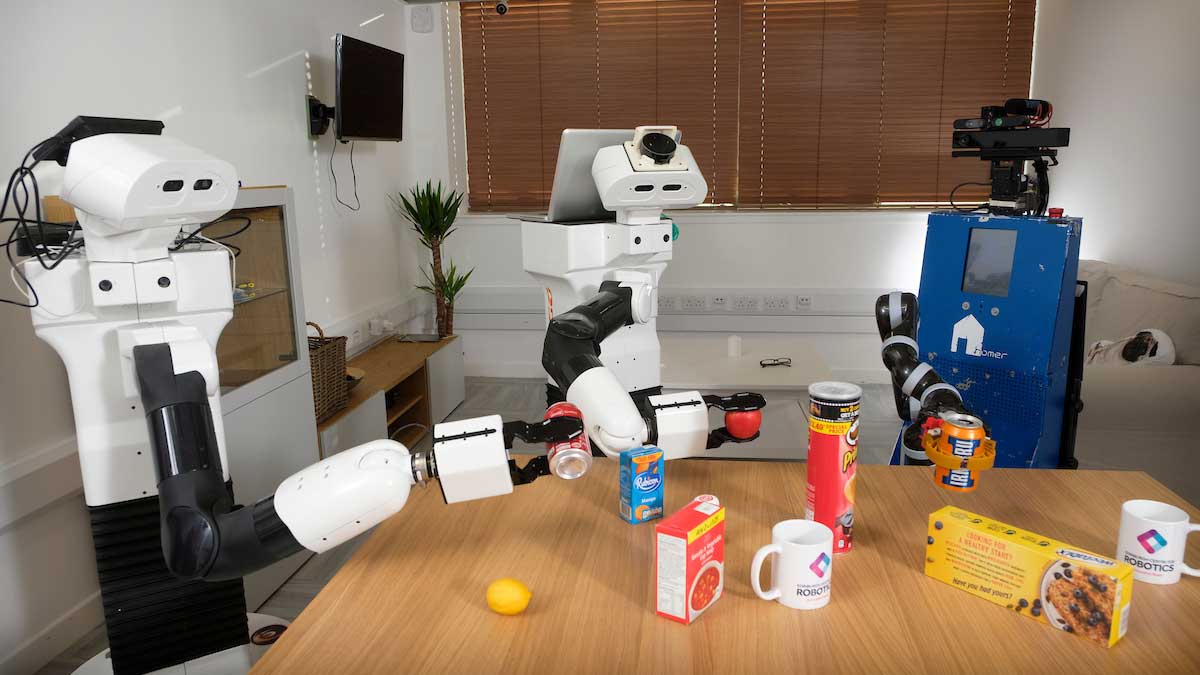
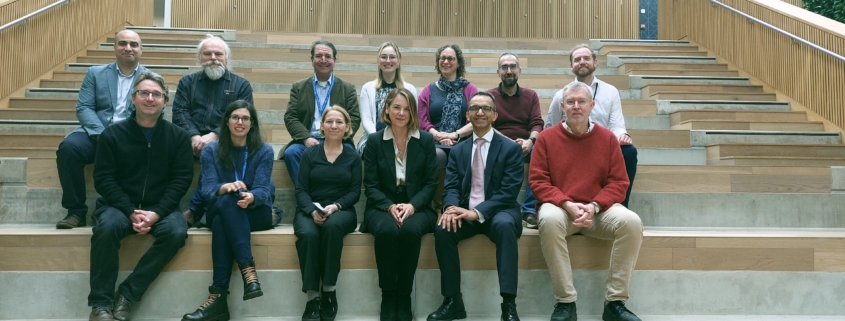
The National Robotarium is hosting the 2026 UK Robotics Summer School, taking place from 22-26 June 2026.
The Summer School, organised by the Edinburgh Centre for Robotics – a joint initiative between the University of Edinburgh and Heriot-Watt University and supported by the UK-RAS Network CDT D2AIR, will feature a week of expert-led lectures, tutorials, and industry talks covering some of the most important and fast-growing areas in robotics and artificial intelligence. Participants will also gain hands-on experience working with state-of-the-art robotics technology and platforms.
Key topics for 2026 include:
Bioinspired robotics
Generative AI for robotics
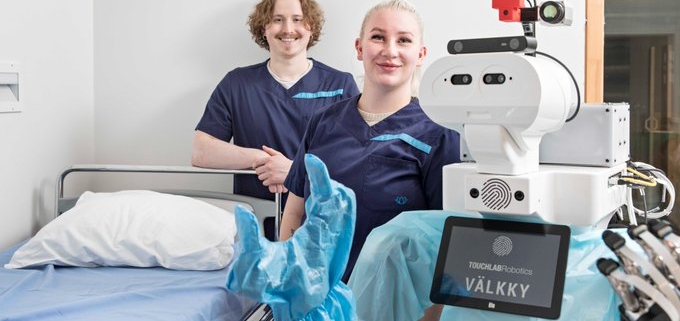
Healthcare robotics
Safe AI for robotics
The programme will also include an Industry Application Day, where industry partners will present current projects, real-world challenges, and emerging opportunities in robotics and autonomous systems.
In addition to the academic and technical programme, the Summer School provides excellent networking opportunities, bringing together students, researchers, and industry professionals from across the UK robotics and AI community. Registration includes refreshments, lunch, and the Summer School dinner, kindly sponsored by the UK-RAS Network.
Participants can register for the full week or choose to attend specific days depending on their availability and interests. The registration deadline is 29 May 2026.
In an opinion piece, originally published by The Herald on 13 December 2024, Business Development Manager Lisa Farrell outlines how robotic technologies can be adopted to address the NHS crisis.
As the UK Government conducts its consultation on a 10-year plan for the NHS’s future, the discussion inevitably focuses on funding pressures and waiting lists. Yet in this vital debate about modernising our health service, we risk missing a transformative opportunity: robotics. This technology offers two crucial benefits – supporting our overwhelmed healthcare workers while simultaneously building a powerful new economic sector, with Scotland at its heart.
The UK’s robotics sector lags behind other G7 countries, but Scotland’s integrated health service and world-class universities, combined with an emerging robotics cluster, give us distinct advantages to change this trajectory. The National Robotarium in Edinburgh is already demonstrating this potential – developing technologies that could both support our NHS and create high-value jobs.
..we must think bigger. By positioning NHS Scotland as an “informed customer” for robotics, we could provide the secure market needed for Scottish manufacturers to scale up and innovate.
The global healthcare robotics market is projected to reach £24 billion by 2035. With strategic investment and coordinated action, Scotland could capture a significant share of this growing market while simultaneously improving our health service. This aligns with both the NHS’s needs and the UK’s broader economic interests – as a recent report from the Tony Blair Institute noted, robotics will increasingly become “the arms and legs of AI” in delivering real-world impact.
Consider the practical impacts. Automated porters are already operating in Glasgow hospitals, moving linen and equipment, and freeing up staff time. Robotic pharmacy assistants are supporting medication management, meaning humans can offer consultations and chronic medication service reviews rather than doing admin. And in Lanarkshire, social robots are being pioneered to support independent living and reduce pressure on staff. These early examples show Scotland’s potential to lead in healthcare innovation.
But we must think bigger. By positioning NHS Scotland as an “informed customer” for robotics, we could provide the secure market needed for Scottish manufacturers to scale up and innovate. This would create a virtuous cycle – as healthcare providers benefit from improved efficiency, manufacturers gain the confidence to invest in research and development.
The prize is substantial. With NHS Scotland’s annual budget exceeding £18 billion, even modest efficiency improvements through robotics could generate significant savings for reinvestment. More importantly, we could create thousands of high-skilled jobs in manufacturing, engineering, and technology, while freeing up existing healthcare staff to focus on patient care.
This isn’t just about healthcare technology though – it’s about economic transformation. By developing expertise in healthcare robotics, Scotland could export both products and knowledge globally. Our universities could attract international talent and investment. Our manufacturers could build new revenue streams.
However, this opportunity requires coordinated action between NHS Scotland, the Scottish Government, manufacturers, and research institutions. We need strategic investment in a robotics supply chain, supportive regulation that ensures patient safety while encouraging innovation, and skills development for the workforce of tomorrow.
The foundations are being laid – now we need the vision and commitment to build on them. With the right support and investment, Scotland could help pioneer how robotics transforms healthcare delivery across the UK while building a powerful new economic sector. The alternative is watching other countries seize these opportunities while we import their solutions. The choice – and the opportunity – is ours.
Researchers at the National Robotarium are working with an innovative new health and care facility in Lanarkshire to advance development of the next generation of assistive robotics.
Blantyre LIFE, a ground-breaking care development which opened last year, has already forged an international reputation for pioneering increasingly sophisticated care and expertise in the heart of a community. Several fact-finding missions have been undertaken to see how technology is being used to make day-to-day living easier and safer, including service-users having the opportunity to learn how to live independently as possible in a tech-enabled homes.
Now, in a taste of things that could come, South Lanarkshire University Health and Social Care Partnership have welcomed the arrival of the National Robotarium’s ARI, a ‘social robot’, with human-like characteristics.
Two weeks of research, supported by experts from the Human-Robot Interaction Research group at the National Robotarium, the world-leading centre for robotics and artificial intelligence (AI) at Heriot-Watt University’s Edinburgh campus, have been underway to gather feedback from health and social care staff on an early robot prototype that aims to assist people recovering after critical injury.
Professor Soumen Sengupta, Chief Officer of South Lanarkshire University HSCP said:
“The foundation of our partnership is made up of the human compassion of the expertise of our staff.
“The presence of ARI represents our commitment to both amplifying – not replacing – that expertise with latest technology and working with academic partners in a highly innovative space.
“It also characterises our dedication to helping shape emerging and existing opportunities that rapidly evolving technology could have for the future of health and care delivery.”
The research team is led by the Head of Human-Robot Interaction (HRI) at the National Robotarium Professor Lynne Baillie.
Professor Baillie said:
“We’re developing the ARI robot to support the self-management of rehabilitation by patients. The robot will offer verbal instruction and encouragement during exercise sessions as well as using its human-like limbs to physically demonstrate how to do exercises properly.
“We believe that this engagement can help empower patients to stick with their exercise regime and improve their overall wellbeing.”
Whilst patients aren’t yet involved in the research, Carl Bettosi, a PhD student in HRI at the Edinburgh Centre for Robotics, who is supervised by Professor Baillie, has been working closely with health and social care professionals at Blantyre LIFE to gather data which will inform future versions.
He said: “A key focus of our research is the ability of the robot to make some decisions autonomously and thus reduce the burden on healthcare staff. To do this, we will develop cutting-edge decision-making techniques driven by machine learning.
“It’s amazing to come to a place like Blantyre LIFE and see how technology is being embraced and used alongside hard-earned human expertise and compassion. We hope to work with Blantyre again in the near future.”
The National Robotarium, one of six Data Driven Innovation hubs funded in partnership with The University of Edinburgh, works directly with industry to test and develop robotic, AI and automated technologies, creating innovative solutions to global challenges. Scientists from the facility have been working in tandem with Blantyre LIFE to explore how robotics can support healthcare professionals and improve patient wellbeing.
Lisa Farrell, Business Development Manager, said:
“We’re on a mission at The National Robotarium to create new robotics technologies that can support clinicians and healthcare professionals whilst stimulating growth and innovation within the health services. However, it’s crucial that any robotics solutions are developed with the end user in mind.
“Collaborating with facilities like Blantyre LIFE allows us to work closely with experts in health and social care throughout the testing and development stage. Their lived experience helps us understand their priorities when working with patients, allowing us to build robotic systems that are safe, effective, and user-friendly.”
WATCH: Carl and ARI at Blantyre LIFE:
https://thenationalrobotarium.com/wp-content/uploads/HSCP-Blantyre-Life-Ari-scaled-e1724425982193.jpg6671000Louise Jackhttp://thenationalrobotarium.com/wp-content/uploads/Robotarium.pngLouise Jack2024-08-26 00:01:092024-08-23 18:11:34The National Robotarium and Blantyre LIFE: The future of robotics-assisted care
This article was originally published by Frankie Macpherson in healthandcare.scot on Monday 28 April
A new project has spotlighted the potential of robotic technical to support independent living and social engagement for people living in assisted residential accommodation, at the same time as ensuring a quick response when things go wrong.
Scottish researchers partnered with charity and specialist home care provider, Blackwood Homes and Care to explore how robotics might work alongside, and potentially improve, Blackwood’s existing care systems.
Lead researcher and expert in assistive robotics, Heriot-Watt University’s Dr Mauro Dragone said:
“Robotics offers a powerful solution for independent living, enabling remote monitoring, reducing staff pressures, and increasing personal choice and care flexibility. Projects like this help de-risk innovation by embedding technical expertise into care environments, ensuring reliability and user acceptance.
“To achieve lasting impact, partnerships — such as with the National Robotarium at Heriot-Watt — are essential.
“They provide the research, support and training needed to scale new technologies responsibly and effectively across Scotland’s health and care sector.”
Temi: robot first responders
The Temi is being used as a first responder for residents at Blackwood Homes and Care, providing 24/7 support.
At the heart of the project was the ‘Temi’ robot, which was integrated with the digital telecare systems already used across three buildings in Glasgow. Temi could reach people in their apartments to help Blackwood’s Homes and Care 24/7 emergency response team and carry out routine health and wellbeing check-ins.
Dr Dragone said that the robots have been developed with input from staff and residents. He said: “These robots acted as first responders, automatically travelling to residents’ flats during emergencies and enabling live video contact with care teams. Unlike traditional devices, they ensured support even when residents couldn’t access their phones or tablets.
“Beyond emergency response, the robots also carried out daily mental health and wellbeing check-ins.
“Developed through co-design with residents and staff, the robot could ask questions, play music, and facilitate contact with the care team — adding value to day-to-day life and increasing social interaction.
“One of the most successful aspects of the collaboration between the research team at Heriot-Watt University and the innovation team in Blackwood was these participatory design activities, to understand their concerns but also their aspiration, preferences and desires for the new technology.”
Participants in the trial reported increased satisfaction with the enhanced service, highlighting Temi’s contribution to both social engagement and accessibility of care services.
A care work team leader who attended one of the sessions demonstrating how the robotics work described themselves as “totally converted” from a non-believer in robotics to seeing it as something that can help “shape the future of care”.
The UK’s National Robotarium played a ‘pivotal role’ in advancing robotic and software solutions through this partnership, with Heriot-Watt researchers developing “custom software and user interfaces” for Temi.
The research team also trained staff, and integrated the system within Blackwood’s residences, and now hope to continue to advance robotic-assisted independent living and care.
One person involved in the trial said they had “immensely enjoyed” the process, adding:
“I initially got involved as I was curious about what robotics encompassed, and despite being unsure about technology, I kept an open mind. From the very first workshop, I saw how they could be of benefit. Contributing ideas from a service user point of view felt such a privilege and now that I have seen my ‘mental health check-in’ idea has been incorporated into the robot, is just mind blowing!
“It makes me feel not only proud of my idea, but more importantly, that it can be of benefit to others. That makes me happy to know that someone else might feel better because of it.”
Remote triage
One challenge the teams worked to address for remote care staff is that systems often rely on the person who is in trouble to trigger an emergency video call.
The researchers explain this can “difficult to manage”, as it may not be possible if someone has fallen out of sight of the device or is feeling ill or confused.
Dr Mauro Dragone showcases the Temi robot to health and social care practitioners with the National Robotarium Laboratory for Robotic Assistive living (LARA).
Dr Dragone explained Temi could respond to an emergency being trigged without residents using a phone or tablet. It travels from the ground floor, using the building’s lifts if needed, to reach and connect residents with a virtual care team through a live video feed. Once connected, the responder from the remote care team takes control of the robot, assesses the situation and can speak to the resident.
He said: “This allowed remote staff to assess the situation accurately and quickly enhanced emergency response and enabling care even during travel restrictions.
“Temi is a mobile robot with a tablet and camera for video calls, combined with obstacle detection, navigation software, and the ability to operate lifts and doors.
“While Temi doesn’t currently carry out physical tasks, Heriot-Watt is now developing smart home devices and modular robotic furniture to work alongside robots like Temi — extending their support potential in care settings.”
He added that this is particularly helpful during stations where there are travel or social distancing restrictions, as seen during the COVID crisis.
Dr Dragone emphasised that robotics is an increasing key component of independent living, not just for remote monitoring but also promoting social connections and self-management at times of self-isolation or travel restrictions.
Find out how our cutting-edge technology and expertise can help your business
https://thenationalrobotarium.com/wp-content/uploads/Mauro-Dragone-at-EMERGENCE.jpg6661000Louise Jackhttp://thenationalrobotarium.com/wp-content/uploads/Robotarium.pngLouise Jack2025-04-28 17:03:262025-04-28 18:05:13Enhancing independent living with robotics
Robotic ‘coaches’ aiding upper limb rehabilitation for stroke and brain injury survivors have been successfully trialled in Vienna, Austria. This international pilot study was led by researchers from the National Robotarium.
The VITALISE (Virtual Health and Wellbeing Living Lab Infrastructure) project, funded by the Horizon Europe programme and led by the National Robotarium’s Human Robot Interaction (HRI) team, has developed a system where socially assistive robots communicate with patients using a headset that detects brain neural activity.
Developed with the AIT Austrian Institute of Technology, the robot processes these signals to understand the user’s movement intention during exercises, providing real-time verbal motivation, visual mimicry, and feedback as they complete specific movements.
This research aims to make it easier and more engaging for people to adhere to prescribed self-managed rehabilitation routines by providing personalised support based on individual needs, cognitive capability, and exercise pace.
“We envision a future where patients have access to personalised robotic coaches that support clinicians and experts to deliver even more successful rehabilitation journeys.” – Professor Lynne Baillie
Around 80% of acute stroke and brain injury survivors have an upper limb impairment, limiting arm movement. This often long-term impairment can significantly affect an individual’s independent living and daily activities.
Improving functions after cognitive injuries requires task-specific repetitive exercise. However, 60% of stroke survivors may suffer from forgetfulness, and only 31% complete their prescribed rehabilitation routines. Lack of motivation and immediate progress indicators can contribute to this low exercise uptake.
Over three months, the VITALISE team worked with 16 stroke and brain injury survivors and six therapists to test the robot-assisted rehabilitation system’s ability to understand user intention and provide personalised motivation. They explored whether a robot could detect a person’s intended exercise movement using brain signal data and then mimic that motion in real-time to demonstrate an exercise.
Through questionnaires and interviews, researchers gathered feedback on the robot’s success at motivating exercise, building user trust, and overall ease of use. This evaluation has helped investigate the potential for socially assistive robots with neural interfaces to provide tailored support for self-managed rehabilitation.
The National Robotarium is part of the Data-Driven Innovation initiative, supported by £21 million from the UK Government and £1.4 million from the Scottish Government. The initiative aims to turn Edinburgh into the data capital of Europe and is part of the wider £1.5 billion Edinburgh and South-East Scotland City Region Deal.
Lynne Baillie, Professor of Computer Science at Heriot-Watt University and academic lead at the National Robotarium for human-robot interaction, assistive living and health, said:
“We know that sustained, repetitive exercises are crucial for recovery after a stroke or brain injury. However, without supervision, it can be challenging for survivors to stay motivated. Our research shows the incredible potential for these technologies to understand users’ needs and empower them to achieve recovery goals.
“At the National Robotarium, our ambition is to develop automated technologies that assist and empower people, including those managing health conditions, to remain independent in their homes for longer. This successful pilot represents an important milestone toward that vision, demonstrating how we can thoughtfully design robotics to deliver better health outcomes for vulnerable groups like stroke and brain injury survivors.”
Markus Garschall, scientist at the AIT Austrian Institute of Technology, Center for Technology Experience, and Vice President of AAL AUSTRIA, added:
“Especially in the field of eHealth, co-design methods are very helpful and work well. It was important for us to examine the user experience as well as the feasibility of the approach for both people with hemiparesis and physiotherapists.
“At the same time, the transnational collaboration with scientists from Scotland was also very inspiring; we need much more European cooperation and exchange, especially in the healthcare sector.”
The pilot study was funded under the European Union’s Horizon2020 Research and Innovation Programme as part of the larger VITALISE project for advancing rehabilitation infrastructure.
https://thenationalrobotarium.com/wp-content/uploads/Researchers-trial-robotic-coaching-using-a-head-band-that-can-interpret-brain-signals-scaled.jpg13112560Louise Jackhttp://thenationalrobotarium.com/wp-content/uploads/Robotarium.pngLouise Jack2024-08-20 10:11:562024-08-20 10:11:56Robots help guide self-managed rehabilitation for stroke and brain injury survivors
Researchers in Robotics and Artificial Intelligence (AI) from Heriot-Watt University and The University of Edinburgh hosted a visit from Caroline Lamb, NHS Scotland Chief Executive and Director – General Health and Social Care, at the National Robotarium on 18 March. The purpose of the visit was to showcase the latest innovations in robotics for healthcare being developed by scientists.
Led by Professor Lynne Baillie, Heriot-Watt’s world-leading expert in Human-Robot Interaction (HRI), the visit included an introduction from Chief Executive of the Robotarium, Stewart Miller, followed by a tour of the high-spec HRI labs and selection of demonstrations from researchers developing cutting-edge robotics and AI solutions to support people’s health, wellbeing and social care, and reduce pressure on clinical and healthcare staff.
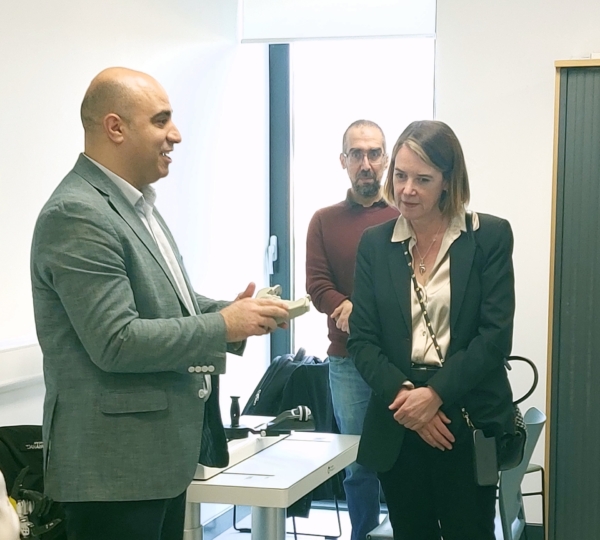
Prof. Kia Nazarpour (University of Edinburgh), Dr Theo Georgiou (Heriot-Watt University) and Caroline Lamb
Examples of research included the FEATHER project, a ground-breaking study that is utilising AI and smart home sensors to monitor living habits and enable the early detection of urinary tract infections (UTIs). The project team, a partnership with the Robotarium and School of Informatics at Edinburgh University, is working with social care and residential homes to develop the smart data systems and help improve patient care for the condition, which affects 150 million people worldwide.
The Horizon Europe project SPRING, led by academic co-lead at the National Robotarium Professor Oliver Lemon, was also featured during the tour, with a demonstration of the socially-assistive ARI robots, which have been providing advice and comfort to elderly patients and those with cognitive decline in a hospital in Paris. Recent news of the study has captured the public’s imagination and garnered significant media interest worldwide.
The varied and comprehensive programme also included talks and visual presentations from Research Assistants and doctoral students from Edinburgh Centre for Robotics covering topics such as robotics-assisted surgery and assessment, automated upper-limb protheses and rehabilitation, robotic exoskeletons, wearable devices to combat drug overdoses, healthcare sensors, long-term monitoring resources for an ageing population, and legged robots.
Caroline was accompanied by Professor Soumen Sengupta, Chief Officer of South Lanarkshire Health and Social Care Partnership, throughout the visit. Following the tour, they joined scientists and business figures from the Robotarium in a roundtable discussion on the future of applications of robotics in the NHS and beyond.
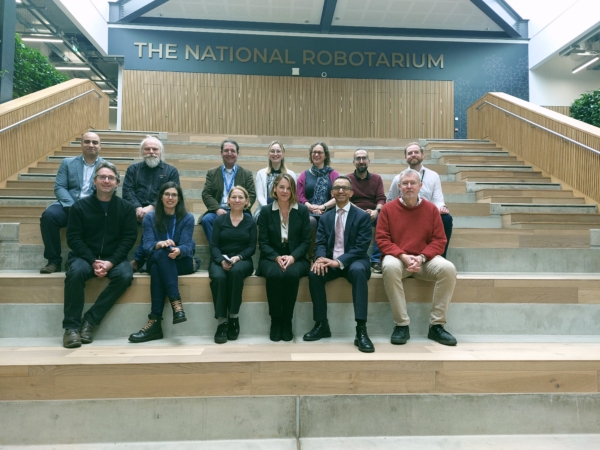
The visit was organised and led by Professor Lynne Baillie (front row, third from left)
Professor Lynne Baillie said: “On behalf of the research teams at Heriot-Watt and The University of Edinburgh, I’d like to express my gratitude to Caroline and Soumen for taking the time to visit the National Robotarium and learn about the wide-ranging robotic applications and solutions we’re developing with input from the health and social care industry.
“As Chief Executive of NHS Scotland and lead of the Digital Health and Care Directorate, Caroline was interested in learning about new innovations that can complement the existing care and support being given to patients across the country.
“Scotland’s population is ageing more rapidly than ever before. That, alongside the pandemic and other public health crises, is putting strain on existing health services, leading to longer waiting lists and staff burnout. We believe that the safe and responsible application of robotics, AI and data could provide solutions to current challenges facing the sector, facilitating independent-living for longer and improving patient wellbeing overall.”
Professor Soumen Sengupta, Chief Officer of South Lanarkshire University Health and Social Care Partnership, said: “Innovation and collaboration with partners across the nation is crucial to how increasingly sophisticated care is being delivered, compassionately, in and with communities.
“Indeed, this is something we are actively committed to in South Lanarkshire and across Lanarkshire as a whole.
“These are challenging times for health and social care services – which further reinforces the importance of innovation and collaboration with strategic partners such as our universities.
“From the stimulating presentations and lively discussions with colleagues from Heriot-Watt University and The University of Edinburgh, it is clear that there is huge scope to build upon the exciting developments that are already being progressed with the NHS in Scotland, and to expand the opportunities for collaboration in relation to social care and housing.
“We all clearly share a common, resolute commitment to the ongoing exchange of learning and experience with a view to harnessing all the potential of technology to enhance the vital work of our health and care staff and to improve the quality of lives across our diverse communities.
“I very much look forward to our harnessing the expertise and enthusiasm that is evident within the National Robotarium to contribute to the transformation of health and social care right across Scotland.”
https://thenationalrobotarium.com/wp-content/uploads/20240318_145730-scaled.jpg19202560Louise Jackhttp://thenationalrobotarium.com/wp-content/uploads/Robotarium.pngLouise Jack2024-03-27 10:00:492024-03-27 10:20:39Health and social care robots showcased for NHS Scotland Chief Executive
On 27 January, The National Robotarium hosted First Minister for Scotland, John Swinney MSP, as he delivered a speech on how The Scottish Government plans to transform the nation’s health and care system.
In his speech to leading experts and clinicians from across the Scottish healthcare sector, the First Minister, introduced by CEO of The National Robotarium, Stewart Miller, and Cabinet Secretary Neil Gray MSP, highlighted the government’s commitment to improving patient care through the expansion of digital and AI solutions, including the launch of a new Digital Front Door health and social care app by the end of 2025.
Cabinet Secretary for Health and Social Care, Neil Gray MSP
The National Robotarium centre for robotics and AI was commended in the speech by for its pursuit to advance robotics to modernise the health service, utilising robotic, automated systems and smart systems to alleviate staff workloads and reduce waiting times. Mr Swinney also referenced a recent think piece by Lisa Farrell, Business Development lead for healthcare robotics at The National Robotarium, which highlights the need for investment into a dynamic, strategic vehicle to support rapid innovation and adoption of new technologies across NHS Scotland.
The event was attended by Heriot-Watt Principal, Professor Richard Williams, alongside leading experts, clinicians and decision makers from NHS Scotland and health charities, and watched online through The Scottish Government’s social media live stream. A number of robotics start-ups working in the healthcare sector were also in the audience.
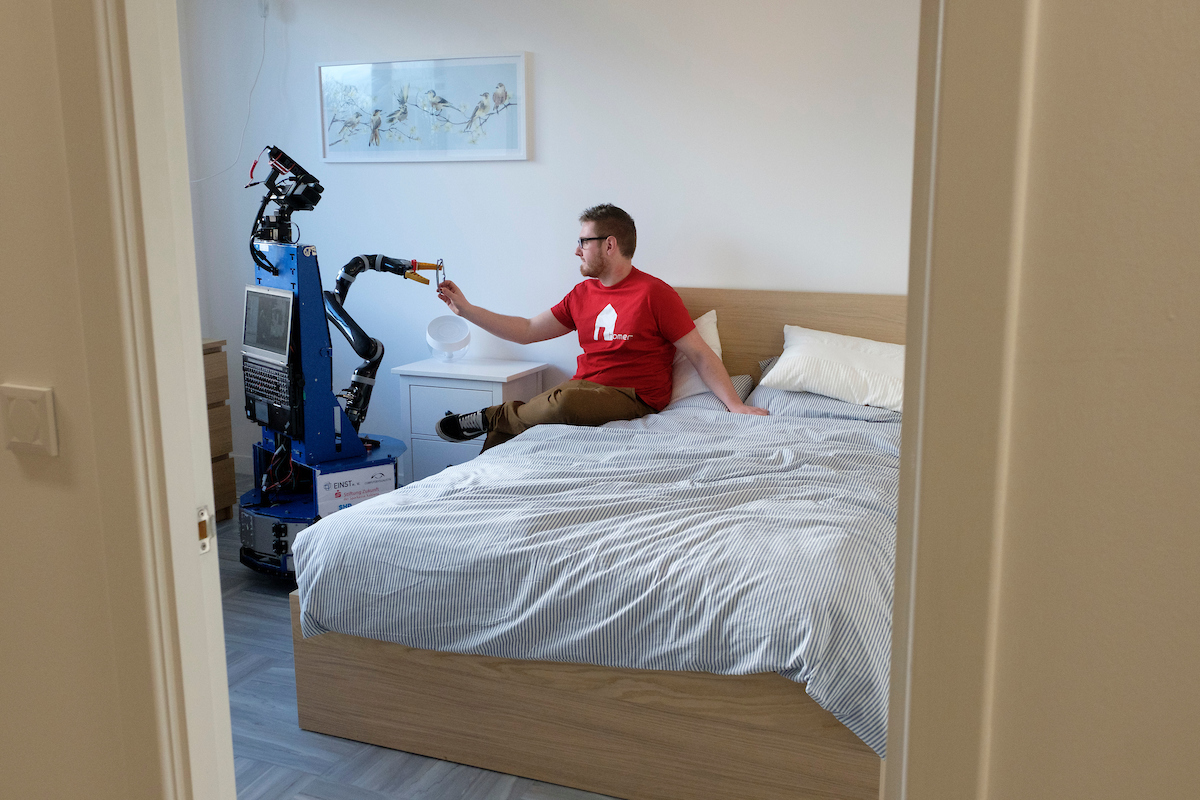
Following the speech and Q&A discussion, the First Minister and Cabinet Secretary joined Stewart and Lisa for a short tour of The National Robotarium’s Human-Robot Interaction labs, taking in the facility’s Laboratory for Robotic Assistive living (LARA), a testbed for assistive robots, designed to emulate a two-bedroom apartment.
Mr Swinney and Mr Gray also met with healthcare robotics start-up companies BioLiberty and Metacarpal, both of which are based at The National Robotarium, utilising its office space, flexible labs and high-tech equipment to develop their robotic innovations.
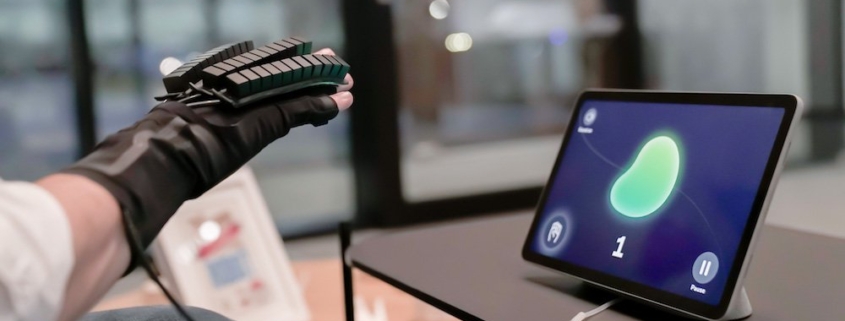
Rowan Armstrong, co-founder of Bioliberty, which has developed an AI-enabled robotic hand to support rehabilitation and physiotherapy for stroke patients, building strength and capturing progress through its Lifeglov monitoring system, and Fergal Mackie, Founder and CEO of Metacarpal, who has designed a purely mechanical robot hand for upper-limb amputees, both discussed how being part of the award-winning facility’s business incubation programme has enabled them to fast-track their creations. They also discussed the challenges facing healthcare innovators in trying to increase adoption of new technologies into the NHS.
Stewart Miller, CEO of The National Robotarium said: “It was an honour to host the First Minister and be part of this important discussion that puts digital innovation at the heart of improving health and social care in Scotland.
“At The National Robotarium, we’re advancing robotics that can help people live healthily and independently for longer, improving their lives and supporting our dedicated healthcare professionals to deliver better care. However, this goal isn’t possible without support from government.
“We have welcomed this opportunity to share and discuss how robotics, data and AI can make our healthcare services more accessible and sustainable while simultaneously building a powerful new economic sector in Scotland.”
https://thenationalrobotarium.com/wp-content/uploads/FM-NR-1000px-2.jpg6671000Louise Jackhttp://thenationalrobotarium.com/wp-content/uploads/Robotarium.pngLouise Jack2025-01-28 18:17:352025-05-06 16:43:09Scotland’s First Minister launches public services innovation plan at The National Robotarium
An innovative medtech start-up which has created a soft robotic glove to help rehabilitate stroke patients has received almost half a million pounds of new funding to accelerate its product to market.
Bioliberty has secured a £435,000 project from the Biomedical Catalyst, Innovate UK’s flagship grant funding mechanism. The scheme is designed to transform innovative ideas into commercially viable businesses.
The Edinburgh-based company’s robotic glove works by assisting a patient to open and close their hand, an action which can be severely limited following a stroke. Developed in collaboration with physiotherapists, occupational therapists, and clinicians, the glove has built-in sensors that allows it to vary levels of resistance to tailor rehabilitation exercises to the user. This new Innovate UK funding will go towards developing the machine learning and data collection elements of the product.
Bioliberty is a tenant at the National Robotarium, benefitting from the world-leading robotics centre’s incubation facilities, state-of-the-art labs, and engineering expertise.
The National Robotarium is part of the Data-Driven Innovation initiative, supported by £21 million from the UK Government and £1.4 million from the Scottish Government. The initiative aims to turn Edinburgh into the data capital of Europe and is part of the wider £1.3 billion Edinburgh and South-East Scotland City Region Deal.
Statistics from the UK’s Stroke Association state that someone has a stroke every five minutes in this country affecting 100,000 people every year. It’s estimated that 1.3 million people in the UK have had a stroke with many requiring ongoing therapy to recover from the symptoms.
New guidelines from the National Institute for Health and Care Excellence (NICE) published in October states that stroke victims should receive up to three hours of rehabilitation a day, five days a week. However, the Stroke Association has voiced concerns over the NHS’ ability to deliver on this target.
Bioliberty, which has already raised more than £3.5 million in private and public funding and created 8 new highly skilled roles within the company over the last six months, believes the new technology can help deliver on these new guidelines.
Speaking ahead of the UK Stroke Forum in Birmingham, Conan Bradley, Co-Founder at Bioliberty, said:
“Bioliberty is on the verge of a revolutionary leap in rehabilitation technology. Our upcoming trials for our soft robotic glove are set to ignite the United States, with top rehab clinics eagerly in discussions. With this newfound funding, we’re poised to accelerate trials and expedite our market launch. But we’re not stopping at the U.S.; the UK beckons, with a significant demand for innovative rehabilitation solutions amidst the latest NICE guidelines.
“Having access to the National Robotarium’s state-of-the-art office and lab facilities, including its ecosystem of collaborators, industry experts and academic teams, has been vital in helping us to develop our product.”
Lisa Farrell is Business Development Manager at the National Robotarium. She said:
“With an ageing population, demand for robotic solutions to assist in the rehabilitation of those who’ve experienced a stroke will be in great demand. Stroke is the leading cause of disability worldwide1, so Bioliberty’s product is addressing a global need, which is one of the core missions of the National Robotarium.
“The National Robotarium’s mission is to develop robotic and AI solutions which make people safer, healthier and more productive and working with tenant companies, we want to provide a catalyst for entrepreneurship, and deliver economic and societal benefits.”
UK Government Minister for Scotland Malcolm Offord said:
“This pioneering technology has the potential to become a vital tool for health professionals to help improve stroke patients’ care during their rehabilitation process.
“The UK Government has invested £21 million in the National Robotarium helping foster world-leading research and support high quality jobs, investment and growth, as part of our more than £2.7 billion investment to level up across Scotland.”
https://thenationalrobotarium.com/wp-content/uploads/Bioliberty-Soft-Robotic-Glove-2.jpg4601000Louise Jackhttp://thenationalrobotarium.com/wp-content/uploads/Robotarium.pngLouise Jack2023-12-04 11:57:362023-12-04 11:57:36Innovate UK funding accelerates robotic stroke rehabilitation device towards launch
Researchers at the National Robotarium, hosted by Heriot-Watt University and the University of Edinburgh, are developing an artificial intelligence (AI) companion that will aid memory recollection, boost confidence and combat depression in people living with Alzheimer’s disease and other types of dementia.
The idea for the ground-breaking ‘Agent-based Memory Prosthesis to Encourage Reminiscing’ (AMPER) project originated from Dr. Mei Yii Lim, a co-investigator of the project and an experienced memory modelling researcher.
Memory loss in people with Alzheimer’s disease occurs in reverse chronological order, with pockets of long-term memory remaining accessible even as the disease progresses. While most current rehabilitative care methods focus on physical aids and repetitive reminding techniques, AMPER’s AI-driven user-centred approach will focus on personalised storytelling to help bring a patient’s memories back to the surface.
Dr. Lim explains “AMPER will explore the potential for AI to help access an individual’s personal memories residing in the still viable regions of the brain by creating natural, relatable stories. These will be tailored to their unique life experiences, age, social context and changing needs to encourage reminiscing.”
Working in partnership with the University of Strathclyde, the team at Heriot-Watt University have been awarded £450,000 of funding by the Engineering and Physical Sciences Research Council, part of UK Research and Innovation (UKRI).
Difficulties in communicating with others and decreased confidence are commonly experienced by people living with dementia and can often lead to individuals becoming withdrawn or depressed. By using AI to aid memory recollection, researchers at the National Robotarium hope that an individual’s sense of value, importance and belonging can be restored and quality of life improved.
The project’s long-term vision is to help demonstrate how AI companions can become more widely used and integrated into domestic, educational, health and assistive-needs settings.
Project partners include the charity Sporting Memories, which delivers reminiscence therapy to people with dementia through video footage in day care centre settings, NHS Scotland Neuroprogressive and Dementia Network, and the Latin American Network for Dementia Research.
The National Robotarium, a partnership between Heriot-Watt University and the University of Edinburgh, is part of the Data-Driven Innovation initiative and is supported by £21 million from the UK Government and £1.4 million from the Scottish Government through the £1.3 billion Edinburgh and South East Scotland City Region Deal – a 15 year investment programme jointly funded by both governments and regional partners.
Professor Ruth Aylett from the National Robotarium is leading the research. She said:
“One of the most difficult aspects of living with dementia can be changes in behaviour caused by confusion or distress. We know that people can experience very different symptoms that require a range of support responses. Current intervention platforms used to aid memory recollection often take a one-size-fits-all approach that isn’t always suitable to an individual’s unique needs.”
“AI technology has the potential to play a pivotal role in improving the lives of people living with cognitive diseases. Our ambition is to develop an AI-driven companion that offers patients and their caregivers a flexible solution to help give an individual a sustained sense of self-worth, social acceptance and independence.
“Through projects like AMPER, we’re able to highlight the many ways AI and robotics can both help and improve life for people now and in the future. At the National Robotarium, we’re working on research that will benefit people in adult care settings as well as across a wide range of other sectors that will make life easier, safer and more supported for people.”
Once developed, the AI technology will be accessed through a tablet-based interface to make it more widely accessible and low-cost. The research team at the National Robotarium plans to separately investigate the use of a desktop robot to determine if there are benefits to be gained by having a 3D representation of a character.
UK Government Minister for Scotland Iain Stewart said:
“Alzheimer’s disease is one of the cruellest and most challenging diseases anyone can face, so it is very encouraging to hear that A.I. could help treat some of the symptoms of dementia and improve the quality of life for those afflicted.
“The UK Government is investing £21m in the National Robotarium to support world-leading research in Scotland with the potential to improve people’s lives everywhere.”
https://thenationalrobotarium.com/wp-content/uploads/hands-2906458_1920.jpg12801920Louise Jackhttp://thenationalrobotarium.com/wp-content/uploads/Robotarium.pngLouise Jack2022-03-14 13:14:092022-09-22 09:25:40Storytelling AI set to improve wellbeing of people with dementia
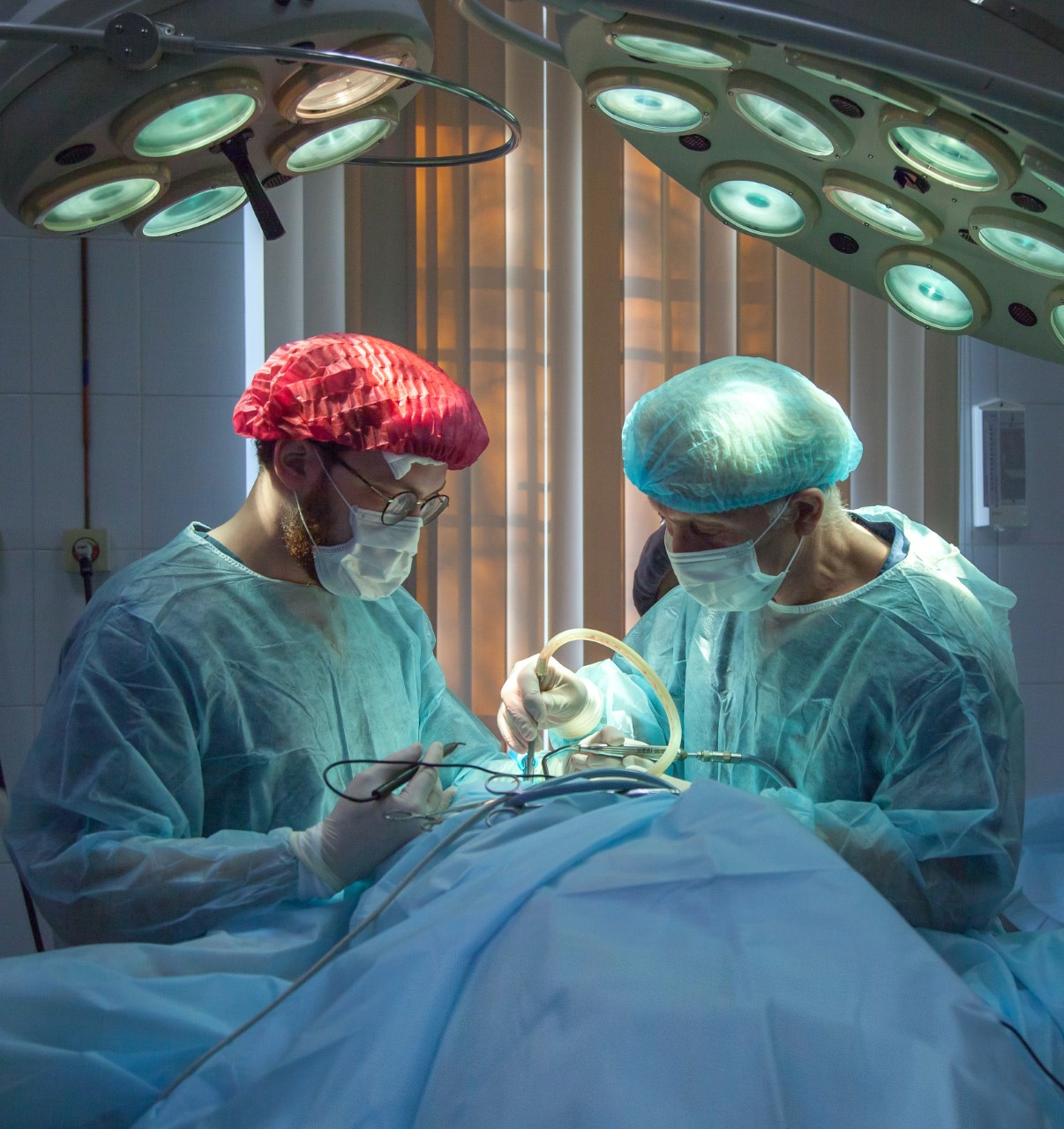
Researchers from the National Robotarium, a partnership between Heriot-Watt University and the University of Edinburgh, industry partners and Edinburgh-based clinicians are creating a new robot-assisted surgery technique to improve patient care globally.
The ground-breaking method has been awarded £1.25 million and is funded by the Engineering and Physical Sciences Research Council, part of UK Research and Innovation.
It will be used during robotic surgery to help decide how much of the patient’s tissue is affected by cancer and should be removed.
The outer rim of tissue which the surgeon chooses to remove is known as the ‘surgical margin’. Currently, surgical margins are identified using the surgeon’s experience, preoperative imaging such as CT scans together with visual observations and, in open surgery, tactile ‘feel’. However, when undertaking ‘keyhole surgery’ using laparoscopic, endoscopic (flexible telescope) or robotic operations, surgeons can’t use ‘feel’ to determine tissue characteristics.
Combining engineering, clinical, and industrial skillsets, the new collaboration will allow mechanical measurements to be taken inside and around the surgical target which will be interpreted using a set of ‘mechanical intelligence’ algorithms.
The project team also includes IntelliPalp Dx, CMR Surgical and leading clinicians from the Western General Hospital.
Dr Yuhang Chen from the National Robotarium is leading the research. He said:
“This new technique will offer surgeons a quantitative, real-time, reliable and evidence-based method for determining the optimal surgical margin to make when removing a tumour.
“Surgeons operating along a ‘keyhole’ or using techniques for minimally invasive surgery need to identify different structures or diseased areas, even when these look very similar. Our work is aimed at identifying the optimum margin in cancer surgery, to allow the removal of a tumour together with enough tissue to ensure the cancer is completely removed, but without excess being lost.
“We’re bringing together expertise from laser manufacturing, fibre-optic sensors, micromechanical probing and computational modelling to create a mechanical ‘imaging’ probe capable of detecting cancerous tissue that can be used with a standard minimally-invasive surgery instrument. Coupled to this, we’ll be building a ‘mechanically-intelligent’ data modelling framework and will integrate it into the probe operation for tumour identification and surgical margin assessment. This will effectively eliminate the margin of error for surgeons, giving them confidence that they have removed the correct amount of tissue during the operation itself and reduce the need for further invasive surgery for patients.”
Mr Hugh Paterson, consultant colorectal surgeon from the Western General Hospital, said:
“Robot-assisted surgery is the next major development in minimally invasive surgery and has seen rapid development in its application for a wide variety of conditions. This project, however, will be one of its first applications to support and improve accuracy in cancer surgeries which is extremely exciting.
“Currently, although surgeons use detailed preoperative scans to decide on surgical margins during surgery, they also use vision and ‘feel’ to distinguish normal and abnormal tissue. ‘Feel’ is much reduced in key-hole surgery, and almost completely absent in robotic-assisted surgery. Margins can be particularly difficult to determine in confined spaces such as rectal or pelvic organ surgeries where taking a wider margin can be challenged by the organ’s close proximity to vital nerves and blood vessels. This can place risk on the bladder, bowel, sexual organs and lower limbs. We believe this new technique will restore ‘feel’ to surgeons doing robotic surgery, allowing greater precision through accurate assessment, hugely benefiting patients and significantly limiting repeat surgery and the need for additional treatments.”
UK Government Minister for Scotland Iain Stewart said:
“This exciting research could significantly improve the quality of care and treatment for cancer patients worldwide. I’m proud we are supporting the development of world-leading surgical robots through our £21 million investment in the National Robotarium as part of the UK Government’s £1.7 billion programme of levelling up in Scotland.
“The UK Government is also investing £5 billion a year in research and innovation to develop the latest ideas and technology at institutions like the National Robotarium.”
Scottish Government Economy Secretary Kate Forbes said:
“Technology has the potential to change lives for the better and a breakthrough of potentially huge benefit to surgery in Scotland will be welcomed by many cancer patients and their families.
“I’m pleased the Scottish Government is providing £1.4 million to support the Robotarium as we move towards a sustainable and innovative economic recovery.”
The project itself is funded through EPSRC’s Healthcare Partnership Scheme through which funds are used to support existing research and progress it towards real world application.
https://thenationalrobotarium.com/wp-content/uploads/thumbnail_olga-guryanova-tMFeatBSS4s-unsplash.jpg12801206Louise Jackhttp://thenationalrobotarium.com/wp-content/uploads/Robotarium.pngLouise Jack2022-02-14 13:48:572023-09-27 17:15:22Breakthrough technique set to improve robotic cancer surgery
We may request cookies to be set on your device. We use cookies to let us know when you visit our websites, how you interact with us, to enrich your user experience, and to customize your relationship with our website.
Click on the different category headings to find out more. You can also change some of your preferences. Note that blocking some types of cookies may impact your experience on our websites and the services we are able to offer.
Essential Website Cookies
These cookies are strictly necessary to provide you with services available through our website and to use some of its features.
Because these cookies are strictly necessary to deliver the website, refusing them will have impact how our site functions. You always can block or delete cookies by changing your browser settings and force blocking all cookies on this website. But this will always prompt you to accept/refuse cookies when revisiting our site.
We fully respect if you want to refuse cookies but to avoid asking you again and again kindly allow us to store a cookie for that. You are free to opt out any time or opt in for other cookies to get a better experience. If you refuse cookies we will remove all set cookies in our domain.
We provide you with a list of stored cookies on your computer in our domain so you can check what we stored. Due to security reasons we are not able to show or modify cookies from other domains. You can check these in your browser security settings.
Google Analytics Cookies
These cookies collect information that is used either in aggregate form to help us understand how our website is being used or how effective our marketing campaigns are, or to help us customize our website and application for you in order to enhance your experience.
If you do not want that we track your visit to our site you can disable tracking in your browser here:
Other external services
We also use different external services like Google Webfonts, Google Maps, and external Video providers. Since these providers may collect personal data like your IP address we allow you to block them here. Please be aware that this might heavily reduce the functionality and appearance of our site. Changes will take effect once you reload the page.
Google Webfont Settings:
Google Map Settings:
Google reCaptcha Settings:
Vimeo and Youtube video embeds:
Other cookies
The following cookies are also needed - You can choose if you want to allow them:
Privacy Policy
You can read about our cookies and privacy settings in detail on our Privacy Policy Page.