The International Blue Economy Robotarium – dubbed the ‘Blue Robotarium’ – will bring together leading experts in science and industry to test and develop cutting-edge robotic technologies to revolutionise the global blue economy.
Over the coming months, the Blue Robotarium aims to:
Develop an expansive programme that explores learning and solutions related to robotics, AI and data management for the offshore wind and tidal energy sectors;
Rapidly advance the testing and development of robotic systems to improve the sustainability of marine industry operations;
Create a centre in Orkney for testing, certification and performance validation of new robotic, AI digital technologies;
Support and facilitate the safe deployment of new technologies, underpinned by expert support and management;
Stewart Miller, CEO of The National Robotarium, spearheaded the new consortium alongside Professor Sandy Kerr, Director, School of Energy, Geoscience, Infrastructure and Society at Heriot-Watt’s Orkney campus.
Stewart said: “This is a hugely exciting opportunity to showcase how the National Robotarium model can be adapted to drive robotic innovations for specific sectors.
“The International Blue Economy Robotarium will explore sustainable solutions that will enhance the offshore energy, marine and renewables industries through advanced technology.
“With access to a network of 400 service specialists, the Blue Robotarium will be a one-stop-shop for enterprising companies seeking to enhance efficiencies and improve sustainability using robotics.”
https://thenationalrobotarium.com/wp-content/uploads/IBER-all-energy-land-1.jpeg13372082Louise Jackhttp://thenationalrobotarium.com/wp-content/uploads/Robotarium.pngLouise Jack2025-05-14 16:32:312025-05-20 10:53:04New ‘Blue Robotarium’ aims to transform marine energy industry
To mark National Engineering Day (13 November 2024), we have been speaking to our Robotics Engineers about their career paths, engineering role models and what a typical day is like at the National Robotarium…
Hsing-Yu Chen
Who’s your engineering role model?
One of my key role models in engineering is Morris Chang, the founder of Taiwan Semiconductor Manufacturing Company (TSMC). His technical expertise, leadership and vision have revolutionised the semiconductor industry and made a huge impact on global technology innovation. His emphasis on long-term thinking, collaboration, and focus on excellence in manufacturing processes continues to inspire me in my own work.
What in your mind is an example of good engineering?
An example of engineering that truly inspires me is the development of reusable rockets. This breakthrough in space technology shows us the power of dreaming big and pushing the boundaries of what’s possible. The ability to reuse rockets—once thought to be impossible—has the potential to completely reshape the aerospace industry, opening up new possibilities for space travel and exploration.”
What is typical day like as a Robotics Engineer?
A typical day for a robotics engineer begins with problem-solving, addressing challenges and issues related to the robots they are developing. This entails brainstorming innovative solutions to optimize robot performance, troubleshooting both hardware and software components, conducting experiments to validate the robots’ functionality, and delving into data analysis. Given the collaborative nature of their work, engineers often engage in ongoing communication with team members and clients.
What skills are required to be a good engineer?
Beyond technical proficiency, being a good engineer relies on essential problem-solving and critical thinking skills, enabling the identification and resolution of intricate engineering challenges. Equally critical is a commitment to continuous learning and stay attuned with this rapidly evolving field, ensuring that engineers can adapt to new technologies and innovate effectively.
How does engineering improve people’s lives?
Robotics engineering plays a pivotal role in enhancing people’s lives in numerous ways. For instance, the creation of surgical robots and prosthetic limbs improves the quality of medical treatments and enhances the lives of patients. Autonomous vehicles not only increase transportation efficiency but also enhance road safety. Assistive robots simplify daily tasks, making life more convenient and accessible for individuals. These advancements underscore the transformative impact of robotics engineering on our daily existence and overall well-being.
How can engineering help us live and/or work more sustainably?
Robotic engineering offers substantial potential to enhance sustainable living and working in various domains. This can be achieved by automating industrial processes to boost efficiency, optimising resource utilisation to reduce consumption and lower carbon emissions, improving recycling rates through precise sorting, and monitoring environmental changes. These technologies have the potential to create a more environmentally friendly and resilient world.
Hari Lakshman
Who are your engineering role models?
The reason I pursued an engineering career was after watching an animated video about Nikola Tesla’s life. Reading about his work, dedication, and passion to keep inventing things inspired me to follow in his footsteps. Another inspiration in my life is Henry Ford, who taught me so much about tech business, optimisation, and efficiency.”
Can you give an example of good engineering that inspires you?
The pyramids are the first engineering marvel that blew my mind; it’s exhausting even to imagine the methods ancient people might have used to build such a magnificent structure. Another marvel is the Chandra X-ray Observatory, which enables scientists to collect data and images for space research. This incredible piece of engineering has revolutionised space science research.”
What does the role of Robotics Engineer involve?
Robotics engineers involve themselves in various fields of engineering. It is always a big learning curve, sometimes building robots feels like creating a human child. We have knowledge in coding, software development, and designing prototypes, which involves an extensive understanding of mechanical engineering, electrical engineering, and control systems. We try and implement cutting-edge machine learning and AI algorithms to make the robot more intelligent and more efficient. For me, I’m still learning lots and lots to become a fine-tuned robotics engineer.
What skills are required to be a good engineer?
Robotics engineers should have skills such as critical thinking and design thinking, programming, active learning, teamwork, safety skills and leadership qualities.
How does engineering improve people’s lives?
Engineering helps to improve people’s lives in every possible way: economically, and ethically, it helps to improve quality of life, solve societal problems, fight against climate change and more. At the National Robotarium, we use our engineering skills to build robots that can help people with physically or mentally challenging tasks, and improve efficiency and cost-effectiveness.
Ronnie Smith
What is typical day like as a Robotics Engineer?
What you spend most of your time on day to day depends on your own role within the team. Some engineers can spend most of their day at a computer doing design or programming, while others might do largely hands on work building, extending, debugging, and maintaining robots. Since we tend to work on multiple projects at once, most days start by figuring out what to prioritise. For me, a typical day might involve some proposal writing, development work, project team meetings, and monitoring/debugging some of the robots we are testing as part of ongoing projects.
What skills are required to be a good engineer?
Since robotics is such an inter-disciplinary field, I think there is no fixed set of skills to be a robotics engineer. I think a good robotics isn’t necessarily someone who is an expert in all aspects of robotics, but rather someone who has their own strengths in a few core areas and who is interested in learning about the whole robotic system to the point where they can understand how everything fits together. This applies to myself, as I come from mainly a software background, but am keen to use my time at the National Robotarium to learn and become a more “rounded” robotics engineer.
How does engineering improve people’s lives?
Most of the time, when engineers are working on a problem it is in the name of improving our comfort, efficiency, safety, or our general quality of life. Robotics is a field which has the potential to touch on all of these aspects. In my previous role as a PhD student, we worked on assistive robotics and technology for older adults. Through user engagement we worked to understand the ways in which collaborative robotics can enable individuals to live in their own home for longer by automating aspects of daily tasks that might otherwise be impossible to complete alone.
How can engineering help us live and/or work more sustainably?
One of the main ways that robots can aid with sustainability is by being more efficient than the solutions that came before. What is meant by efficiency will of course differ across domains, but for example in manufacturing this might mean process efficiency which increases hourly output for the same or less energy. On the other hand, in agriculture it could be that increased precision in turn leads to increased efficiency, e.g., more accurate and targeted spraying of crops conserves resources.
Can you give an example of good engineering that inspires you?
I would look to the semiconductor industry and the advancement of the transistor-based processor over the past several decades as an example of inspiring engineering. Computers today are using billions of tiny transistors, manufactured at nanometre scale, to perform trillions of mathematical operations every second. This achievement has relied on back-to-back advancements and innovation across materials science, lithography, quantum physics, and of course computer and electronics engineers. To me, this is a shining example of human ingenuity and our ability to work together on a large scale to create technology that is so pervasive and seamless that we are able to take it for granted.
Rahul Ramachandran
Who are your engineering role models?
The Wright brothers and Dr. A.P.J. Abdul Kalam are two of my biggest role models. The Wright brothers’ achievement in creating the first successful powered airplane inspires me with their relentless pursuit of innovation and their ability to overcome doubt and failure. Similarly, Dr. Kalam’s perseverance and contributions to ISRO, especially his leadership in missions like India’s Mars Orbiter Mission, remind me of the importance of vision and hard work in achieving groundbreaking results. Both have shown me that with determination and passion, it’s possible to change the course of history.
Can you give an example of good engineering that inspires you?
One piece of engineering that really inspires me is the Moog synthesizer. What I love about it is how it simplified the complex technology of earlier electronic instruments, making it easier for musicians to use. The design is so elegant, and the way it combines innovation with simplicity was groundbreaking at the time. The Moog didn’t just change the way music was made; it made a complex tool feel accessible, showing how thoughtful design can open up new possibilities and spark creativity in unexpected ways.
What does the role of Robotics Engineer involve?
Robotics is an interdisciplinary field and because of that robotics engineer’s role depends on one’s engineering background, be it mechanical, electrical, computer science, sociology or applied physics. For example, a robotics engineer with a degree in Mechanical Engineering would work on the design and modelling of robot mechanics, whereas one with a background in electrical and electronics engineering would develop the robot’s battery management system and its sensors and actuators.
What skills are required to be a good engineer?
I believe that to be a good engineer, you must be able to understand the need for an engineering solution to any given problem. It’s not the “what” and “how” but the “why” that comes first.
Be curious, take inspiration from nature and question EVERYTHING! Analytical thinking is very important as is the ability to communicate effectively in a collaborative environment. It is helpful to have an engineering degree, but it is not always necessary if you have the proper knowledge and practical skills.”
How does engineering improve people’s lives?
We live in a world where everything we see has been engineered for us to live a better life, especially in today’s modern digital world, where everything is data-driven. We now have self-driving cars and text-to-speech solutions such as Okay Google, Alexa and Siri which enable us to make calls and play songs using voice commands.
At the National Robotarium, we are developing solutions such as unmanned underwater robots to undertake the inspection of offshore turbines, which is currently being done by deep-sea scuba divers. We are also improving the quality of life for many people doing repetitive tasks in factories by developing solutions for factory automation, which will enable people to safely undertake less repetitive and more skilled tasks side-by-side with robots.

The National Robotarium is hosting an exclusive screening of the new film in the Nash Squared Tech Flix series.
‘AI and Robotics: Transforming society and the workforce’, hosted by Group Technology Evangelist David Savage, will explore how the rapid advancement of robots and Artificial Intelligence is impacting employment, regulation, and business-readiness andincludes interviews with Robotarium CEO Stewart Miller, academic co-lead Professor Yvan Petillot, and COO of resident company, medical technology start-up Bioliberty, Conan Bradley.
https://thenationalrobotarium.com/wp-content/uploads/Nash-Squared-film-screening.jpeg470940Louise Jackhttp://thenationalrobotarium.com/wp-content/uploads/Robotarium.pngLouise Jack2024-05-07 12:30:542024-05-29 13:53:08‘AI and Robotics: Transforming society and the workforce’ – Thurs 23 May, 2pm
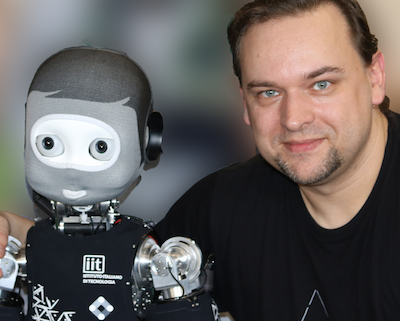
Dr Ingo Keller has been appointed as the first Head of Robotics at the National Robotarium, the UK’s centre for Robotics and Artificial Intelligence.
A software, AI and robotics engineer with over 20 years of experience in science and industry, Ingo will lead the facility’s growing team of robotics engineers as they test and develop new technologies and systems to address real-world challenges. Current projects include robotics for sectors including agriculture, construction, manufacturing, aerospace and fisheries.
Ingo has in-depth, hands-on experience with a multitude of robotic systems, including all phases of software development, life-cycle management and DevOps tooling. He has co-founded a number of start-up technology companies in software architecture and database management systems, developing a keen understanding of the potential of applied emerging technologies for addressing industry challenges.
Prior to his new role, he was Chief Technology Officer at Xihelm, a London-based robotic harvesting solutions company, where he worked while completing a PhD in Data Augmentation for Human-Robot Interaction at Heriot-Watt University, where the National Robotarium is based.
On his new appointment, Ingo said: “I’m delighted to join the National Robotarium team at this exciting stage of its development and lead on the creation of robotics, AI and engineering systems that can truly transform people’s lives and work. My goal is to get more robots out of the lab and into the wild, and being able to talk directly to industry leaders about their challenges means we can develop safe, practical, and effective robotic technologies that can be seamlessly integrated into society.
“I’m also passionate about sharing the knowledge and expertise of our talented team to build robotics skills in different sectors, ensuring people are equipped with the tools they need to operate and manage robotics and AI, and promoting the positive benefits of these technologies to all.”
Stewart Miller, Chief Executive Officer, said: “The appointment of Ingo as our first Head of Robotics is an important and exciting milestone for the National Robotarium. He is passionate about applying his extensive expertise to new and interdisciplinary problem spaces and will be a great ambassador, working with experts in all fields of science and industry to advance state-of-the-art robotics systems.”
https://thenationalrobotarium.com/wp-content/uploads/WebsitePic-400x400-1.png400400Louise Jackhttp://thenationalrobotarium.com/wp-content/uploads/Robotarium.pngLouise Jack2023-08-29 09:50:122023-10-24 12:06:29The National Robotarium appoints first Head of Robotics
Dr Karen Donaldson, a Project Manager at the National Robotarium, has been announced today (10 Jan) as one of the first inductees to the UK Young Academy – a network of early career researchers and professionals established to help tackle local and global issues and promote meaningful change.
As part of the first cohort of 67 members, Karen will have the opportunity to help shape the strategy and focus of this new organisation and inform local and global policy discussions and find innovative solutions to the challenges facing societies now and in the future.
An engineering physicist, Karen’s research in physics, plasma physics, robotics and engineering has been internationally recognised through a variety of publications and journals. Prior to joining the National Robotarium’s Project Management team, she worked in SMeSTech at the University of Strathclyde.
In collaboration with fellow members who are also excelling in their respective fields across the private sector, charities and academia, including colleague and public engagement lead for the Edinburgh Centre for Robotics, Dr Alistair McConnell, Karen will develop ideas, and lend a voice to developing inclusive and credible solutions for positive global change.
Karen said: “It’s an honour to join the UK Young Academy and build my networks with intelligent, likeminded people.
“I always strive to advance myself and technology – being a member of the Young Academy will support these goals.”
https://thenationalrobotarium.com/wp-content/uploads/196397432_587723415555699_2385826604862551258_n-e1673366052686.jpg752624Louise Jackhttp://thenationalrobotarium.com/wp-content/uploads/Robotarium.pngLouise Jack2023-01-10 15:40:142023-09-27 17:07:09National Robotarium Project Manager inducted into UK Young Academy
CENSIS, Scotland’s Innovation Centre for sensing, imaging and Internet of Things (IoT) technologies has recently donated £1000 to the Heriot-Watt University Robotics Society. The generous contribution was arranged to support the society in its events and educational outreach programmes that teach students and secondary schools about robotics and autonomous systems.
The Robotics Society was founded in 2019 by current co-President Liza Masson and Calum Thow (pictured above alongside volunteer engineer David Ingleby and current co-president Bruce Wilson) and led by a small team of six, including Treasurer, Claudia Garcia Mendoza, and Head of Engagement, Mario Fuente Rodriguez.
It is open to any student interested in electronics and robotics. They run regular workshops, training and drop-in sessions where attendees can learn about different robotic technologies, use and test robotic equipment, borrow parts and create new projects, as well as social events, talks and interactive exhibitions.
Due to the society’s ethos in improving accessibility within robotics and STEM, they were shortlisted for an Engineering Talent Award this year in the category of inclusivity and diversity, and its membership has grown from 20 in its first year to over 60 current active members.
Co-President Liza Masson said on behalf of the Society: “We are extremely excited by the collaboration between the Heriot-Watt Robotics Society and CENSIS. The support from them will allow us to fund our project teams, plan new workshops for members in semester 2 and purchase components that our members want or need.
“We’re also very eager for the future plans to run lab tours and visits, giving our members even further experience and links to industry through the CENSIS network.”
Paul Winstanley, CEO of CENSIS Innovation Centre
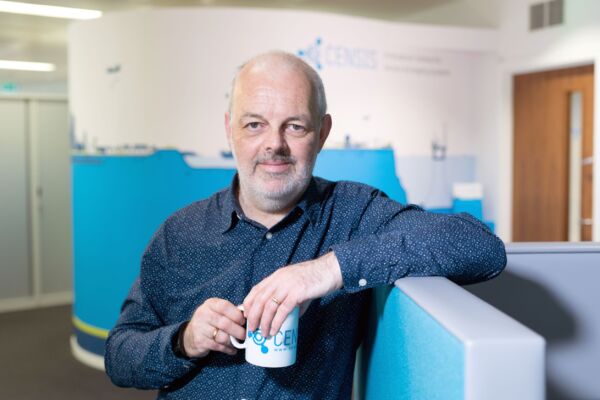
CEO of CENSIS Paul Winstanley said: ““It is a pleasure to offer this support to the Robotics Society. I met some of the team at the National Robotarium launch in September and what really stood out for me was the group’s creativity, positive attitude, and vision for robotics as a force for good. The society deserves a lot of credit for its commitment to inclusion by keeping it open to everyone, not just engineers.
“At CENSIS we’ve been saying for a long time that you don’t need a tech background to find a rewarding career in automation, robotics or the Internet of Things. There are lots of job opportunities out there and it’s wonderful to see this reflected in the workshops and activities the society offers.”
As well as providing financial support, CENSIS has given the Society a lab tour of their offices in Glasgow and will contribute to their timetable of talks and presentations. The first talk, planned for early 2023, will have CENSIS Business Development Director, Cade Wells speak to the group on the IoT and its use in the robotics and automation sectors.
About CENSIS
CENSIS in a not-for-profit Innovation Centre established to support private businesses and public sector organisations to accelerate the pace of innovation by exploiting sensing, imaging and Internet of Things (IoT) technologies. Their work aims to de-risk and accelerate innovation and overcome technology barriers to allow businesses to transform, develop new products and services, improve operational effectiveness and profitability.
https://thenationalrobotarium.com/wp-content/uploads/52376292429_f5eac7453f_o-scaled.jpg17072560Louise Jackhttp://thenationalrobotarium.com/wp-content/uploads/Robotarium.pngLouise Jack2022-11-24 09:41:102023-09-27 17:08:27CENSIS donates £1000 to Heriot-Watt Robotics Society
To mark National Engineering Day on 2 November, we’ve been chatting with a few members of the National Robotarium Engineering team to find out what it’s like to be a Robotics Engineer at the UK’s most advanced centre for robotics and artificial intelligence.
Jonatan Scharff-Wilners,
Senior Robotics Engineer
What does the role of Robotics Engineer involve?
The role is very varied. I am mainly focused on writing software for autonomy and path-planning, but get to join in on the design process for hardware as well as leading technical projects and going on lots of field trials. In addition, as I come from the academic side, I am still able to continue my research when projects we’re working on overlap with my field of interest.
What skills are required to be a good engineer?
Adaptability both to technology and to people. We work with a lot of different methods and technologies and need to quickly get up to speed on how to efficiently use them. The same goes for people; every person is unique and it is important to be able to adapt to who you’re working with. Every person is a vital player in the team and being able to motivate, acknowledge, respect, teach and learn from each other is the key to successful collaboration, particularly when working on large scale projects. A skill I learned from industry, and try to practise, is that ‘good enough is good enough’.
As engineers, we usually like our work to be completely perfect however this is not always necessary. Even though it is hard to leave something you feel that can be improved, it can often be the right choice.
How does engineering improve people’s lives?
Most of the things around us today, particularly those that remove tedious tasks and improve quality of life, are heavily engineered. In the case of the National Robotarium, our work is to remove humans from dangerous sites by allowing them to control remote robots more easily or to develop robots that can achieve tasks autonomously. The use of Autonomy, Robotics and AI will also play a key role in modernising our society, enabling it to adapt to environmental and societal challenges ahead, such as the transition to green and renewable energy.
Sean Katagiri,
Robotics Engineer
What does the role of Robotics Engineer involve?
It can range from being hands on with the latest robotic hardware, to working on developing the brains of the system in a virtual environment. I have a good mix of both when working with subsea robotics as it allows me to go on outdoor trials to test the autonomous systems we’ve developed. Promoting autonomous solutions to the public has also become a key responsibility for myself and the rest of the team at The National Robotarium.
What skills are required to be a good engineer?
Being flexible and willing to incorporate new ideas into your work is absolutely key for working in a team environment. Robotics covers such a wide range of fields when it comes to technical challenges, so opening up to others with more experience in a particular aspect of the autonomous system being developed is very important.
How does engineering improve people’s lives?
At the National Robotarium we are looking to improve both the public and industry’s image of robots as something that can be functional and a core part of our day-to-day lives. Any scenario wherein a human life is endangered due to harsh working conditions or dangerous environment would benefit greatly from an intelligent robotic system taking their place. Our team are currently working on projects in the offshore and construction sectors that are looking to remove humans from harm’s way in those fields.
Tomasz Lucynski,
Robotics Engineer
What does the role of Robotics Engineer involve?
Robotics is a science that encompasses many, previously separated, fields: mechanical engineering, electrical engineering, computer science, but also often seemingly distant fields like cognitive sciences. This job is as much interesting as it also is challenging. Every project can bring something new, unexpected, but also fun! For example, after working on the robotic system supporting surgeons, you can move on to monitoring of the marine life. That’s very unique, quite unlike any other job.
What skills are required to be a good engineer?
A good engineer needs to be versatile and think out of the box, be a hacker of sorts, but most importantly, be just a little bit lazy! This is because the best solution to a problem is not solving it, it’s removing it altogether!
This is only possible if you can move freely between all aspects of the project, maybe a complex mechanical problem can be addressed in software, or a difficult software task can be eliminated by using different hardware. Finally, engineers are no longer solitary geniuses, the best results are achieved by well-coordinated team efforts so being a good team player is extremely important.
How does engineering improve people’s lives?
We’re surrounded by technology, so almost every aspect of our life can be improved with engineering. Technology can help with removing little hassles of the everyday life as well as to provide entertainment or be a life-changer for people in need. Boundaries of what’s possible are being moved every day.
Hari Lakshman,
Robot
What does the role of Robotics Engineer involve?
Robotics engineers involve themselves in various fields of engineering. It is always a big learning curve, sometimes building robots feels like creating a human child. We have knowledge in coding, software development, and designing prototypes, which involves an extensive understanding of mechanical engineering, electrical engineering, and control systems. We try and implement cutting-edge machine learning and AI algorithms to make the robot more intelligent and more efficient. For me, I’m still learning lots and lots to become a fine-tuned robotics engineer.
At the end of the day, the only goal we try to achieve is to make the world a safe and sound place for everything that lives on it.
What skills are required to be a good engineer?
Important skills that any robotics engineer should have are critical and design thinking skills, sufficient programming skills, active learning, teamwork, safety skills and leadership quality are some very necessary skills set needed for a good engineer.
How does engineering improve people’s lives?
Engineering helps to improve people’s life in every possible way: economically, ethically, it helps to improve quality of life, solve societal problems, to fight against climate change and more.
At the National Robotarium we use our engineering skills to build robots that can help people with physically or mentally challenging tasks, and to improve efficiency and cost-effectiveness. There are advanced projects that we have been involved in that can tackle environmental issues such as the energy crisis and food security, as well as using robotics and AI to advance medical applications
Alix Partridge.
Soft Robotics Engineer
Alex (far left) with teammate Thomas McGravie
What does the role of Robotics Engineer involve?
For me, the role of robotics engineer is about combining creativity and logical thinking to come up with novel solutions to complex challenges. My specific role within the team is soft robotics engineer, so most of my time is spent playing with interesting materials and structures to create compliant and often bio-inspired mechanisms that provide adequate sensing or actuation to solve a challenge.
What skills are required to be a good engineer?
I don’t think there is a limit to the skills required to be an engineer, nor do I think you can have the wrong skills. I am a great collector of hobbies, from textiles to cooking, pottery to music and I feel that with each new skill I collect I have a better approach to my work as an engineer. There is such a range of engineering on offer now that you can always find a use for the most bizarre of skills! That said, I would advise practising patience as it often takes a lot of failure before a solution is found.
How does engineering improve people’s lives?
During my PhD at the BRL in Bristol, I had many opportunities to interact with the community – either through talks, conferences or studies – and I loved hearing their feedback about the work my lab was conducting. What I found most inspiring was when we presented to older generations, or those with disabilities and heard how excited they were about technologies we were creating to tackle the problems they faced in their lives. To see their eyes light up as we presented novel technologies that could aid them with getting around the house or performing the simple tasks that some of us take for granted was incredible and something that drives me forwards in my work.
Rahul R. Ramakrishnan,
Robotics Engineer
What does the role of Robotics Engineer involve?
Robotics is an interdisciplinary field and because of that robotics engineer’s role depends on one’s engineering background be it mechanical, electrical and electronics, computer science, sociology or applied physics and mathematics among others. For example, a robotics engineer with a degree in Mechanical Engineering would work on design and modelling robot mechanics whereas one with a background in electrical and electronics engineering would work on developing the robot’s battery management system and its sensors and actuators.
I have a background in mechatronics engineering and robotics research so I work on robotics systems design and development, both on the hardware and software level.
What skills are required to be a good engineer?
I believe that to be a good engineer the number one skill is to be able to understand the need for an engineering solution to any given problem. It’s not the “what” and “how” but the “why” that comes first. Be curious, take inspiration from nature and question EVERYTHING! Analytical thinking is very important for anyone to be a good engineer and the ability to communicate effectively in a collaborative environment. It is good to have an engineering degree, but it is not always necessary if you have the right knowledge and practical skills.
How does engineering improve people’s lives?
We live in a world where everything we see has been engineered for us to live a better life, especially in today’s modern digital world where everything is data-driven. We now have self-driving cars and text-to-speech solutions such as Okay Google, Alexa and Siri which enable us to make calls and play songs using voice commands.
At the National Robotarium, we are developing unmanned underwater robots to address various problems such as inspection of offshore turbines, which is currently undertaken by experienced deep-sea scuba divers. We are conducting research and development of various robotic solutions for assisted living for elderly and disabled people. We are also improving the quality of life for many people who are doing repetitive tasks in factories by developing solutions for factory automation, which will enable people to safely undertake less repetitive and more skilled tasks side-by-side with robots.
https://thenationalrobotarium.com/wp-content/uploads/National_Engineering_Day_Blue_Logo_Colour_v1_RGB.jpg5811200Louise Jackhttp://thenationalrobotarium.com/wp-content/uploads/Robotarium.pngLouise Jack2022-10-31 17:21:322023-09-27 17:19:38Spotlight On: our Robotics Engineers
We may request cookies to be set on your device. We use cookies to let us know when you visit our websites, how you interact with us, to enrich your user experience, and to customize your relationship with our website.
Click on the different category headings to find out more. You can also change some of your preferences. Note that blocking some types of cookies may impact your experience on our websites and the services we are able to offer.
Essential Website Cookies
These cookies are strictly necessary to provide you with services available through our website and to use some of its features.
Because these cookies are strictly necessary to deliver the website, refusing them will have impact how our site functions. You always can block or delete cookies by changing your browser settings and force blocking all cookies on this website. But this will always prompt you to accept/refuse cookies when revisiting our site.
We fully respect if you want to refuse cookies but to avoid asking you again and again kindly allow us to store a cookie for that. You are free to opt out any time or opt in for other cookies to get a better experience. If you refuse cookies we will remove all set cookies in our domain.
We provide you with a list of stored cookies on your computer in our domain so you can check what we stored. Due to security reasons we are not able to show or modify cookies from other domains. You can check these in your browser security settings.
Google Analytics Cookies
These cookies collect information that is used either in aggregate form to help us understand how our website is being used or how effective our marketing campaigns are, or to help us customize our website and application for you in order to enhance your experience.
If you do not want that we track your visit to our site you can disable tracking in your browser here:
Other external services
We also use different external services like Google Webfonts, Google Maps, and external Video providers. Since these providers may collect personal data like your IP address we allow you to block them here. Please be aware that this might heavily reduce the functionality and appearance of our site. Changes will take effect once you reload the page.
Google Webfont Settings:
Google Map Settings:
Google reCaptcha Settings:
Vimeo and Youtube video embeds:
Other cookies
The following cookies are also needed - You can choose if you want to allow them:
Privacy Policy
You can read about our cookies and privacy settings in detail on our Privacy Policy Page.