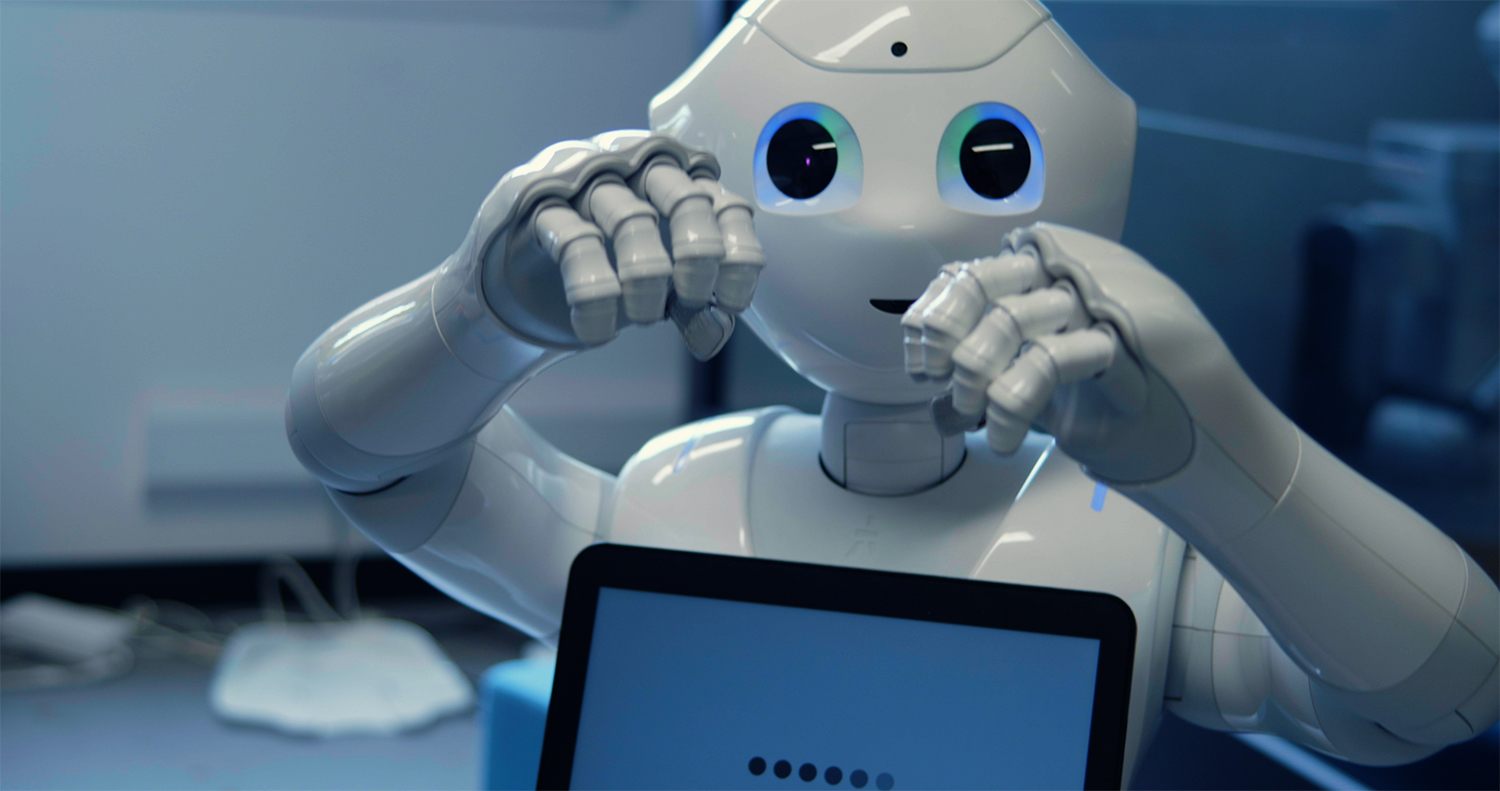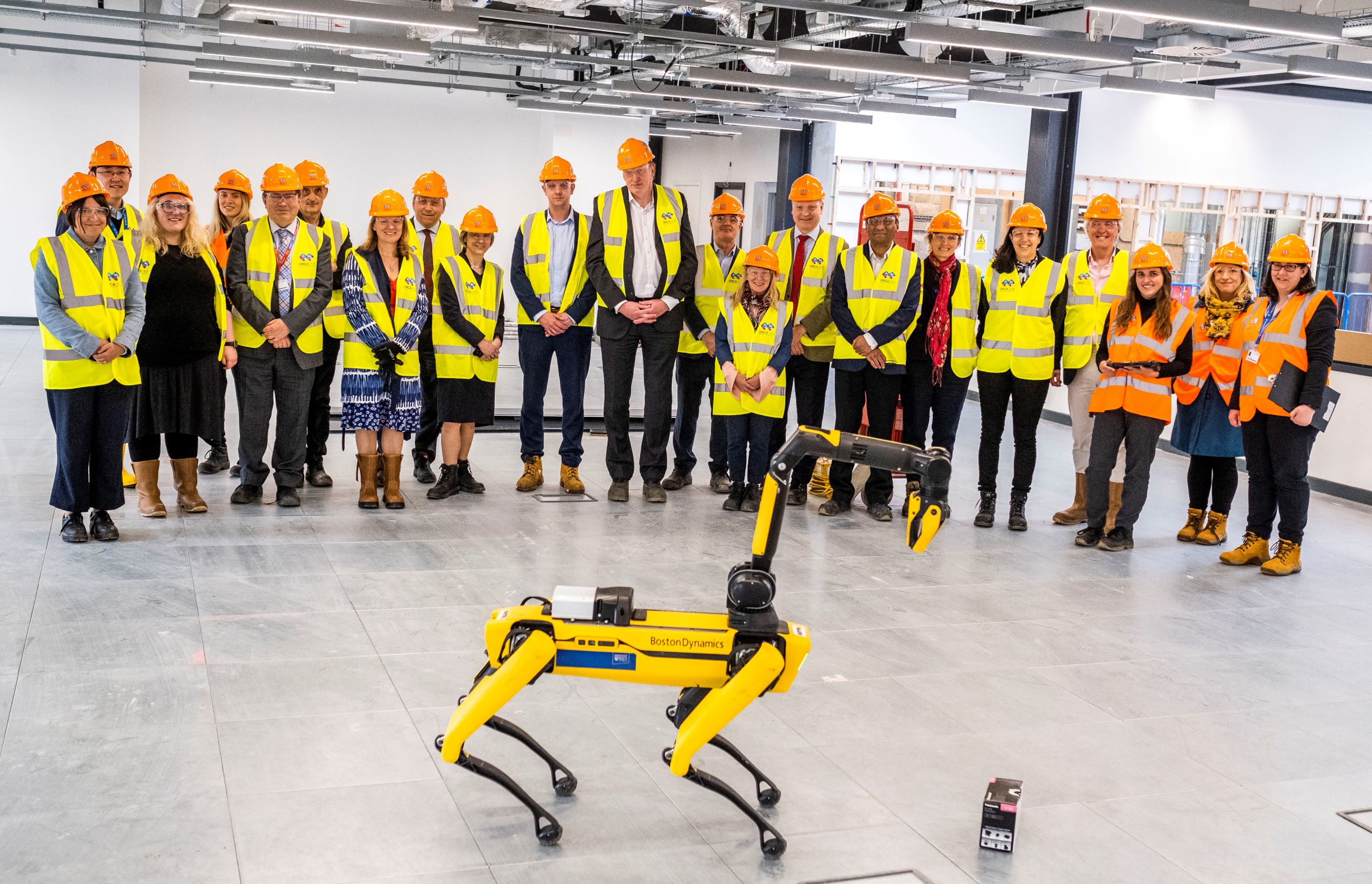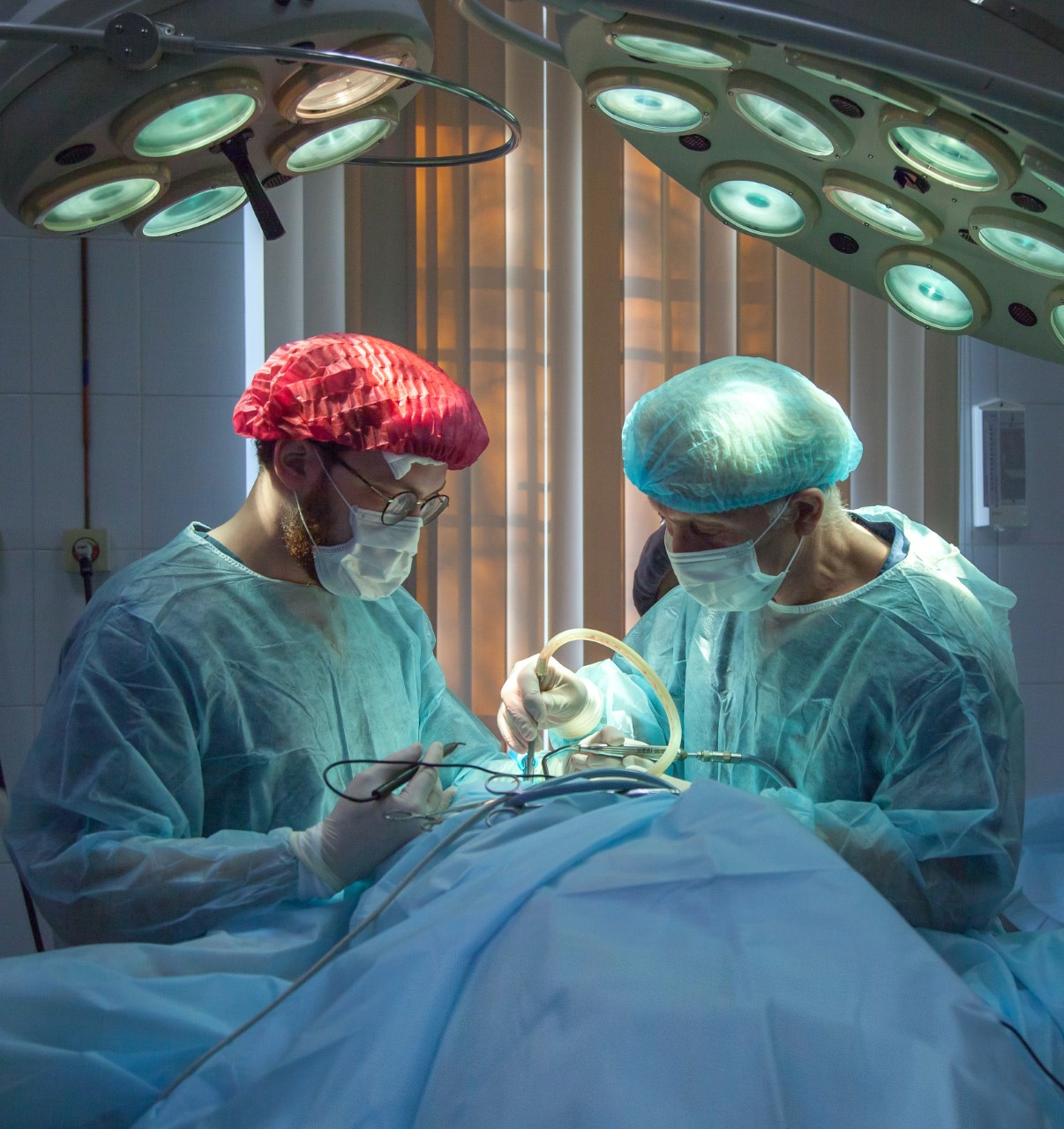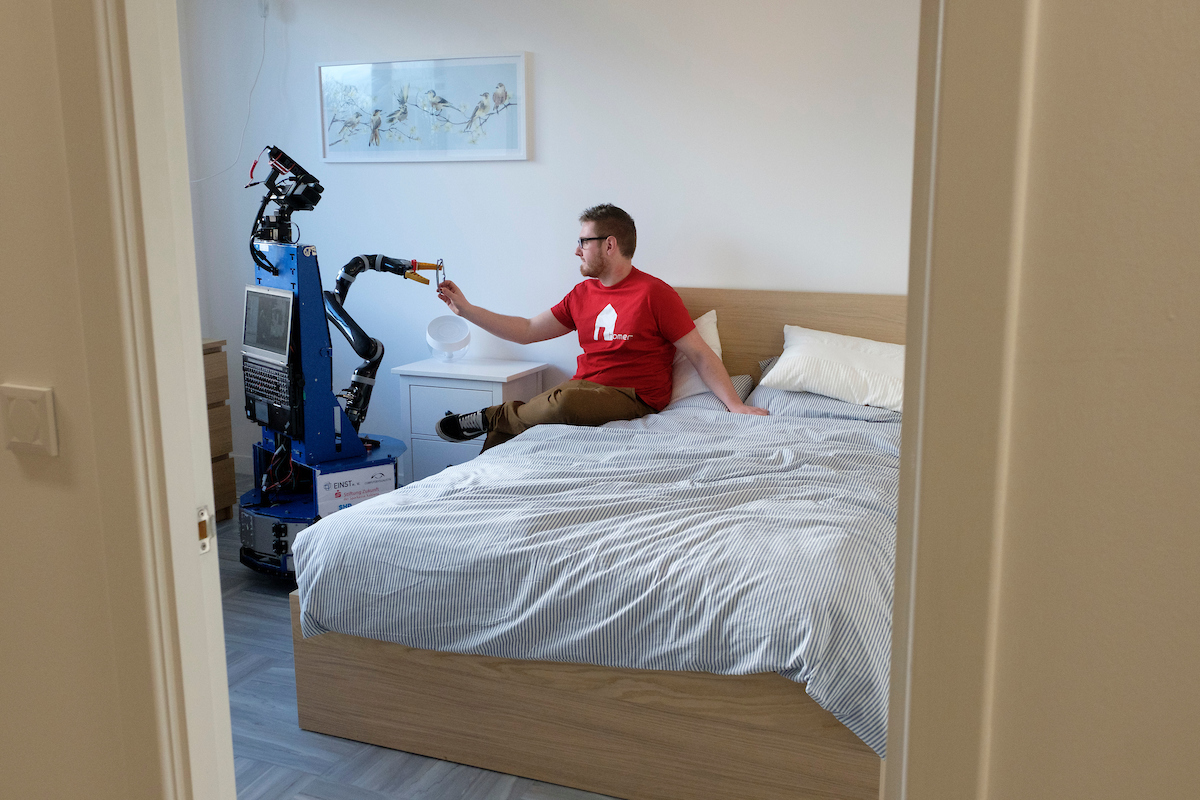
Industry representatives from health technology and telecare are invited to attend the next Emergence Healthcare Technologies Network event, taking place at the National Robotarium.
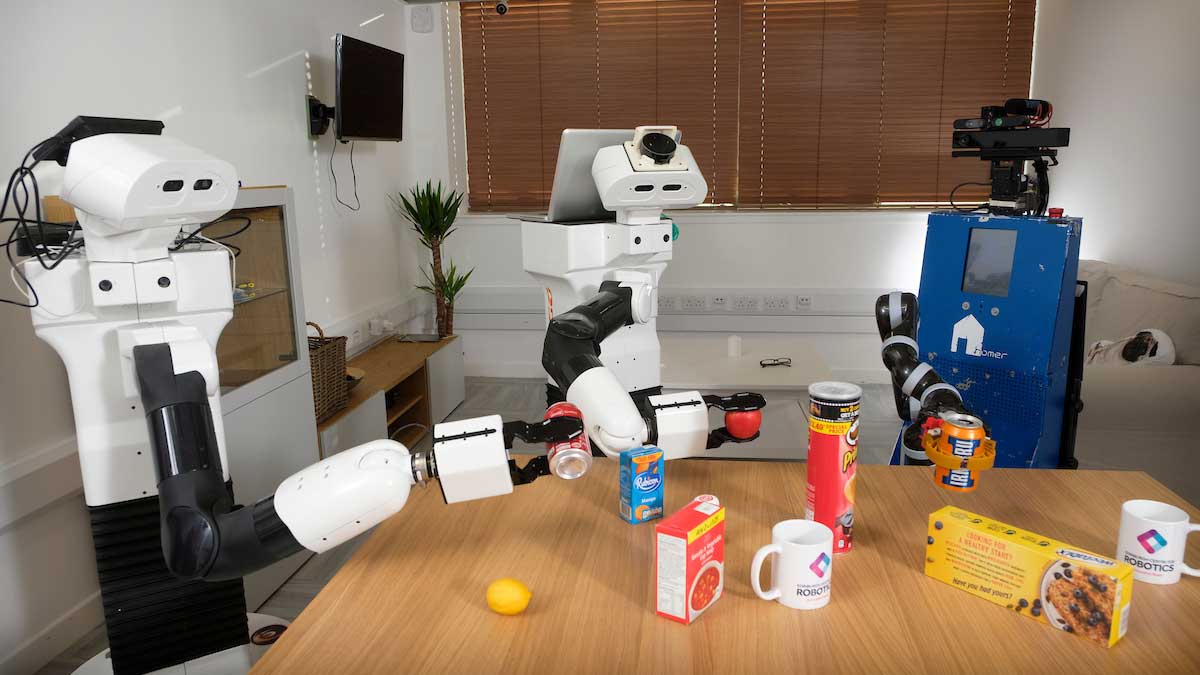
An interactive workshop, participants will explore the use of intelligent and robotic systems for the elderly or frail. Insights into the challenges facing healthcare professionals will be shared, along with hands-on exploration of new technologies, including robots and smart sensors, in the facility’s living lab.
📌 Tackling Frailty: Facilitating the Emergence of Healthcare Robots from Labs into Services
📅 Tuesday 4 June
🕙 1000-1600
📍 The National Robotarium, Heriot-Watt University, Edinburgh
Prof. Dr. Patrick C. K. Hung, Faculty of Business and IT, Ontario Tech University, Canada is speaking at the National Robotarium on 22 May.
Join us in the Atrium space from 12-1pm for an insightful talk on the social impacts of anthropomorphic and zoomorphic robots.
No booking required
Abstract
A social robot consists of a physical hardware component that interacts with humans connected through a network infrastructure as a cyber-physical computing system supported by cloud services. Human-robot interaction (HRI) is a research area that involves understanding, designing, and evaluating robots for use by or with humans. The Uncanny Valley theory describes the disturbing effect of imperfect human likenesses that have dominated HRI.
Referring to the Uncanny Valley, social robots usually constitute a form of anthropomorphism. Social robots typically behave like humans or animals, such as mimicry of human/animal behavior and emotional expression, with speech, gestures, movements, and eye-gaze features. Prior research found that it is much easier for an embodied humanoid robot with emotional expression to gain users’ trust to release personal information than a disembodied interactive kiosk. Emotions are essential to human cognition and behavior caused by an identifiable source, such as an event or seeing emotions in other people. During the pandemic, our research team designed and built a homemade robotic puppy with wood and mechatronics with a mechanical tail to express emotion from scratch with body language. This talk will then overview our social-technical research works from anthropomorphic to zoomorphic robots. This talk will also focus on a recent study of a guide dog robot for people with visual impairments in Canada.
Speaker Bio Patrick C. K. Hung is a Professor and Graduate Program Director of Computer Science at Ontario Tech University, Faculty of Business and Information Technology. He is a Leverhulme Visiting Professor at Aston University, England, and an Honorable Guest Professor at Shizuoka University, Hamamatsu, Japan. He was also a Distinguished Visiting Fellow at Abertay University, Scotland, and a Visiting Researcher at the University of São Paulo, Brazil. Dr. Hung worked with Boeing Research and Technology in Seattle on aviation services-related research with two U.S. patents on the mobile network dynamic workflow system. Before that, he was a Research Scientist with Australia’s Commonwealth Scientific and Industrial Research Organization. He is a founding member of the IEEE Technical Committee on Services Computing and IEEE Transactions on Services Computing. In addition, he is an editorial board member for the IEEE Transactions on Engineering Management and a coordinating editor of the Information Systems Frontiers. He has a Ph.D. and Master in Computer Science from the Hong Kong University of Science and Technology, a Master in Management Sciences from the University of Waterloo, Canada, and a Bachelor in Computer Science from the University of New South Wales, Australia.
https://thenationalrobotarium.com/wp-content/uploads/Ben-Glasgow-33.jpg13632048Louise Jackhttp://thenationalrobotarium.com/wp-content/uploads/Robotarium.pngLouise Jack2024-05-16 17:05:582024-05-23 10:40:31Anthropomorphic to Zoomorphic Social Robots: Our Experiences – Wed 22 May, 1200-1300
A robot that can wink, laugh, and shrug is about to turn the National Robotarium in Edinburgh into its first home in the UK.
Ameca, which is made by British company Engineered Arts, will be used as part of the facility’s outreach work with school pupils and the general public to study humans’ reactions to robots.
The National Robotarium, the UK’s centre for robotics and artificial intelligence (AI) based at Heriot-Watt University in partnership with The University of Edinburgh, has purchased Ameca, making it the first place in the UK to have this state-of-the-art humanoid robot.
Described by Engineered Arts as the ‘world’s most advanced’ humanoid robot, Ameca’s sophisticated features include embedded microphones, cameras, facial recognition software, and articulated motorised components which enable it to interact with people in a natural and engaging way. By showcasing Ameca’s capabilities through its public outreach and education programmes, the National Robotarium will seek to break down barriers and build trust between humans and robots.
Ameca will be utilised as part of the National Robotarium’s outreach and engagement programme, helping to build trust in robotics and improve adoption.
The facility’s dedicated public engagement team will feature Ameca at various events, school visits, and workshops across Scotland and beyond, providing opportunities for people of all ages and backgrounds to interact directly with the robot and learn about the latest advancements in robotics and AI.
Researchers will also utilise Ameca to study public perceptions and attitudes towards humanoid robots, gathering valuable insights to inform the development of future technologies that prioritise trust, transparency, and user-friendliness.
Steve Maclaren is Chief Operating Officer at the National Robotarium. He said:
“The arrival of Ameca at the National Robotarium marks a significant step forward in our mission to make robotics more accessible and relatable to the people of Scotland, the UK and beyond. Since opening our doors in September 2022, we’ve successfully hosted more than 50 in-person and virtual events and engaged with 1000s of school-aged children.
“Ameca represents an exciting opportunity to build on that success and take public engagement to the next level. By giving people the chance to interact with this state-of-the-art humanoid robot firsthand, we aim to demystify robotics, foster trust in human-robot interaction, and showcase the remarkable potential of these technologies to improve our daily lives and benefit society as a whole.”
Will Jackson is the founder and CEO of Engineered Arts Ltd. He said:
“We are incredibly proud to have Ameca join the many preeminent robots at the National Robotarium. Meeting an AI-embodied humanoid robot is a unique experience that very few people have witnessed and we are very excited to be able to share what can be a profound moment with a wider audience.”
The National Robotarium is part of the Data-Driven Innovation initiative, supported by £21 million from the UK Government and £1.4 million from the Scottish Government. The initiative aims to turn Edinburgh into the data capital of Europe and is part of the wider £1.5 billion Edinburgh and South-East Scotland City Region Deal.
https://thenationalrobotarium.com/wp-content/uploads/Ben-38-scaled-e1724410004325.jpg6651000Louise Jackhttp://thenationalrobotarium.com/wp-content/uploads/Robotarium.pngLouise Jack2024-04-17 00:01:472024-04-16 12:20:58‘World’s most advanced’ humanoid robot arrives at the National Robotarium
Researchers in Robotics and Artificial Intelligence (AI) from Heriot-Watt University and The University of Edinburgh hosted a visit from Caroline Lamb, NHS Scotland Chief Executive and Director – General Health and Social Care, at the National Robotarium on 18 March. The purpose of the visit was to showcase the latest innovations in robotics for healthcare being developed by scientists.
Led by Professor Lynne Baillie, Heriot-Watt’s world-leading expert in Human-Robot Interaction (HRI), the visit included an introduction from Chief Executive of the Robotarium, Stewart Miller, followed by a tour of the high-spec HRI labs and selection of demonstrations from researchers developing cutting-edge robotics and AI solutions to support people’s health, wellbeing and social care, and reduce pressure on clinical and healthcare staff.
Prof. Kia Nazarpour (University of Edinburgh), Dr Theo Georgiou (Heriot-Watt University) and Caroline Lamb
Examples of research included the FEATHER project, a ground-breaking study that is utilising AI and smart home sensors to monitor living habits and enable the early detection of urinary tract infections (UTIs). The project team, a partnership with the Robotarium and School of Informatics at Edinburgh University, is working with social care and residential homes to develop the smart data systems and help improve patient care for the condition, which affects 150 million people worldwide.
The Horizon Europe project SPRING, led by academic co-lead at the National Robotarium Professor Oliver Lemon, was also featured during the tour, with a demonstration of the socially-assistive ARI robots, which have been providing advice and comfort to elderly patients and those with cognitive decline in a hospital in Paris. Recent news of the study has captured the public’s imagination and garnered significant media interest worldwide.
The varied and comprehensive programme also included talks and visual presentations from Research Assistants and doctoral students from Edinburgh Centre for Robotics covering topics such as robotics-assisted surgery and assessment, automated upper-limb protheses and rehabilitation, robotic exoskeletons, wearable devices to combat drug overdoses, healthcare sensors, long-term monitoring resources for an ageing population, and legged robots.
Caroline was accompanied by Professor Soumen Sengupta, Chief Officer of South Lanarkshire Health and Social Care Partnership, throughout the visit. Following the tour, they joined scientists and business figures from the Robotarium in a roundtable discussion on the future of applications of robotics in the NHS and beyond.
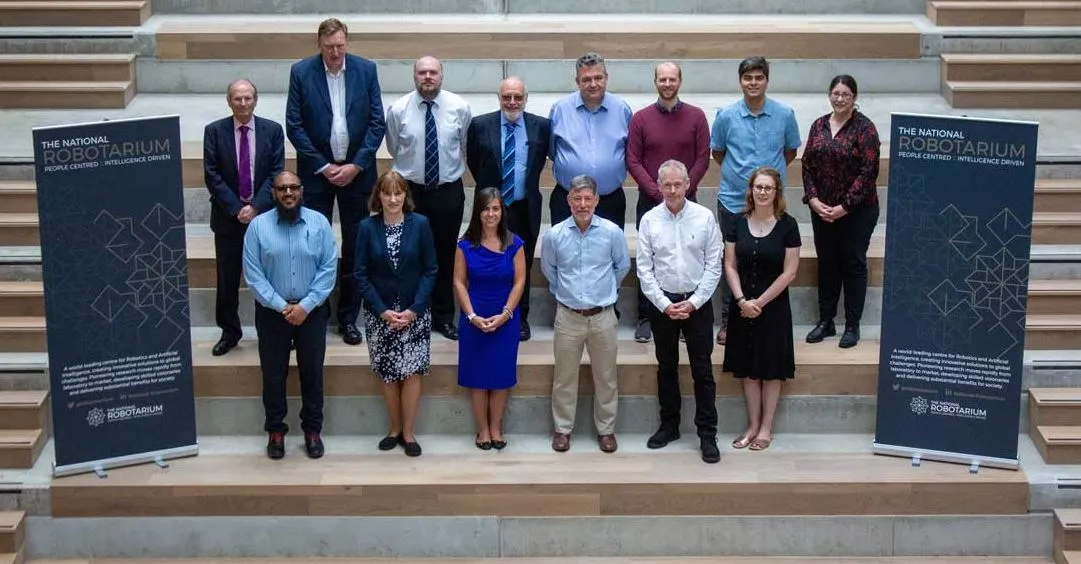
The visit was organised and led by Professor Lynne Baillie (front row, third from left)
Professor Lynne Baillie said: “On behalf of the research teams at Heriot-Watt and The University of Edinburgh, I’d like to express my gratitude to Caroline and Soumen for taking the time to visit the National Robotarium and learn about the wide-ranging robotic applications and solutions we’re developing with input from the health and social care industry.
“As Chief Executive of NHS Scotland and lead of the Digital Health and Care Directorate, Caroline was interested in learning about new innovations that can complement the existing care and support being given to patients across the country.
“Scotland’s population is ageing more rapidly than ever before. That, alongside the pandemic and other public health crises, is putting strain on existing health services, leading to longer waiting lists and staff burnout. We believe that the safe and responsible application of robotics, AI and data could provide solutions to current challenges facing the sector, facilitating independent-living for longer and improving patient wellbeing overall.”
Professor Soumen Sengupta, Chief Officer of South Lanarkshire University Health and Social Care Partnership, said: “Innovation and collaboration with partners across the nation is crucial to how increasingly sophisticated care is being delivered, compassionately, in and with communities.
“Indeed, this is something we are actively committed to in South Lanarkshire and across Lanarkshire as a whole.
“These are challenging times for health and social care services – which further reinforces the importance of innovation and collaboration with strategic partners such as our universities.
“From the stimulating presentations and lively discussions with colleagues from Heriot-Watt University and The University of Edinburgh, it is clear that there is huge scope to build upon the exciting developments that are already being progressed with the NHS in Scotland, and to expand the opportunities for collaboration in relation to social care and housing.
“We all clearly share a common, resolute commitment to the ongoing exchange of learning and experience with a view to harnessing all the potential of technology to enhance the vital work of our health and care staff and to improve the quality of lives across our diverse communities.
“I very much look forward to our harnessing the expertise and enthusiasm that is evident within the National Robotarium to contribute to the transformation of health and social care right across Scotland.”
https://thenationalrobotarium.com/wp-content/uploads/20240318_145730-scaled.jpg19202560Louise Jackhttp://thenationalrobotarium.com/wp-content/uploads/Robotarium.pngLouise Jack2024-03-27 10:00:492024-03-27 10:20:39Health and social care robots showcased for NHS Scotland Chief Executive
With the backing of funding from the Engineering and Physical Sciences Research Council (EPSRC), UKRAS-STEP will strengthen the UK’s Robotics and Autonomous Systems capabilities, improve the long-term career prospects of Research Technical Professionals (RTPs) and create stronger links between academia, industry and government.
Through a consortium of 37 universities within the existing UKRAS network, the project, led by University of Leeds Professor of Robotics, Robert Richardson, will deliver a programme of education across eight themes, designed to support the diverse range of technical expertise that currently supports world-class robotics research.
“Research technicians are the backbone of world-leading research into Robotics and Autonomous Systems, providing a wealth of technical expertise and operational support…”
– Steve Maclaren, Chief Operating Officer at the National Robotarium
Professor Richardson said: “Research Technicians in Robotics and Autonomous Systems play a pivotal role in advancing robotics research across various industry sectors in the UK, spanning from transport and healthcare to manufacturing and unmanned systems.
“Despite their amazing contribution, career growth opportunities are limited and as a result, some areas experience high staff turnover. UKRAS STEPS will establish a dedicated platform to address these challenges by facilitating the development of secondments, training programmes and mentorship schemes.
COO Steve Maclaren and Senior Technician Thomas McGravie
The National Robotarium will lead in formation of a number of task groups, each focused on addressing a particular challenge within the technical research sector. Through an open call, HEIs from the UK-RAS network will work together to deliver tasks ranging from small projects and producing training materials to holding national workshops and influencing policy through white papers.
“The UKRAS-STEP initiative will enable me and other technical research colleagues working in robotics across the UK to connect, share knowledge and best practice.”
– Thomas McGravie, Senior Technician at the National Robotarium
Chief Operating Officer at the National Robotarium Steve Maclaren will lead on the Task Groups work package. He said: “We are thrilled to be a part of the UKRAS-STEP programme and work with the RAS community to help advance training and opportunities for technical research staff.
“Research technicians are the backbone of world-leading research into Robotics and Autonomous Systems, providing a wealth of technical expertise and operational support that enable scientists to conduct research safely and effectively in an optimum research environment.
“Without them, we would be unable to maintain and manage essential research components such as robotic equipment, lab space, computer systems and software, so it is vital that our community of technical research professionals feel valued with opportunities to develop and grow.”
Thomas McGravie has been Senior Technician for Heriot-Watt University at the National Robotarium since it opened in September 2022. He said: “The UKRAS-STEP initiative will enable me and other technical research colleagues working in robotics across the UK to connect, share knowledge and best practice, and build upon our individual and collective skills.
“I’m excited to see the proposal come to life and look forward working more closely with the wider RTP community.”
About UKRAS-STEP
The UK Robotics and Autonomous Systems Strategic Technical Platform (UKRAS-STEP), led by University of Leeds, is one of 11 new projects benefitting from a share of a new £16 million investment by EPSRC and UKRI Digital Research Infrastructure (DRI) to improve the long-term career prospects of Research Technical Professionals (RTPs).
UKRAS-STEP will create a community-driven strategic technology platform that empowers individuals to develop, while building an inclusive community to enhance the UK research environment and support the delivery of world-class research in the UK.
Its three main objectives are:
i) To enhance individual technical knowledge, skills and career development amongst research technicians;
ii) Provide opportunities for networking, knowledge-sharing, community-driven activities, celebrating and promotion success, international collaboration and national advocacy;
iii) Deliver a flagship programme that is inclusive, ethical and sustainable.
https://thenationalrobotarium.com/wp-content/uploads/1000002836.jpg17342312Louise Jackhttp://thenationalrobotarium.com/wp-content/uploads/Robotarium.pngLouise Jack2024-03-18 11:04:362024-08-23 10:51:06The National Robotarium to support robotics technician development across UK
Next-generation socially assistive robots have been successfully tested in a healthcare setting to assist patients, alleviate their anxiety, and relieve pressure on nursing staff as part of a hospital trial co-conducted by researchers from the National Robotarium in Paris, France.
The SPRING (Socially Assistive Robots in Gerontological healthcare) trial developed robots equipped with advanced artificial intelligence to enable natural conversations, understand patient needs, and assist hospital staff with routine tasks across three waves of experiments with elderly volunteers at Assistance Publique Hôpitaux de Paris.
Results show that robots were able to smoothly engage in social interactions like greeting patients, answering questions, and providing directions. Critically, robots are quickly demonstrating an ability to comprehend multi-party conversations – following dialogue between several individuals simultaneously.
By undertaking simple but repetitive duties, robots also reduced potential physical contact between clinicians and patients as part of the trial, with early feedback suggesting the use of socially assistive robots may lower infection transmission risk, while boosting productivity of nurses and doctors.
Anxiety and uncertainty can often precede a hospital visit and it is understood that this behaviour can be more pronounced in senior patients, with up to 20% of older adults suffering from the illness1. It is hoped that the availability of helpful and socially intelligent robots that can converse and answer initial screening questions whilst alleviating busy hospital staff could prove extremely beneficial in clinical settings.
Patients and companions make their enquiries with the ARI robot
Professor Anne-Sophie Rigaud, Head of Department at Assistance Publique Hôpitaux de Paris, said:
“Our patients are increasingly interested in robotics and the evolution of hospital services, which they see as the logical evolution of our society. We believe that the ARI robot could in future become an essential element of patient care in hospitals, thanks to its capacity for social interaction and guidance.
“Older adults have also expressed that they’re pleased with the design of the robot and thought that it would be useful to provide information and companionship to patients with cognitive disorders.”
The feasibility of implementing the SPRING project has been made possible by academics at the National Robotarium who have made major advances in developing large language models (LLM) that enable robots to be capable of natural and fluent conversations with groups of people.
The Paris trials have provided key insights into how this emerging technology can enhance care delivery and safety whilst simultaneously advancing innovations in areas like computer vision, audio processing and human-robot interaction which have potential for further global applications.
The €8.4 million collaborative SPRING project includes researchers from Heriot Watt University, the National Robotarium, the Czech Technical University, Bar Ilan University Israel, University of Trento Italy, Assistance Publique Hôpitaux de Paris, PAL Robotics Spain, ERM AUtomatismes France, and is coordinated by Inria France. SPRING received support from Horizon 2020, a programme funded by the European Union.
The National Robotarium is part of the Data-Driven Innovation initiative, supported by £21 million from the UK Government and £1.4 million from the Scottish Government. The initiative aims to turn Edinburgh into the data capital of Europe and is part of the wider £1.3 billion Edinburgh and South-East Scotland City Region Deal.
Professor Oliver Lemon, academic co-lead at the National Robotarium
Oliver Lemon is a professor of AI and academic co-lead at the National Robotarium. He said:
“Today’s rapid advances in AI are truly inspiring and open up a world of possibilities for its positive impact on various sectors, including healthcare. One of the most significant contributions of robotics and AI is its ability to conserve resources and alleviate human workload, therefore providing valuable new tools for enhancing healthcare delivery.
“The prospect of robots seamlessly collaborating with hospital staff to enhance the patient experience is now closer to reality. Promising initial trials at Assistance Publique Hôpitaux de Paris have demonstrated our robot’s ability to converse effectively with patients and their companions simultaneously.
“We believe that the SPRING project marks a significant milestone in the development of interactive robotics, and we are proud of its achievements, while recognising the exciting challenges that lie ahead.”
UK Government Minister for Scotland, Malcolm Offord, said:
“The early trials into helper robots successfully demonstrates the great potential such advanced technology has to deliver vital support to health staff, improve patient care and prevent the spread of infections and diseases.
“The UK Government has invested £21 million in the National Robotarium helping foster world-leading research and support high quality jobs, investment and growth, as part of our more than £2.9 billion investment to level up across Scotland.”
Scottish Government Wellbeing Economy, Fair Work and Energy Secretary, Neil Gray, said:
“I welcome this progress using artificial intelligence to help ease the pressure on health service staff.
“With Scottish Government support, the National Robotarium is using cutting edge research to help drive innovation and artificial intelligence to deliver creative solutions to real world challenges.”
https://thenationalrobotarium.com/wp-content/uploads/ARI-INRIA-4-scaled.jpg14402560Louise Jackhttp://thenationalrobotarium.com/wp-content/uploads/Robotarium.pngLouise Jack2024-01-31 00:01:252024-01-31 09:23:00Socially assistive robots deployed in Paris hospital to ease pressure on staff and reassure patients
Trainee surgeons learning to conduct laparoscopic (or keyhole) surgery will soon be able to complete their training quicker thanks to an AI-empowered system being developed by researchers at the National Robotarium of Heriot-Watt University, in collaboration with the Dundee Institute for Healthcare Simulation of University of Dundee.
Using artificial intelligence (AI) to monitor human movements in real-time, the self-training system called AILap will combine machine learning and machine vision technologies with low-cost physical box trainers to provide users with real-time feedback that improves their keyhole surgery techniques and skills.
Over the past 30 years, keyhole or laparoscopic surgery has become common practice for a number of procedures, including operations on the gastrointestinal tract where precise stitching (called suturing) is vital. Existing assessment and training methods for these vital skills are often time consuming, labour intensive, access limited, and costly.
A recent survey from surgical-training body the Fellowship Council revealed that up to 56% of fellows who had finished their training were not able to sufficiently execute laparoscopic suturing, with surgical trainees identifying laparoscopic suturing as the most deficient, yet the most important skill, at the conclusion of their surgical training.
It is hoped that AILap will support surgical trainees to increase their access to training through self-directed exercises and benefit from immediate feedback powered by AI. The project will also help clinical academics responsible for the training of surgeons to restructure their programmes to teach more trainees with the support of AI.
The project is composed of researchers from the National Robotarium at Heriot-Watt University, alongside academics from the University of Dundee. It has been awarded £600,000 from the UK Government by the Engineering and Physical Sciences Research Council, part of UK Research and Innovation.
As the National Robotarium celebrates its first anniversary since opening in September 2022, AILap is the latest in a series of transformational projects associated with the facility.
The National Robotarium is part of the Data-Driven Innovation initiative and is supported by £21 million from the UK Government and £1.4 million from the Scottish Government through the £1.3 billion Edinburgh and South East Scotland City Region Deal.
AILap project lead and National Robotarium academic, Dr Mustafa Suphi Erden (pictured), said:
“Laparoscopy training takes a significant amount of time to learn and currently requires access to training platforms and guidance from expert surgeons who are often time-poor. That’s why AILap technology has the potential to play an incredibly important role in supporting professional training in our public services and health systems.
“We hope AILap will enable training a greater number of surgeons without the need of an expert supervision. The technology will work with off-the-shelf components so it will be affordable and accessible for health care systems around the world.
“At the National Robotarium, researchers are passionate about developing robotics and AI innovations that can be harnessed to tackle the biggest challenges in healthcare. Whether in the field of robotic surgery, laser surgery, assisted living, or early diagnosis for diseases, we’re driving research and building partnerships that can change lives.”
Stewart Miller, CEO of the National Robotarium, said:
“We launched the National Robotarium a year ago with the mandate to develop AI and Robotics solutions that will help people live safer, healthier, and more productive lives. Technologies like this have enormous potential to address key challenges we face as a society, such as the significant time and resources it takes to equip prospective surgeons with the knowledge, practice, and experience of laparoscopic procedures.
“The announcement of this pioneering research project follows 12 months in which our dedicated teams of researchers, academics and engineers have delivered a breadth of cutting-edge innovation on the world stage in social and medical care, agritech, the global energy transition and beyond. AILap is another important milestone in that story and one which I believe demonstrates Scotland and the UK’s role at the forefront of global developments in AI and robotics.”
UK Government Minister for Scotland Malcolm Offord said:
“This pioneering AI technology has the potential to deliver faster and cheaper training for surgeons in the UK, meaning improved skills and better outcomes for patients.
“The UK Government is supporting the National Robotarium with £21 million investment helping to foster this world-leading research as well as delivering high-quality jobs and bringing sustainable economic growth to the region as part of our £300 million investment in South East Scotland.”
https://thenationalrobotarium.com/wp-content/uploads/laparoscopic-surgery.jpg14142121Louise Jackhttp://thenationalrobotarium.com/wp-content/uploads/Robotarium.pngLouise Jack2023-11-02 17:19:182023-11-02 17:20:09Autonomous training tool delivers in-demand surgical skills with real-time feedback
Funding for a new training centre to make robots safer and more trustworthy has been announced for the Edinburgh Centre for Robotics.
The new UKRI Centre for Doctoral Training in Dependable and Deployable Artificial Intelligence for Robotics – shortened to CDT-D2AIR (pronounced ‘dare’) – will train new PhD students in verification and certification systems for robotics and AI.
The aim of the centre, delivered in partnership by experts from Heriot-Watt University and The University of Edinburgh, is to ensure that robotics applications in the home and in industry – such as AI assistants to help with independent living or robotic machinery in manufacturing and construction – can interact safely with the environment and users. Postgraduate students in the CDT will be given access to high-spec lab space, robotics equipment and expertise at the National Robotarium as part of their studentship.
The centre is being awarded a share of £117 million funding by UK Research and Innovation (UKRI) – the UK’s national funding agency for investing in science and research – as one of 12 new Centres for Doctoral Training announced by the UK’s Department for Science, Innovation and Technology in the week of the AI Safety Summit 2023.
The successful submission, driven by former National Robotarium academic co-lead Professor Helen Hastie, highlighted the opportunity and need for students to be able to build skills and understanding around AI, verification, design and robotics, ensuring the UK is equipped with the knowledge to develop AI-driven robotic technologies that are trustworthy, dependable and ethical for end users and industry. The centre builds on work already being undertaken by the UKRI TAS (Trustworthy Autonomous Systems) Node in Trust, which Professor Hastie and others at Heriot-Watt are involved in.
Professor Ron Petrick, a Professor of Computer Science at Heriot-Watt University and a world-leading researcher in automated planning and robotics, is Director of the new D2AIR Centre for Doctoral Training.
He said: “There is a clear need for robotics and AI systems be certifiable, reliable and capable of interacting safely with people and the environment. While AI methods are being increasingly used in robotics, much of this technology was not originally designed with safety and other important human-centred requirements in mind. Making AI truly applicable to, and deployable in, robotic solutions will require advanced sets of skills and a new way of thinking.”
Professor Petrick said examples such as generative AI assistants – embodied as robots or speakers – that are deployed in the home to help with independent living, had to converse and collaborate safely. Robots that can sense and interact in their environment for manufacturing and construction also had to work in challenging and extreme environments.
“Crucially, in all of these cases, the safety of autonomous systems is key to their deployability, especially when they need to operate around people,” he added.
Professor Petrick said D2AIR would build a new talent pipeline of graduates who can think in new ways around researching, designing, building and deploying dependable and safe robotics solutions.
“This pipeline will increase productivity, catapulting the UK as a world-leader in trustworthy robotics and AI technologies,” Professor Petrick said.
UKRI said £117 million funding in total had been awarded to 12 Centres for Doctoral Training in Artificial Intelligence based at 16 universities. The investment will continue to ensure that the UK has the skills needed to seize the potential of the AI era, and to nurture the British tech talent that will push the AI revolution forwards, UKRI said.
Michelle Donelan, UK Secretary of State for Science, Innovation and Technology, said: “The UK is at the very front of the global race to turn AI’s awesome potential into a giant leap forward for people’s quality of life and productivity at work, all while ensuring this technology works safely, ethically and responsibly.
“The plans we are announcing today will future-proof our nation’s skills base, meaning we can reap the benefits of AI as it continues to develop. At the same time, we are taking the first steps to put the power of this technology to work, for good, across Government and society.”
UKRI Chief Executive, Professor Dame Ottoline Leyser, said: “The UK is in a strong position to harness the power of AI to transform many aspects of our lives for the better. Crucial to this endeavour is nurturing the talented people and teams we need to apply AI to a broad spectrum of challenges, from healthy aging to sustainable agriculture, ensuring its responsible and trustworthy adoption. UKRI is investing £117 million in Centres for Doctoral Training to develop the talented researchers and innovators we need for success.”
https://thenationalrobotarium.com/wp-content/uploads/DSC0223-copy-scaled.jpg17072560Louise Jackhttp://thenationalrobotarium.com/wp-content/uploads/Robotarium.pngLouise Jack2023-11-02 12:32:122023-11-02 12:46:02New training centre created to make robots safer and more trustworthy
Heriot-Watt University has been named as one of 29 new members joining the Turing University Network. The network provides institutes that excel in data science and AI the opportunity to engage with its broader network to advance world-class research that address global challenges. Heriot-Watt is home to the National Robotarium, a £22.4m centre for robotics and AI, created to produce new and innovative technologies to overcome real-world obstacles, boosting its credentials as a leader in the UK data science and AI landscape.
The Alan Turing Institute launched the network as a pilot in April 2023, with an open call for new members announced in early summer this year. It now includes 65 members across the UK, facilitating better connections and providing access to a bespoke network that encourages collaboration across the data science and AI ecosystem. The network is a key component of The Alan Turing Institute’s strategy and supports it in delivering its three overarching goals: to advance world-class research and apply it to national and global challenges, build skills for the future, and drive an informed public conversation.
Dr Jean Innes, Chief Executive Officer of The Alan Turing Institute, said: “We’re really pleased to welcome our new members to the network. We hope that they will benefit from being part of our data science and AI group and find opportunities for new, meaningful collaborations across the data science and AI landscape.”
Oliver Lemon, Professor in Conversational AI, and academic co-lead of the National Robotarium, Heriot-Watt’s Global Research Institute for robotics and artificial intelligence, said: “We are thrilled to be accepted into the Turing University Network, a prestigious consortium of universities dedicated to advancing world-class AI research with real-world applications.
“The National Robotarium was created to develop robotics and AI solutions that make a difference in the world. By joining the Turing University Network, we will be able to collaborate with other leading institutions and build on our collective expertise to create even more ground-breaking innovations.
“This partnership is a testament to the strength of our AI research programme and our commitment to using technology to solve the world’s most pressing challenges. We are excited to work with our fellow Turing Network members to make a positive impact on the economy, industry, and society.”
The full list of universities joining the network are:
•Aston University
•University of Aberdeen
•University of Bath
•University of Bradford
•University of Dundee
•University of East Anglia
•University of Essex
•University of Greenwich
•University of Hull
•University of Lincoln
•University of Portsmouth
•University of Salford
•University of Sussex
•University of Westminster
•University of York
•Birkbeck, University of London
•Coventry University
•Edinburgh Napier University
•Heriot-Watt University
•Lancaster University
•London Business School
•Loughborough University
•Manchester Metropolitan University
•Oxford Brookes University
•Sheffield Hallam University
•Swansea University
•The Open University
•University of Leicester
•University of St Andrews
https://thenationalrobotarium.com/wp-content/uploads/TATI_UniversityNetworkLogo_Black-scaled-1.jpg25472560Louise Jackhttp://thenationalrobotarium.com/wp-content/uploads/Robotarium.pngLouise Jack2023-10-02 09:01:002023-10-24 12:05:34Turing University Network: A Collaboration for World-Class AI Research
Innovators, healthcare experts, students and scientists converged for a special 5-day hackathon event, focused on shaping solutions for better independent living.
Sponsored by the Scottish Informatics & Computer Science Alliance (SICSA) and the EPSRC Network+ EMERGENCE, the Robotics + Care Mashup took place at the National Robotarium from 16-20 October.
Hosted by the Heriot-Watt University CARE (Cognitive Assistive Robotic Environments) Group, the event offered a unique opportunity to test and develop emerging technologies, including cloud, robotics and IoT (Internet of Things) equipped with machine learning and artificial intelligence capabilities, for health and social care. Applications can include non-intrusive monitoring of health status and vital signs, detecting patterns and trends in behaviour, triaging, facilitating communication and social-connectedness, and generally supporting general self-management of health and wellbeing.
Working in teams, students in different disciplines, such as robotics, engineering, computer science, nursing, medicine, psychology and business, developed new and innovative concepts that can address challenges for healthcare providers and people who require assisted living support. Throughout the week, end-users, academics, technologists and care providers assesssed the progression of each idea and provided feedback in real-time.
The Mashup also hosted a number of talks and product development sessions from technical providers on topics including APIs and sensor kits, ethics and cybersecurity, and live robot demonstrations in the Laboratory for Robotic Assistive living (LARA)
Godfrey works with the HRI research group, located in the Laboratory for Assistive Living (LARA), a unique test lab for developing assistive robots
EMERGENCE Robotics + Care Mashup, 16-20 Oct 2023
Toyota Human Support Robot (HSR)
EMERGENCE Robotics + Care Mashup, 16-20 Oct 2023
https://thenationalrobotarium.com/wp-content/uploads/NR-stills-76.png10552000Louise Jackhttp://thenationalrobotarium.com/wp-content/uploads/Robotarium.pngLouise Jack2023-09-07 14:01:542024-04-08 16:08:13Robotics + Care Mashup event to improve independent living
We may request cookies to be set on your device. We use cookies to let us know when you visit our websites, how you interact with us, to enrich your user experience, and to customize your relationship with our website.
Click on the different category headings to find out more. You can also change some of your preferences. Note that blocking some types of cookies may impact your experience on our websites and the services we are able to offer.
Essential Website Cookies
These cookies are strictly necessary to provide you with services available through our website and to use some of its features.
Because these cookies are strictly necessary to deliver the website, refusing them will have impact how our site functions. You always can block or delete cookies by changing your browser settings and force blocking all cookies on this website. But this will always prompt you to accept/refuse cookies when revisiting our site.
We fully respect if you want to refuse cookies but to avoid asking you again and again kindly allow us to store a cookie for that. You are free to opt out any time or opt in for other cookies to get a better experience. If you refuse cookies we will remove all set cookies in our domain.
We provide you with a list of stored cookies on your computer in our domain so you can check what we stored. Due to security reasons we are not able to show or modify cookies from other domains. You can check these in your browser security settings.
Google Analytics Cookies
These cookies collect information that is used either in aggregate form to help us understand how our website is being used or how effective our marketing campaigns are, or to help us customize our website and application for you in order to enhance your experience.
If you do not want that we track your visit to our site you can disable tracking in your browser here:
Other external services
We also use different external services like Google Webfonts, Google Maps, and external Video providers. Since these providers may collect personal data like your IP address we allow you to block them here. Please be aware that this might heavily reduce the functionality and appearance of our site. Changes will take effect once you reload the page.
Google Webfont Settings:
Google Map Settings:
Google reCaptcha Settings:
Vimeo and Youtube video embeds:
Other cookies
The following cookies are also needed - You can choose if you want to allow them:
Privacy Policy
You can read about our cookies and privacy settings in detail on our Privacy Policy Page.