Autonomous training tool delivers in-demand surgical skills with real-time feedback
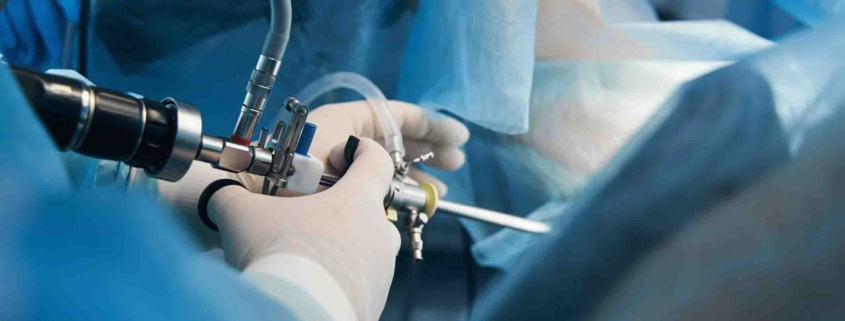
Trainee surgeons learning to conduct laparoscopic (or keyhole) surgery will soon be able to complete their training quicker thanks to an AI-empowered system being developed by researchers at the National Robotarium of Heriot-Watt University, in collaboration with the Dundee Institute for Healthcare Simulation of University of Dundee.
Using artificial intelligence (AI) to monitor human movements in real-time, the self-training system called AILap will combine machine learning and machine vision technologies with low-cost physical box trainers to provide users with real-time feedback that improves their keyhole surgery techniques and skills.
Over the past 30 years, keyhole or laparoscopic surgery has become common practice for a number of procedures, including operations on the gastrointestinal tract where precise stitching (called suturing) is vital. Existing assessment and training methods for these vital skills are often time consuming, labour intensive, access limited, and costly.
A recent survey from surgical-training body the Fellowship Council revealed that up to 56% of fellows who had finished their training were not able to sufficiently execute laparoscopic suturing, with surgical trainees identifying laparoscopic suturing as the most deficient, yet the most important skill, at the conclusion of their surgical training.
It is hoped that AILap will support surgical trainees to increase their access to training through self-directed exercises and benefit from immediate feedback powered by AI. The project will also help clinical academics responsible for the training of surgeons to restructure their programmes to teach more trainees with the support of AI.
The project is composed of researchers from the National Robotarium at Heriot-Watt University, alongside academics from the University of Dundee. It has been awarded £600,000 from the UK Government by the Engineering and Physical Sciences Research Council, part of UK Research and Innovation.
As the National Robotarium celebrates its first anniversary since opening in September 2022, AILap is the latest in a series of transformational projects associated with the facility.
The National Robotarium is part of the Data-Driven Innovation initiative and is supported by £21 million from the UK Government and £1.4 million from the Scottish Government through the £1.3 billion Edinburgh and South East Scotland City Region Deal.

AILap project lead and National Robotarium academic, Dr Mustafa Suphi Erden (pictured), said:
“Laparoscopy training takes a significant amount of time to learn and currently requires access to training platforms and guidance from expert surgeons who are often time-poor. That’s why AILap technology has the potential to play an incredibly important role in supporting professional training in our public services and health systems.
“We hope AILap will enable training a greater number of surgeons without the need of an expert supervision. The technology will work with off-the-shelf components so it will be affordable and accessible for health care systems around the world.
“At the National Robotarium, researchers are passionate about developing robotics and AI innovations that can be harnessed to tackle the biggest challenges in healthcare. Whether in the field of robotic surgery, laser surgery, assisted living, or early diagnosis for diseases, we’re driving research and building partnerships that can change lives.”
Stewart Miller, CEO of the National Robotarium, said:
“We launched the National Robotarium a year ago with the mandate to develop AI and Robotics solutions that will help people live safer, healthier, and more productive lives. Technologies like this have enormous potential to address key challenges we face as a society, such as the significant time and resources it takes to equip prospective surgeons with the knowledge, practice, and experience of laparoscopic procedures.
“The announcement of this pioneering research project follows 12 months in which our dedicated teams of researchers, academics and engineers have delivered a breadth of cutting-edge innovation on the world stage in social and medical care, agritech, the global energy transition and beyond. AILap is another important milestone in that story and one which I believe demonstrates Scotland and the UK’s role at the forefront of global developments in AI and robotics.”
UK Government Minister for Scotland Malcolm Offord said:
“This pioneering AI technology has the potential to deliver faster and cheaper training for surgeons in the UK, meaning improved skills and better outcomes for patients.
“The UK Government is supporting the National Robotarium with £21 million investment helping to foster this world-leading research as well as delivering high-quality jobs and bringing sustainable economic growth to the region as part of our £300 million investment in South East Scotland.”