This workshop has been postponed and is no longer going ahead on 21 January. An alternative date will be announced shortly.
The National Robotarium’s Robotics Readiness Workshops are designed to help you assess where your business stands in terms of robotic adoption and equip you with bespoke tools to guide your journey. Whether you’re just starting or looking to future-proof your operations, this workshop will provide the insights and practical steps needed to integrate robotics effectively. We’ll help you identify your current readiness level and outline next steps tailored to your business, ensuring a smooth transition into robotics adoption.
Note: This workshop, delivered as part of The National Robotarium’s Robotics Adoption Fund, will focus specifically on robotics for textiles sectors.
Workshop format
Participation involves attending a half-day workshop at the National Robotarium.
Through interactive sessions, group discussions and real-world case studies, you will:
Discover how to adopt and scale robotics effectively.
Avoid common pitfalls and make smarter investments.
Leverage insights from The National Robotarium to address global industry challenges.
Eligibility
We’re seeking business leaders, operations managers, and decision-makers from companies of all sizes who are looking to understand how robotics can drive efficiency and innovation.
This workshop is also ideal for professionals involved in innovation or technical implementation, ensuring that those with a technical background in robotics can further explore its business applications.
Registration
Register via Eventbrite.
After reviewing your application, our team will contact you and, if successful, invite you to complete a self-assessment task ahead of the in-person workshop.
The National Robotarium’s Robotics Readiness Workshops are designed to help you assess where your business stands in terms of robotic adoption and equip you with bespoke tools to guide your journey. Whether you’re just starting or looking to future-proof your operations, this workshop will provide the insights and practical steps needed to integrate robotics effectively. We’ll help you identify your current readiness level and outline next steps tailored to your business, ensuring a smooth transition into robotics adoption.
Note: This workshop, delivered as part of The National Robotarium’s Robotics Adoption Fund, will focus specifically on robotics for the agriculture sector.
Workshop format
Participation involves attending a half-day workshop at the National Robotarium.
Through interactive sessions, group discussions and real-world case studies, you will:
Discover how to adopt and scale robotics effectively.
Avoid common pitfalls and make smarter investments.
Leverage insights from The National Robotarium to address global industry challenges.
Eligibility
We’re seeking business leaders, operations managers, and decision-makers from companies of all sizes who are looking to understand how robotics can drive efficiency and innovation.
This workshop is also ideal for professionals involved in innovation or technical implementation, ensuring that those with a technical background in robotics can further explore its business applications.
After reviewing your application, our team will contact you and, if successful, invite you to complete a self-assessment taks ahead of the in-person workshop.
From 22-26 September, world-leading experts and entrepreneurs from Scotland’s technology, science and enterprise ecosystem are joining forces to showcase the brightest and best of Scottish innovation for the Scottish Government’s National Innovation Week 2025.
The National Robotarium, the UK’s centre for robotics and Artificial Intelligence at Heriot-Watt University, is part of a number of initiatives that have been highlighted as pioneers in transformative technologies and industries of the future.
£5 million for advanced manufacturing
Scotland’s first National Innovation Week kicked-off at The National Robotarium with an announcement of £5 million investment package for high-growth and high-innovation industries.
Minister for Business Richard Lochhead MSP with Business Development Manager Lisa Farrell during a tour of the facility for Scotland’s National Innovation Week 2025
Minister for Business, Richard Lochhead MSP visited the facility to explore the latest robotics technologies and hear from Business Development Manager Lisa Farrell how the Scottish and UK Government’s initial investment into The National Robotarium has yielded much success in driving forward new technological solutions, as well as stimulating economic growth through its business acceleration programme. Following the tour, the Minister announced the new £5m funding package to bolster Scotland’s cutting-edge innovation industries, including more than £2m of support for new market clusters set out in Scotland’s Innovation Strategy, encompassing space, robotics and critical technologies like semiconductors and quantum systems.
Borderlands Deep Tech Accelerator Hub announces partners
The National Robotarium was named as a key delivery partner in a new Deep Tech Accelerator Hub being launched in the Scottish Borders.
Led by South of Scotland Enterprise (SOSE), the new Hub – based at Borders College Hawick campus – will empower businesses in the South of Scotland to harness the potential of robotics, space, Artificial Intelligence (AI) and deep tech, driving innovation in key sectors and supporting the emergence of new industries.
Borders College Hawick Campus | New STEM, ECO Room education learning centre | Photo Phil Wilkinson
The focus of the Hub will be to support innovation, growth, scale-up, and new business in key industries including textiles, agriculture, manufacturing and in Natural Capital. The Hub will also offer entrepreneurial support, pre and start up support, and provide a Research & Development space featuring a living lab.
It will also have expert technical support for companies who want to test how robotics and deep tech could benefit their businesses.
As well as The National Robotarium, other key partners include Edinburgh Napier University, Scotland’s Rural College (SRUC), Glasgow School of Art, and BE-ST, Scotland’s national innovation centre for construction and the built environment.
Stewart Miller, CEO of The National Robotarium, said:
“This is a very exciting time for deep-tech companies in Scotland with opportunities – like the Deep Tech Accelerator Hub and the recently announced Deep Tech Growth programme – rapidly accelerating to allow our innovative tech companies anchor and scale right here in Scotland.
“Deep tech is going to affect all our lives – and therefore strategic support and industry investment has to go beyond the central belt.
“As CEO of the UK’s National Robotarium, we are working with SOSE to enable the South of Scotland to not only benefit from transformational technologies like robotics, but to also be a driving force in their development, ensuring deep-tech advancement is equitable and fully impactful.”
Converge – Innovation Unlocked
The National Robotarium and Converge, Scotland’s national entrepreneurial programme for the university sector, have highlighted the critical need for ‘innovation pathways’ to fast-track new technologies from early-concept to global commercialisation.
The organisations have joined together to demonstrate how a joined-up approach to entrepreneurship can accelerate innovation and delivery significant economic and societal benefit. One example of that success is Bioliberty, a robotics start-up that is poised to revolutionise the rehabilitation and physical therapy sector leveraging soft robotics, gamification and AI.
Bioliberty have created Lifeglov for patient rehabilitation
From their shared home at Heriot-Watt University, Converge and The National Robotarium have each supported the medtech company as it evolved from a University of Edinburgh start-up into a business with global ambitions.
CTO and co-founder, Ross O’Hanlon understands the value of structured innovation support.
“As engineering graduates with an early-stage idea, we truly didn’t know what we didn’t know” says Ross, “so Converge helped to fill in those gaps with essential business training and support. The initial funding was also crucial in launching the business and preparing us for the next steps”.
Having successfully navigated the early stages of launching a business with Converge, Bioliberty then found its natural home at the National Robotarium, accessing office space, labs and specialist equipment to rapidly advance their innovative Lifehub Clinic technology. Now with FDA registration complete and flagship products ready, Bioliberty is partnering with top US rehabilitation institutions to revolutionise patient care.
As the UK sets out its ambitious plans to rapidly expand its AI capabilities, The National Robotarium, the UK’s centre for robotics and Artificial Intelligence, is powering the ambitions for the ‘arms and legs of AI’: robots.
Now, as part of the centre’s ongoing commitment to drive the national adoption of robotics and AI, The National Robotarium is working closely with NVIDIA to leverage cutting-edge robotics and AI frameworks and create a robotics and AI ecosystem to enable growth and leadership in the UK.
The UK’s hub for robotics innovation
From its home at Heriot-Watt University in Edinburgh, The National Robotarium is widely recognised as the UK’s hub for robotics innovation; supporting cutting-edge, practical research, helping early-stage businesses grow, and fast-tracking new technologies that can transform people’s work, health and lives.
The model has attracted significant recognition within the UK and Scottish Governments, whose support via the Edinburgh and South-East Scotland City Region Deal was instrumental to launching the facility – as a partnership between Heriot-Watt and The University of Edinburgh – in September 2022. Building on this momentum, the Scottish Government recently backed a new initiative to help deep tech companies in Scotland anchor and scale – and fast-track robotics adoption within their operations – marking an encouraging step-change in policy that positions emerging technologies, including robotics and AI, as a key driver for economic growth.
A new era of AI sovereignty
This comes at a pivotal moment as the UK lays the groundwork for a new era of AI sovereignty, with an unprecedented £2 billion recently committed by the UK Government to build the robust, sustainable and secure infrastructure required to physically deploy advanced AI across the country. The opportunity for industry experts at the cutting-edge of digital technologies is substantial. Working with NVIDIA and other leading technology companies can help fully realise the UK’s potential for digital transformation through AI.
Celebrating the UK’s AI ecosystem
At a special UK ecosystem event this week, the National Robotarium Head of Robotics Dr Ingo Keller will lend an expert voice on AI-powered robotics, which are transforming healthcare delivery, supporting offshore energy maintenance, and driving manufacturing innovation, all crucial for delivering the UK Government’s vision.
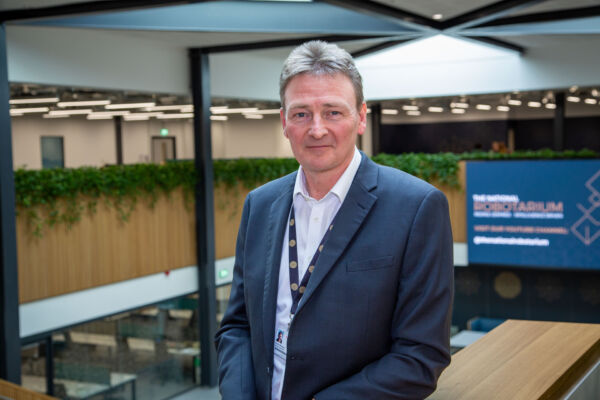
Dr Ingo Keller is Head of Robotics at The National Robotarium
Coinciding with the event, TechUK, the UK’s technology trade association and champion of The National Robotarium, has announced the launch of a dedicated robotics programme within its Tech and Innovation portfolio. By acting as convenor between industry, government and academia, it will provide a platform to advance the UK’s global leadership in robotics, and help towards realising The National Robotarium’s ongoing mission to create a national robotics strategy.
Dr Ingo Keller said: “This is a pivotal time for technological advancement in the UK and the rapid pace in which government are working in collaboration with the private sector, trade associations and other industry experts is driving real progress in delivering a digital infrastructure that can support the UK’s economic and productivity goals.
“However, to fully realise the UK’s ambitions in AI and innovation, it is essential to include robotics – the physical embodiment of AI – as a core component of the national strategy.
“In just three years, The National Robotarium has emerged as a leading force in UK robotics, championing the economic and societal value of building a strong robotics ecosystem. By harnessing AI and supercomputing to power intelligent machines, our work is helping to transform manufacturing, create high-value jobs, and deliver smarter public services.
“As the UK continues to invest in AI and digital transformation, robotics will play a vital role in shaping a future that is not only more efficient and productive, but one that drives growth and global competitiveness.”
The National Robotarium is working with NVIDIA to leverage cutting-edge robotics and AI frameworks to create a robotics and AI ecosystem in the UK
Examples of AI-powered robotics at The National Robotarium include:
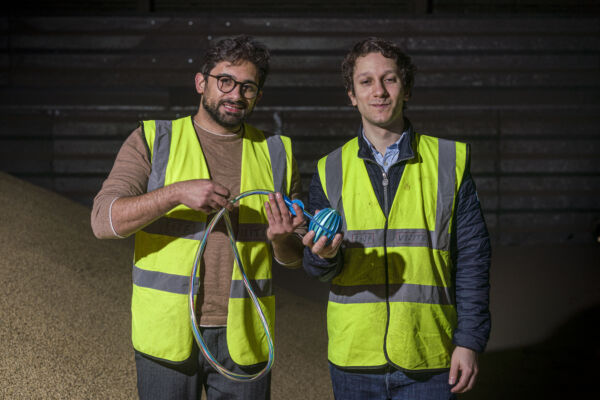
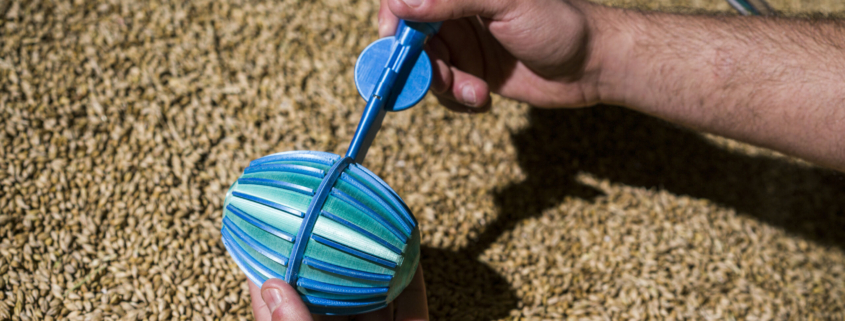
Crover, an agritech company who have created a range of smart portable robot drones that can ‘swim’ through industrial grain silos. Crover utilise AI to gather and transmit data on the integrity of the grain and, when needed, deploying the robot’s burrowing function to optimise the grain’s storage, reducing waste and improving staff safety.
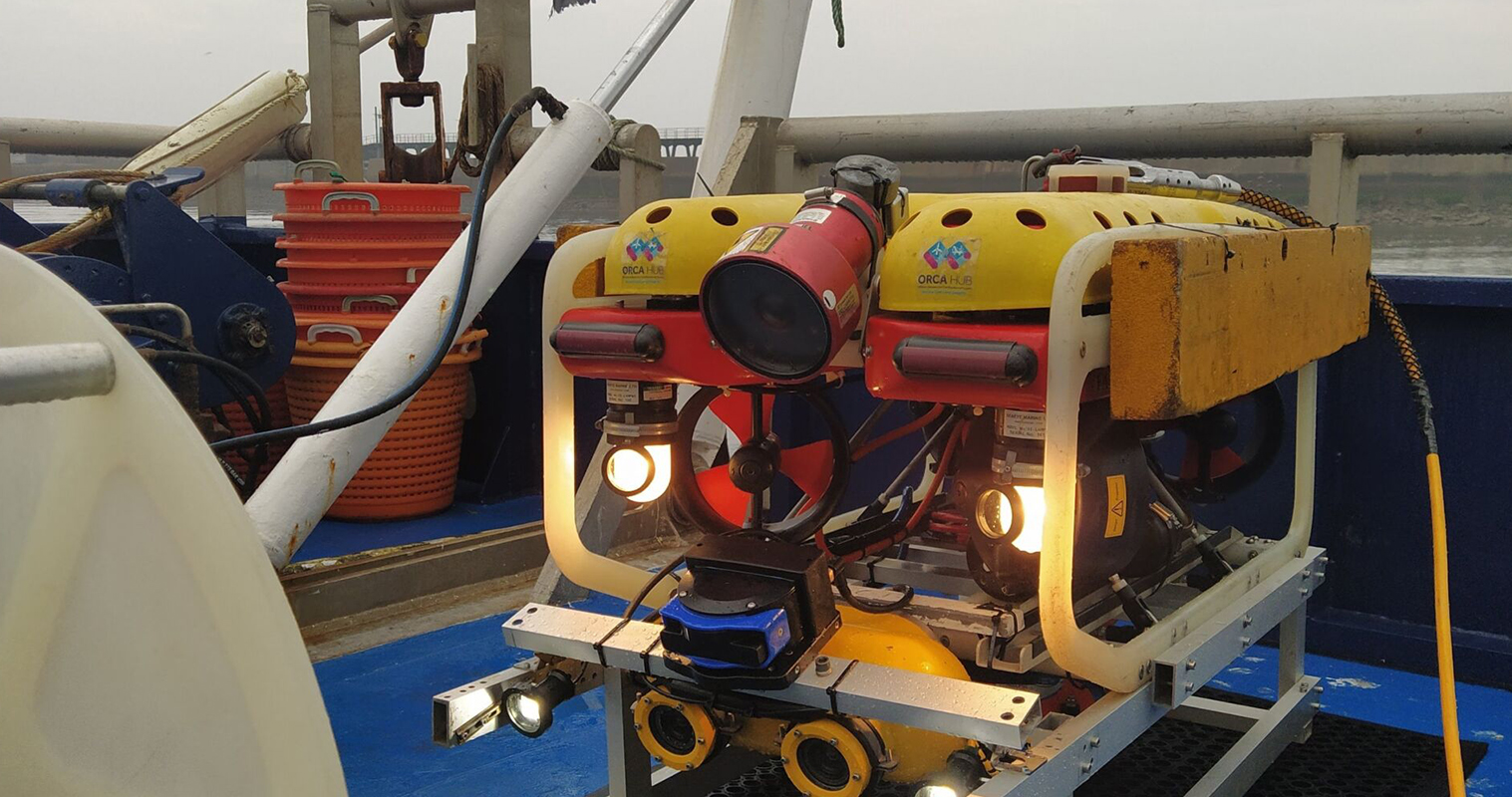
Frontier Robotics, a spinout from Heriot-Watt based at The National Robotarium, Frontier Robotics have developed advanced visual sensing and autonomy technology for subsea robots. Their unique, state-of-the-art camera, which can be mounted onto remotely-operated vehicles (ROVs), uses NVIDIA AI technology to take true-to-life imagery of offshore assets, such as wind turbines and floating offshore wind platforms, and simulate virtually ‘real’ assets.
Smartrawl, an intelligent fishing system that utilises NVIDIA technologies to detect and reduce bycatch. The brainchild of Professor Paul Fernandes, Bicentennial Research Leader at The Lyell Centre, Heriot-Watt University’s global research institute for Earth and marine sciences, Smartrawl’s underwater stereo camera system rapidly processes a fish species AI algorithm to identify and safely release unintended catch using an automated gate system developed with Robotics Engineers at The National Robotarium.
Touchlab Limited. Creators of the world’s thinnest synthetic e-skin, Touchlabuses cutting-edge haptic technologies to allow robots to ‘feel’ texture and perform challenging tasks such as grasping fragile objects or using tools. In collaboration with The National Robotarium’s engineering team, they have further developed their robotic touch systems embedding tactile sensors through HaptX gloves. Using the revolutionary technology, remote operators can gain real-time feedback, helping them to undertake a wide range of tasks, such as safe healthcare delivery in infection-control areas.
https://thenationalrobotarium.com/wp-content/uploads/Ameca-and-child-scaled.jpg17032560Louise Jackhttp://thenationalrobotarium.com/wp-content/uploads/Robotarium.pngLouise Jack2025-09-16 22:35:372025-09-16 15:43:17AI-driven robotics: powering the UK
A new programme to help companies manufacture deep tech products as they take them from prototype to market has been launched by Scottish Enterprise and The National Robotarium.
Deputy First Minister Kate Forbes today (11 September) officially launched the Deep Tech Growth Programme at a showcase event at the Bayes Centre, University of Edinburgh.
Deputy First Minister of Scotland, Kate Forbes MSP with MD, Innovation and Investment at Scottish Enterprise, Jane Martin at the programme launch event, held at The Bayes Centre on 11 Sept 2025
The pilot programme is part of the wider Deep Tech Supercluster and was hailed as a major milestone in Scotland’s innovation journey.
Companies signing up will benefit from wrap-around support from Scottish Enterprise, the National Manufacturing Institute Scotland (NMIS), The National Robotarium, Smart Things Accelerator Centre (STAC), Highlands and Islands Enterprise, universities and the private sector.
According to the Royal Academy of Engineering’s State of UK Deep Tech report, the UK deep tech sector now attracts more than £5 billion in annual venture capital. Deep tech industries are defined as those with substantial scientific or engineering foundations — covering fields such as quantum technologies, photonics, advanced sensors, biotechnology, robotics, satellites and advanced materials.
Business Development Manager (The National Robotarium) Lisa Farrell will lead the pilot of the Deep Tech Growth programme
In Scotland, these capabilities underpin high-growth global markets such as subsea systems, medical technologies, and space.
Deputy First Minister Kate Forbes said: “Deeptech is a fundamental building block of many of the technologies we use in our everyday life – as well as many others that underpin the success of future industries. It represents a high-growth economic opportunity and, as such, it is vital that we harness the huge talent and innovation lying across Scotland’s technology sector.
“We want to see more companies forming, growing and manufacturing here in Scotland. By providing access to public and private support, this supercluster presents a step-change in how we foster deeptech companies and help them to succeed. I look forward to the pilot proving a real game-changer for a number of our most exciting companies, providing them with the right support and expertise at the right time to ensure that they succeed, grow and flourish.”
Managing Director of Innovation and Investment at Scottish Enterprise Jane Martin said: “This exciting collaboration will help companies to manufacture scalable products ultimately anchoring more high-growth firms in Scotland, creating jobs, boosting exports, and attracting investment.
“We want to work with some of Scotland’s most exciting growth prospects intensively to determine the most effective approaches to ensure they can scale here in Scotland, working with public and private partners along the way to create a really joined up system for growth.”
CEO of The National Robotarium Stewart Miller said: “The National Robotarium is proud to be a key delivery partner of the Deep Tech Supercluster Programme. This is a very exciting time for tech companies in Scotland; we have the talent, the skills and the entrepreneurial spirit to rapidly make truly innovative technologies that can improve people’s lives.
“Scotland has a long legacy of technological firsts and programmes like the Deep Tech Supercluster initiative will help to harness the wide range of expert support available to help these fledgling companies scale-up and, crucially, help Scotland retain their valued skills and innovative creations.”
Among the companies showcasing today was Novosound, which is developing thin-film ultrasound sensors for healthcare, subsea inspection, and industrial markets.
Director of Research and Development at Novosound Daniel Irving said: “Having gone through the journey of prototyping and productising deep tech concepts, with the invaluable support of Scottish Enterprise, it’s fantastic to see a dedicated programme now in place to back the next generation of Scottish deep tech start-ups. This kind of targeted support is exactly what’s needed to help innovation thrive.”
The Deep Tech Supercluster Programme is supported by partners including enterprise agencies, Scottish Government, The National Robotarium, Smart Things Accelerator Centre and the National Manufacturing Institute Scotland.
The pilot begins in November 2025 as a manufacturing pathway and will provide tailored support, investment readiness, access to manufacturing facilities, and partner expertise.
Get involved
There are two ways to get involved in the Deep Tech Growth Programme;
As a deep tech company looking to scale: If you’re building a deep tech product with global potential – whether validating feasibility, preparing to scale manufacturing, or expanding into new markets – the programme will help you access the right partners, investment, and support to accelerate growth. Apply as a deep tech company.
As a strategic partner: If you’re a technical, manufacturing, design or investment organisation, you can connect early with high-potential companies, shape projects, and unlock new commercial opportunities via the Partner Pool. Apply as a strategic partner.
Expressions of interest must be submitted to enquiries@scotent.co.uk by midday on 24 October 2025.
https://thenationalrobotarium.com/wp-content/uploads/SE-and-Kate-Forbes-DTSC.jpg545968Louise Jackhttp://thenationalrobotarium.com/wp-content/uploads/Robotarium.pngLouise Jack2025-09-11 15:59:062025-09-15 10:10:34Deep Tech Supercluster Programme takes technologies from prototype to market
A robotics firm based at The National Robotarium has reached a significant milestone by making its first commercial sale with the Offshore Renewable Energy (ORE) Catapult, the UK’s leading technology innovation centre for offshore renewables.
Frontier Robotics, based at the UK’s centre for robotics and AI at Heriot-Watt University, has developed advanced visual sensing and autonomy technology for subsea robots which will now be deployed at several sites including ORE Catapult’s new simulation platform VDARE (Virtual Demonstration and Assessment for Robotic Environments) at its DARE (Digital, Autonomous and Robotics Engineering) Centre in Blyth.
The company’s state-of-the-art camera can be mounted onto a remotely operated vehicle (ROV) to take true to life imagery of offshore assets such as wind turbines, and floating offshore wind platforms. These images are then incorporated into ORE Catapult’s VDARE simulation to create virtually ‘real’ assets.
Dr Jonatan Scharff-Willners, CEO of Frontier Robotics
The unpredictable nature of the world’s oceans makes the inspection and maintenance of offshore assets challenging, with visibility in murky waters a particular obstacle. By leveraging advanced sensor fusion techniques with edge computing, Frontier Robotics’ system offers enhanced visual clarity, robust and reliable positioning and 3D mapping through Simultaneous Localisation and Mapping (SLAM) technology.
SLAM enables ROVs to create comprehensive 3D maps of their surroundings while simultaneously tracking their own position within those environments, providing the foundations for automated and autonomous operations.
The new technology addresses critical challenges for the UK’s offshore wind sector, where more than 2,600 turbines across 43 wind farms require up to three maintenance checks annually. These operations can account for up to 20% of total offshore wind emissions through vessel operations and helicopter transfers. Improved monitoring will enable operators to make faster, better-informed decisions about maintenance operations, reducing both costs and carbon footprint.
Jonatan Scharff Willners, CEO of Frontier Robotics, said:
“Offshore renewable asset inspection is a very challenging and hazardous task in the energy sector. With the UK’s ambitious offshore expansion plans, innovative systems that enhance safety and efficiency aren’t just beneficial – they’re essential.
“This sale to ORE Catapult is really important and helps demonstrate the value of our technology to the market. We’re grateful to the National Robotarium for their support. Being based there, we have access to world-class facilities and exceptional engineering talent and that has accelerated our development timeline.
“Our vision is to become the default autonomy provider for underwater inspections globally, transforming how the industry approaches maintenance and monitoring, and this sale is a major milestone in our journey to delivering that vision.”
Ken Chan, Robotics Operation Lead at ORE Catapult, said:
“Our VDARE simulation platform has been created to accurately represent real world offshore assets and environments, with data integrated into our simulations that respond in real time.
“We have conducted underwater trials using robotics systems to map subsea environments, and have imported data mapping seabed structures, water clarity, temperature and salt levels to create interactive 3D scenes built on accurate, real-world measurements.
“Our mission is to de-risk offshore robotics and accelerate development timelines through affordable, modular, and scalable test environments, and the technology we are now using from Frontier Robotics is supporting us to do that.”
Lisa Farrell, Business Development Manager at the National Robotarium, said:
“Seeing Frontier Robotics develop from incorporation to now securing its first sale demonstrates what’s possible when we properly support innovation in Scotland’s high-growth sectors. Its success creates benefits that extend far beyond one company – strengthening our robotics ecosystem while helping critical industries like offshore energy operate more sustainably.
“The sale to ORE Catapult is a particularly exciting development for us as it coincides with our recent signing of an MOU (Memorandum of Understanding) with ORE Catapult and recent launch of the Blue Robotarium in Orkney, both of which mark our commitment to creating an industry-led robotics cluster and building robotic capabilities to advance the energy transition.
“This is exactly why the National Robotarium exists – to help promising technologies move from concept to commercial reality. We create an environment where talented innovators can access specialised resources rarely found in one location.”
The Frontier Robotics Advisory Board after their inaugural meeting at The National Robotarium
High-profile appointments to expert advisory board
To support its growth trajectory, Frontier Robotics has strengthened its leadership with the appointment of an expert advisory board. Simon Reeve, former Director of Innovation at the Alan Turing Institute and VP of Technology and Innovation at Lloyd’s Register, will chair the board.
He is joined by Mary Jane Brouwers, a highly regarded leader in the Scottish investment ecosystem with over 20 years of experience in early-stage equity investments. The board is completed by Professor Yvan Petillot, a renowned expert in robotics and autonomous systems at Heriot-Watt University, co-founder and ex CTO of SeeByte, and academic co-lead at the National Robotarium.
In addition to their commercial success, Frontier Robotics has bolstered its already impressive funding track record with two new funding grants. The first, from Scottish Enterprise, has seen the firm assess the development of photorealistic, 3D interactive models to significantly decrease the processing time of more commonly used photogrammetry techniques.
The second grant is from the AI Safety Institute for a project the company is working on with partners including King’s College London, and SeaBot Maritime. This project will build and test a training and competence framework to assure the safe and responsible use of AI and autonomy in marine environments and provide a mechanism for the maritime workforce to upskill and adopt the use of the technology as AI advances within the sector.
https://thenationalrobotarium.com/wp-content/uploads/An-underwater-Remotely-Operated-Vehicle-for-inspecting-offshore-assets-.jpg7501000Louise Jackhttp://thenationalrobotarium.com/wp-content/uploads/Robotarium.pngLouise Jack2025-07-31 11:13:062025-07-31 15:32:58Frontier Robotics secures first commercial sale with ORE Catapult
The National Robotarium, the UK’s leading centre for robotics and Artificial Intelligence at Heriot-Watt University, is to be involved in the development of new products and services that help to advance the safe adoption of robotics in the public sector.
As part of round 11 of the CivTech Challenge, a Scottish Government programme that brings the public, private and third sectors together to create new innovations that can make people’s lives better, The National Robotarium and the Directorate for Digital aims to support the development of pioneering ideas that can enable greater adoption of new robotic and smart technologies in public organisations.
Any organisation, team or individual can respond to Challenge 11.8, ‘How can the public sector ensure a safe, secure and transparent adoption of robotics’, with the most promising solutions given the chance to access up to £1.2m in public contracts.
Full Challenge Information
Challenge Title:
How can the public sector ensure a safe, secure and transparent adoption of robotics?
Sponsored by:
The National Robotarium and Scottish Government, Directorate for Digital
Challenge Summary
Robotics is rapidly advancing and with ever-increasing capabilities there are massive opportunities to improve public services and so make people’s lives better. Unlike traditional IT systems robots interact with the physical world. This means that cyber-attacks can potentially result in not just data breaches, but also operational disruption, safety hazards and other harms. So, unless clear standards, assurance requirements and robust testing are established and in place, there are risks to robotics adoption at scale in the public sector supply chain.
So how can we ensure that robotic systems are resilient, trustworthy and capable of withstanding evolving cyber threats?
https://thenationalrobotarium.com/wp-content/uploads/Round-11-Hero-Landscape.png7201280Louise Jackhttp://thenationalrobotarium.com/wp-content/uploads/Robotarium.pngLouise Jack2025-07-25 09:14:022025-09-08 10:59:37Submissions open for CivTech challenge into safe adoption of robotics – closes 2 Sept 2025
The National Robotarium, the UK’s leading centre for robotics and Artificial Intelligence at Heriot-Watt University, is to be involved in the development of new products and services that help to advance the safe adoption of robotics in the public sector.
As part of round 11 of the CivTech Challenge, a Scottish Government programme that brings the public, private and third sectors together to create new innovations that can make people’s lives better, The National Robotarium and the Directorate for Digital aims to support the development of pioneering ideas that can enable greater adoption of new robotic and smart technologies in public organisations.
Any organisation, team or individual can respond to Challenge 11.8, ‘How can the public sector ensure a safe, secure and transparent adoption of robotics’, with the most promising solutions given the chance to access up to £1.2m in public contracts.
CEO Stewart Miller with Robotics Engineer Coena Das
Chief Executive Officer of The National Robotarium, Stewart Miller, said: “Our mission at The National Robotarium is to build the UK’s presence in the robotics sector, support new technology companies in getting their robotic products to market, and encourage businesses to increase the use of robotic technologies in their day-to-day operations.
“A major part of this involves ensuring that companies feel confident in having more robots working side-by-side with humans, customers or other users, and that requires robust cybersecurity that protects their programming and automation.
“Through the CivTech Challenge, we have the opportunity to support the rapid advancement of new products or services that can protect robots – and businesses – from even the most sophisticated cyber-attacks, enabling a smoother transition to robotics adoption.”
Innovators, entrepreneurs, startups, SMEs and established businesses interested in taking on the CivTech Challenge have until 2 September to submit their initial proposal via Public Contracts Scotland.
Hear Stewart discuss the challenge in more detail at: https://youtu.be/SrJM_IONP6E
A partnership between Scotland’s leading technology and agricultural research institutions is developing 5G-connected robotics applications that enable farmers to implement precision agriculture techniques while addressing rural connectivity challenges.
The collaboration between Heriot-Watt University’s The National Robotarium, James Hutton Institute, Scotland 5G Centre, Boston Dynamics, and Freshwave is advancing robotic systems that can perform precision farming tasks – including crop health monitoring, targeted fertiliser application, and soil condition assessment – through portable 5G private networks.
Through private, mobile 5G connectivity, robots like Boston Dynamics’ Spot can undertake real-time scanning and mapping operations in remote or rural settings (photography by Ben Glasgow)
The technology addresses critical challenges facing modern agriculture, such as rising input costs, labour shortages, environmental regulations, and the need to increase food production while reducing environmental impact. Traditional farming approaches often involve uniform treatment across entire fields, but 5G-connected robotics enable plant-by-plant precision, applying resources only where needed.
The robotic systems use high-speed 5G connections to communicate with other robotic devices securely in real time as well as transmit detailed information about crops, soil conditions, and growing environments, enabling farmers to make informed decisions based on current field conditions.
A key breakthrough has been addressing connectivity limitations in rural areas. Agricultural operations requiring data-intensive robotic applications often face inadequate mobile network coverage and bandwidth constraints. The partnership has worked with portable 5G private networks that can be rapidly deployed on farms, providing the high-speed, low-latency connectivity essential for real-time robotic operations.
The robotic systems can stream high-definition video, generate detailed field mapping and, with under-development visual recognition systems, identify issues such as disease, pest infestations, or water stress significantly earlier than traditional monitoring methods. Applications that previously required expensive specialised equipment, technical expertise, and optimal weather conditions can now be implemented more efficiently and cost-effectively.
With global food production required to increase by more than 50% by 2050 while reducing environmental impact, advanced agricultural technologies are becoming essential. The agricultural sector, which contributes £2.2 billion to Scotland’s economy, is positioned to lead development of practical precision farming solutions that address real-world operational challenges.
Project Manager at The National Robotarium, Ruth Plant
Following a demonstration of the 5G-connected robotics technologies at The National Robotarium, Ruth Plant, Project Manager, said:
“What’s exciting about this project is seeing the technology develop from initial concept to working demonstration. We’ve successfully shown that portable 5G networks can provide the connectivity needed for real-time robotic operations in agricultural settings. The integration of these technologies creates opportunities for precision farming that weren’t previously possible in areas with limited connectivity.
“This partnership demonstrates exactly what the National Robotarium was designed to achieve – bringing together leading academic research, innovative companies, and industry expertise to develop practical solutions to real-world challenges. Our facility provides the collaborative environment where these breakthrough technologies can be developed, tested, and demonstrated to the partners and stakeholders who can help bring them to market.”
The technology was demonstrated at a 5G-connected robotics showcase, held at The National Robotarium on 30 June 2025 (photography by Ben Glasgow)
Andrew Christie, agritech specialist at The James Hutton Institute, said:
“As an evolution of precision farming technology being used in modern agriculture, robotics are a next step in the progression towards data driven farming practices, but a barrier to uptake has been the speed and reliability for real time communication and a need for manual intervention for data processing.
“With the integration of 5G private networks in robotics we can address these issues enabling high volumes of data to be transmitted at low latency and allowing us to use our current equipment more effectively, whilst also enabling future progress in swarm robotics, real-time sensors for digital twinning and active data processing through cloud computing.
“The use of remotely deployable 5G private networks as showcased at The National Robotarium and The James Hutton Institute provides relevance to all rural settings, and agricultural businesses regardless of farm type.”
Ian Sharp, Head of Delivery at the Scotland 5G Centre, said:
“The Scotland 5G Centre (S5GC) is focussed on enabling Scotland to unlock the benefits of advanced wireless connectivity, so we are very pleased to play an active role in this partnership.
“The collaboration highlights clearly how advanced wireless communications (5G) can enable new and exciting applications of robotics in an agricultural setting. It’s easy to see from the project how the 5G connected robotics can provide new opportunities to increase productivity and reduce costs.
“It’s also important to note that the partnership itself highlights the collaborative nature and strength of Scotland’s innovation ecosystem, particularly in working closely with industry partners.
“We were able to seed this project through use of funding from our Innovate UK Technology Mission Fund Programme. The IUK Programme ended in March 2025 and enabled a number of other 5G related projects, some of which continued the theme of addressing rural connectivity through the use of mobile 5G test networks deployed in harsh outdoor conditions.”
Robotics Engineer Hari operates the 5G-connected robot using VR
Tom Bennett, Chief Technology Officer at Freshwave, said:
“We’re proud to be enabling next-generation connectivity at the cutting edge of agritech research. Reliable, portable private 5G is unlocking new possibilities for robotics and automation, and we’re excited to support the National Robotarium as they help shape the future of sustainable agriculture alongside their partners and customers.”
WATCH STV News for a special report on The National Robotarium’s 5G Connected Robotics showcase event.
Interested in finding out if 5G-connected robotics can help your business? Contact Project Manager Ruth Plant at r.plant@hw.ac.uk
https://thenationalrobotarium.com/wp-content/uploads/Robotarium-5G-Showcase-130-Spot-1000px.jpg6661000Louise Jackhttp://thenationalrobotarium.com/wp-content/uploads/Robotarium.pngLouise Jack2025-07-02 10:15:002025-07-02 10:15:005G connected robotics set to revolutionise the farming sector
Scotland risks missing out on the global robotics revolution as other nations surge ahead in a market projected to reach £218 billion by 2030, but a major new policy paper published today (19 June 2025) by The National Robotarium shows how the country can still establish itself as a world leader.
Stewart Miller, CEO of the National Robotarium, a Heriot-Watt University Global Research Institute, has today launched the comprehensive policy discussion paper ‘Making Scotland a World Leader in Robotics’ warning that urgent action is needed to prevent Scotland from falling further behind international competitors, while outlining a clear pathway to robotics leadership.
“We’re at a critical juncture,” Miller said. “Countries like China, America, and Singapore are racing ahead in robotics adoption and innovation, while the UK ranks just 24th globally for robots per manufacturing worker. But Scotland has exceptional foundations that, with the right approach, could make us a global robotics powerhouse.”
CEO of the National Robotarium, Stewart Miller (credit Ben Glasgow photography)
The scale of the challenge facing Scotland, highlighted on the front page of The Herald when the policy paper launched, is sobering. Asia dominates with 72% of global robot installations, while Germany installs nearly eight times more robots than the entire UK. Denmark has become a robotics leader through strategic investment in collaborative robots and automation, creating a thriving ecosystem that attracts international companies and talent.
“Other nations aren’t waiting – they’re building robotics capabilities that will define their economic futures,” Miller explained. “While we’ve been developing excellent innovations, our European neighbours and countries like Australia have been creating the systems and support that turn innovation into economic leadership. We risk becoming developers of technology for other countries to commercialise.”
The policy paper highlights the stark reality of missed opportunities. Approximately 20,000 UK manufacturing SMEs currently operate without robotics technology, representing massive untapped potential. According to recent analysis, if UK automation levels matched leading countries, productivity could increase by 22%, potentially contributing £184 billion to the economy over the next decade.
The healthcare sector presents equally concerning gaps. While the global healthcare robotics market is projected to grow to £3.4 billion by 2028, Scotland struggles to translate its clinical expertise and innovation capability into systematic adoption, potentially missing out on £21.7 million in annual efficiency savings for NHS Scotland alone.
“We have companies like Edinburgh-based BioLiberty developing breakthrough stroke rehabilitation technology, but they’re launching in North American markets because we haven’t created the pathways for domestic success,” Miller said. “We’re funding innovations that primarily benefit other countries.”
Companies like Bioliberty have launched stroke rehabilitation technology Lifeglov (pictured) in North America due to lack of pathways to market in the UK
However, Miller’s analysis reveals that Scotland is uniquely positioned to reverse this trend and establish genuine robotics leadership. Unlike countries starting from scratch, Scotland possesses world-class research excellence, outstanding engineering heritage, and proven entrepreneurial spirit.
“The difference between concern and optimism is action,” Miller explained. “Scotland has all the ingredients needed – we just need to combine them more effectively. The National Robotarium has demonstrated what’s possible, supporting over 100 jobs and nurturing 14 innovative companies in less than three years. This success can be replicated and scaled.”
The policy paper identifies three sectors where Scotland can establish clear competitive advantages. The offshore renewables sector offers immediate opportunities, with robotics applications in wind farm operations alone representing a £341 million annual market by 2030. Scotland’s global leadership in offshore energy provides a natural platform for marine robotics excellence.
Healthcare presents extraordinary potential for Scottish innovation. With world-class clinical expertise and growing recognition among healthcare leaders of robotics possibilities, Scotland could become the global centre for healthcare robotics development.
Manufacturing offers perhaps the broadest opportunity, with Scotland’s expertise positioning it to capture significant market share as automation demand accelerates across thousands of ready-to-adopt businesses.
Stewart Miller (pictured with Robotics Engineer Coena Das) argues widespread adoption of robotics in UK manufacturing could lead to greater productivity and efficiencies
“Every challenge becomes an opportunity when viewed through the robotics lens,” Miller said. “NHS pressures could drive healthcare robotics innovation. Manufacturing skills shortages could accelerate automation adoption. Our offshore energy leadership could establish Scotland as the global centre for marine robotics.”
The emergence of embodied AI has created unprecedented opportunities for countries that move decisively. With over a hundred companies worldwide receiving billions in investment to develop genuinely human-capable systems, Scotland’s combination of AI expertise and robotics capability positions it perfectly for this next wave of innovation.
Miller emphasises that Scotland’s advantages extend beyond technology to include cultural and institutional strengths. The country’s collaborative approach between industry, academia, and government – exemplified by the National Robotarium’s ‘triple helix’ model – creates ideal conditions for rapid ecosystem development.
The National Robotarium’s track record provides compelling evidence of Scotland’s potential. Since launching in September 2022, the facility has become internationally recognised, with the Tony Blair Institute for Global Change citing its model in their landmark October 2024 report on robotics leadership. The recent expansion to Orkney through the International Blue Economy Robotarium demonstrates how targeted sector focus can accelerate market leadership.
Professor Gillian Murray, Deputy Principal of Business and Enterprise at Heriot-Watt University, said: “Heriot-Watt has a proud 200-year heritage of pioneering engineering and innovation that has shaped industries worldwide. The National Robotarium exemplifies our commitment to mobilising intellectual and capital assets for global impact. This policy paper demonstrates how Scotland can build on our university sector’s world-class research capabilities to establish genuine leadership in the technologies that will define the future economy.”
Deputy Principal of Business and Enterprise at Heriot-Watt University, Professor Gill Murray
The policy paper outlines a comprehensive vision for establishing Scotland as a global robotics powerhouse through four strategic initiatives:
Create Robotics Scotland as a national coordinating body to accelerate collaboration between research, industry, and international partners
Establish a National Healthcare Robotics Initiative to position Scotland as the global leader in medical robotics innovation
Launch a Marine Robotics Innovation Programme, leveraging Scotland’s offshore expertise to dominate this emerging market
Develop a National Robotics Skills Strategy, ensuring Scotland has the talent to lead across all robotics applications
Miller envisions these initiatives creating a virtuous cycle where Scottish success attracts international investment, talent, and partnerships, transforming Scotland from a country watching the robotics revolution to one leading it.
“We have all the building blocks in place,” Miller concluded. “Outstanding research through institutions like the National Robotarium, breakthrough innovations in technology, and world-class university capabilities. The question isn’t whether Scotland can become a robotics leader – it’s whether we’ll act quickly enough to make it happen.”
https://thenationalrobotarium.com/wp-content/uploads/Robots-and-human.jpg5721000Louise Jackhttp://thenationalrobotarium.com/wp-content/uploads/Robotarium.pngLouise Jack2025-06-19 11:06:142025-06-19 11:06:14Scotland risks being left behind in robotics revolution
We may request cookies to be set on your device. We use cookies to let us know when you visit our websites, how you interact with us, to enrich your user experience, and to customize your relationship with our website.
Click on the different category headings to find out more. You can also change some of your preferences. Note that blocking some types of cookies may impact your experience on our websites and the services we are able to offer.
Essential Website Cookies
These cookies are strictly necessary to provide you with services available through our website and to use some of its features.
Because these cookies are strictly necessary to deliver the website, refusing them will have impact how our site functions. You always can block or delete cookies by changing your browser settings and force blocking all cookies on this website. But this will always prompt you to accept/refuse cookies when revisiting our site.
We fully respect if you want to refuse cookies but to avoid asking you again and again kindly allow us to store a cookie for that. You are free to opt out any time or opt in for other cookies to get a better experience. If you refuse cookies we will remove all set cookies in our domain.
We provide you with a list of stored cookies on your computer in our domain so you can check what we stored. Due to security reasons we are not able to show or modify cookies from other domains. You can check these in your browser security settings.
Google Analytics Cookies
These cookies collect information that is used either in aggregate form to help us understand how our website is being used or how effective our marketing campaigns are, or to help us customize our website and application for you in order to enhance your experience.
If you do not want that we track your visit to our site you can disable tracking in your browser here:
Other external services
We also use different external services like Google Webfonts, Google Maps, and external Video providers. Since these providers may collect personal data like your IP address we allow you to block them here. Please be aware that this might heavily reduce the functionality and appearance of our site. Changes will take effect once you reload the page.
Google Webfont Settings:
Google Map Settings:
Google reCaptcha Settings:
Vimeo and Youtube video embeds:
Other cookies
The following cookies are also needed - You can choose if you want to allow them:
Privacy Policy
You can read about our cookies and privacy settings in detail on our Privacy Policy Page.